Historical report: originally published November 10, 2026, at 09:55 (UTC+8).
On November 7, 2026, two miners using CKPool’s solo-mining service found Bitcoin blocks less than seven hours apart. The combined rewards were valued at about $476,000 in the original report. It is an account of unusually lucky outcomes—not evidence that a home miner can reliably earn a block reward.
What the report identifies
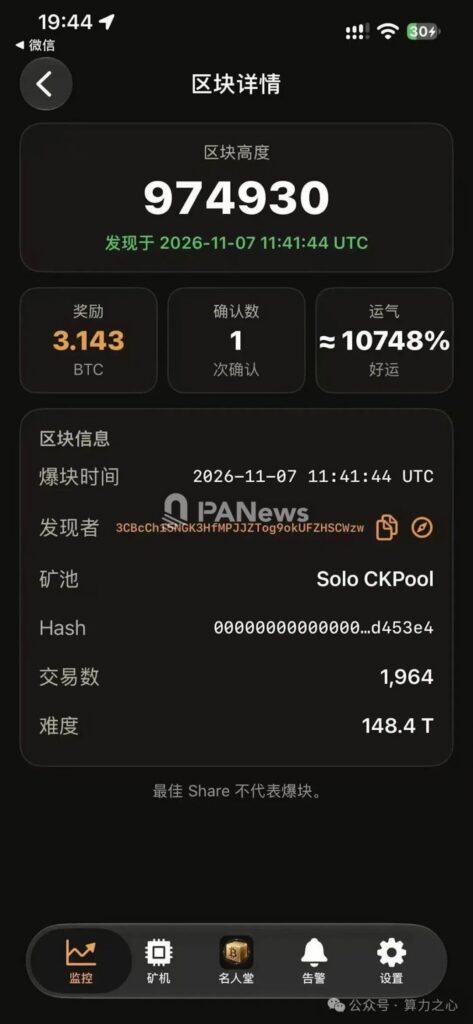
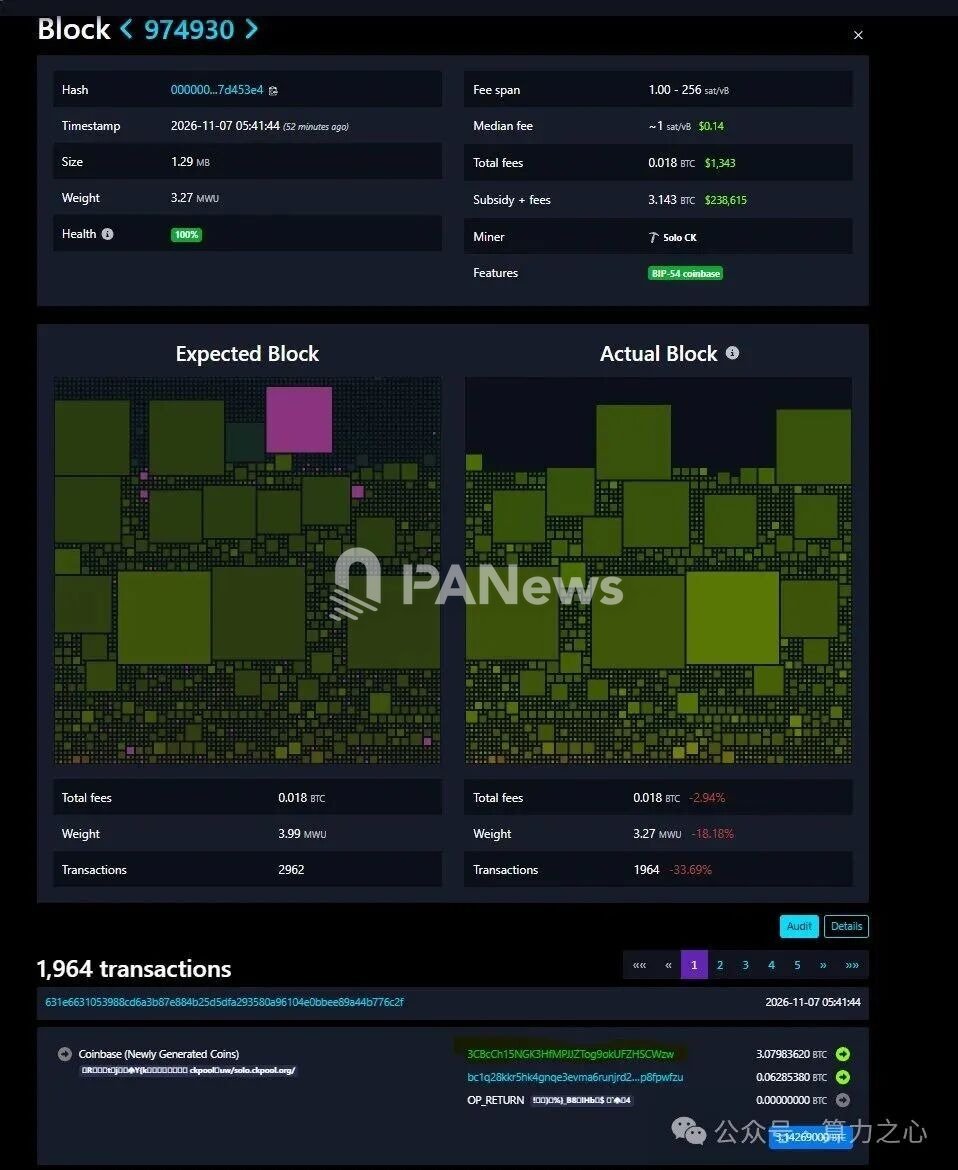
The first miner found block 974893, with a reward valued at roughly $237,000. The second found block 974930 at 7:41 p.m. on November 7. That block included 1,964 transactions and paid approximately 3.143 BTC, then valued at $239,000.
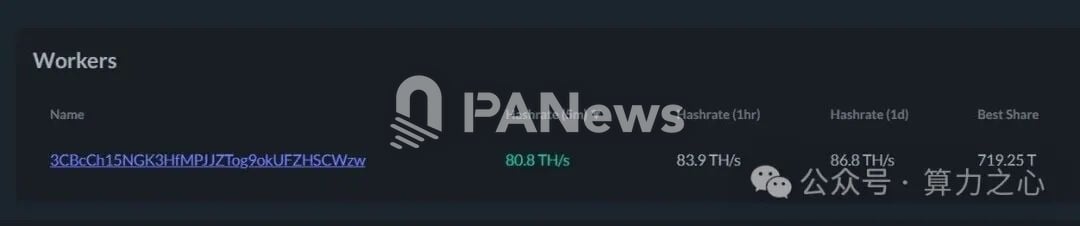
The report identifies the second miner’s device as a Canaan AvalonQ home miner. It cites reported hashrate readings of 80.8 TH/s over five minutes, 83.9 TH/s over an hour and 86.8 TH/s over a day. It does not establish the first miner’s machine model. For the second block, the report says approximately 0.0629 BTC went to a separate address and 3.0798 BTC to the miner’s wallet; it suggests, rather than confirms, that the separate payment was a CKPool service fee.
The appeal—and the missing denominator
Solo mining offers an all-or-nothing payout: a miner who finds a block receives its reward rather than sharing it according to contributed hashrate. A miner who finds no block receives no block reward while still paying for equipment and electricity. That makes a winning screenshot compelling, but it says little about the many machines that do not win.
The article also cites a 6.5 TH/s solo miner that found a block on October 27, and earlier wins involving an Avalon Nano 3S on May 30 and a Bitaxe Gamma on July 10. It reports 36 solo-mined blocks by individual miners in 2026 through its November publication date. Those examples document reported wins, not a return rate for someone buying a machine. The article’s probability and cost estimates depend on hashrate, network difficulty, equipment and electricity use; its cited $400–$1,100 monthly power-cost range should not be read as the operating cost of every small home device.
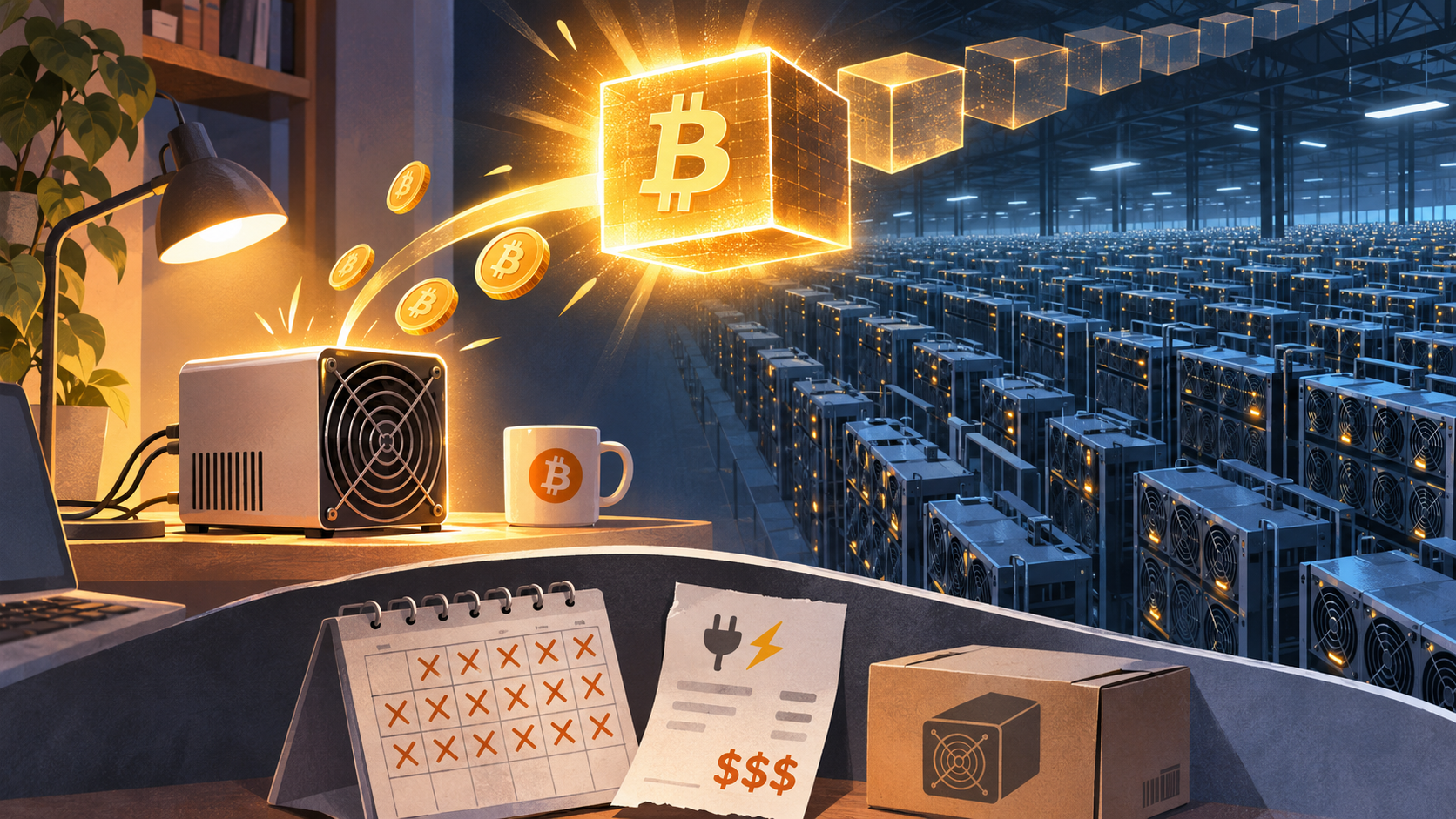
The narrative serves several participants differently: a winner receives a rare payout, while a machine seller may benefit from interest in solo mining. A service operator may receive a fee when a block is found, though the destination of the separate payment in this case was not confirmed. None of those possibilities establishes that ordinary buyers, as a group, profit from solo mining—or that isolated wins demonstrate broader adoption.
Source: panewslab.com (originally published 2026-11-10 09:55 UTC+8)