As reported on November 12, 2026, ZetaChain was preparing to shut down its layer-1 network and move ZETA to Solana. The plan gives the token a new proposed role in ZetaLabs, a private AI application scheduled to launch on December 9. Whether that role creates sustained demand will depend on product use, not the migration alone.
What the approved migration would change
On November 7, ZetaChain’s community approved its second Solana-migration governance proposal with 100% of votes in favor. Under the proposal, the L1 will stop at block 20,755,000, expected around December 9, 2026; staking rewards will stop at the same snapshot height. ZetaScan and a read-only archival RPC node are planned to remain available until October 31, 2027.
Users will be able to claim ZETA on Solana at a 1:1 ratio through ZetaHub with one signature, no deadline and no fee, including SOL fees, according to the proposal. Exchanges will handle conversion of ZETA held on their platforms.
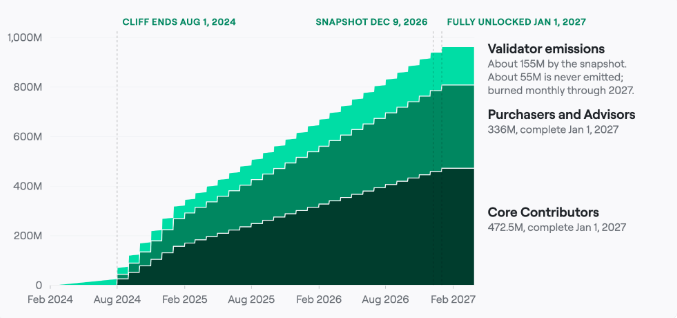
The proposal also calls for approximately 55 million unissued ZETA from the validator-incentive allocation to be placed in a Solana burn reserve controlled by the ZetaChain Foundation. They are scheduled to be burned in twelve monthly portions during 2027, reducing the stated total supply from 2.1 billion to 2.045 billion by year-end. That is a scheduled supply reduction, not evidence of continuing deflation after 2027. ZetaChain has also pledged not to sell newly unlocked foundation ZETA during 2027. Separately, the source says the 44.91 million ZETA allocated to core contributors and investors under the 2024 unlock plan will be fully unlocked by January 1, 2027.
The AI-token case remains to be tested
Previously used as L1 gas, ZETA is intended to gain uses in ZetaLabs. From the first quarter of 2027, the plan would let users lock ZETA they retain to access Premium without a separate payment, spend ZETA on AI credits, or vote on supported markets, data sources and AI models. USDC and bank cards are also planned as ways to buy credits. These are proposed uses; they do not establish how many users will choose ZETA over other options.
ZetaLabs is described as combining AI models, encrypted personal context, on-chain activity and live market data. Its planned features include Bloom, which would turn a user’s on-chain history into encrypted context, a personalized information feed, and x402 support for agent payments. Claims that even ZetaChain cannot read users’ encrypted records, and that the same memory can move between AI services without exposing private information, are product claims rather than independently demonstrated outcomes in the report. ZetaChain said more than 120,000 people had joined the waitlist; a waitlist is not a measure of active adoption.
The migration sets out a concrete supply schedule. The broader narrative—that an AI application can give ZETA lasting utility—remains contingent on ZetaLabs launching as planned and people choosing to use it.