This article reflects reporting by Odaily Planet Daily’s Azuma published on December 23, 2025, at 08:00 (UTC+8). It does not describe a current governance outcome.
A change to Aave’s front-end swap feature has grown into a dispute over the boundary between Aave Labs’ products and the Aave DAO’s protocol. The immediate question is where fees from that feature should go. The broader one—still unresolved at the time of the report—is who should control the Aave brand.
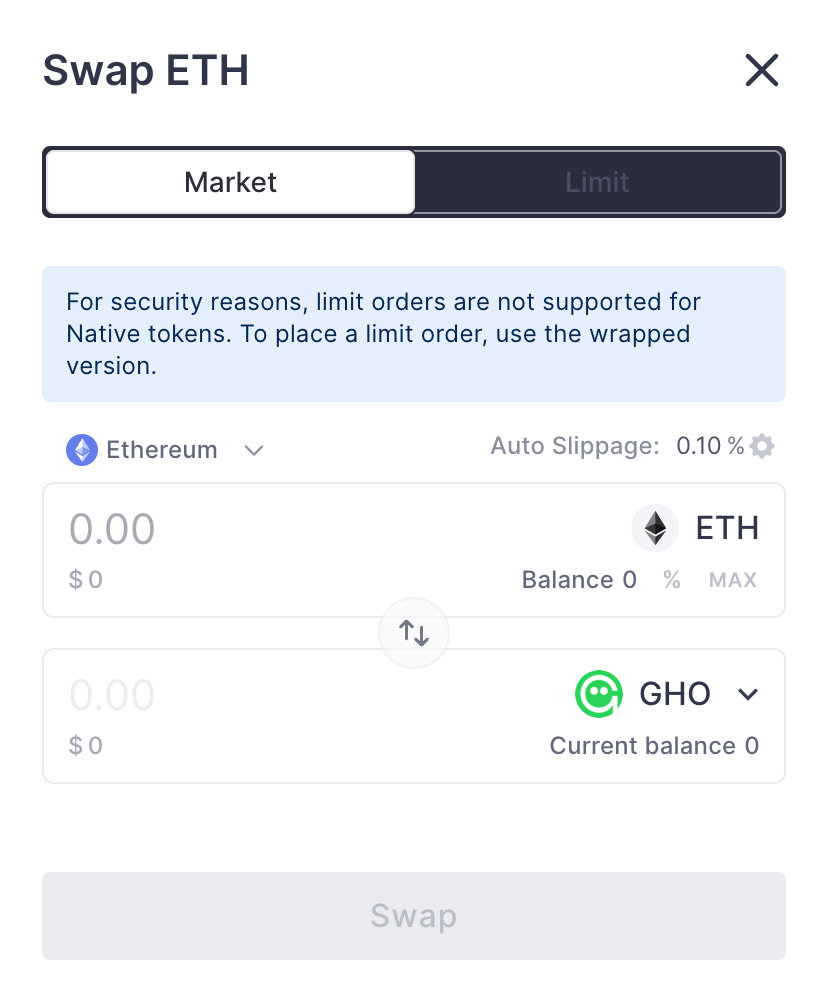
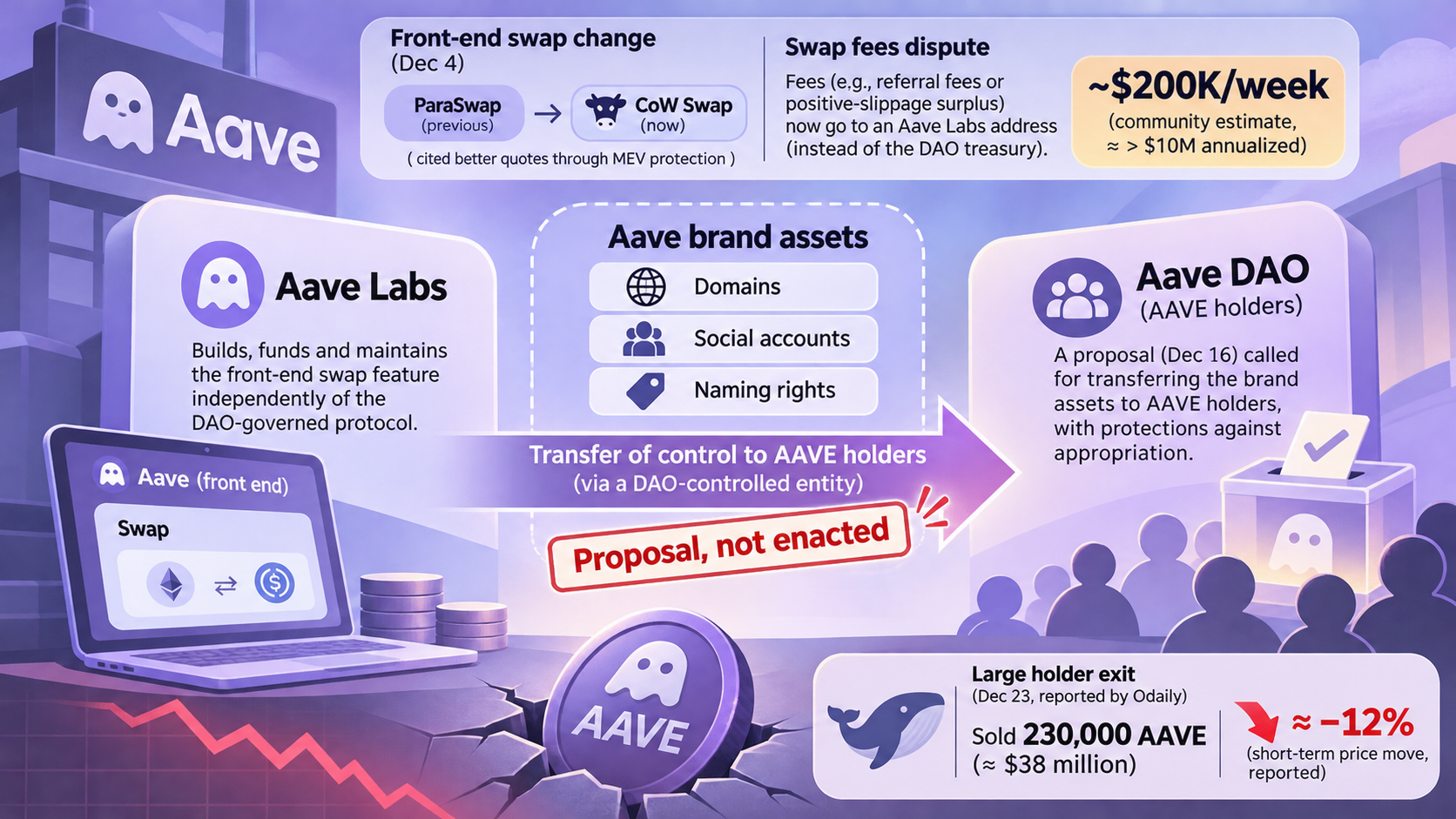
On December 4, Aave announced that CoW Swap would replace ParaSwap as the default route for swaps through its front end, citing better quotes through MEV protection. Community member EzR3aL subsequently said that fees associated with the feature, including referral fees or positive-slippage surplus, had previously gone to the DAO treasury but were now going to an Aave Labs address. Based on flows on Ethereum and Arbitrum, EzR3aL estimated the fees at roughly $200,000 a week, or more than $10 million annualized. That was a community member’s estimate, not a confirmed annual revenue figure.
Aave Labs responded that it funds, builds and maintains the front-end swap feature independently of the DAO-governed protocol. In its view, earlier payments to the DAO were voluntary contributions, not an obligation. That distinction puts the dispute at the intersection of product revenue and token-holder governance, rather than establishing that the DAO has a legal claim to the fees.
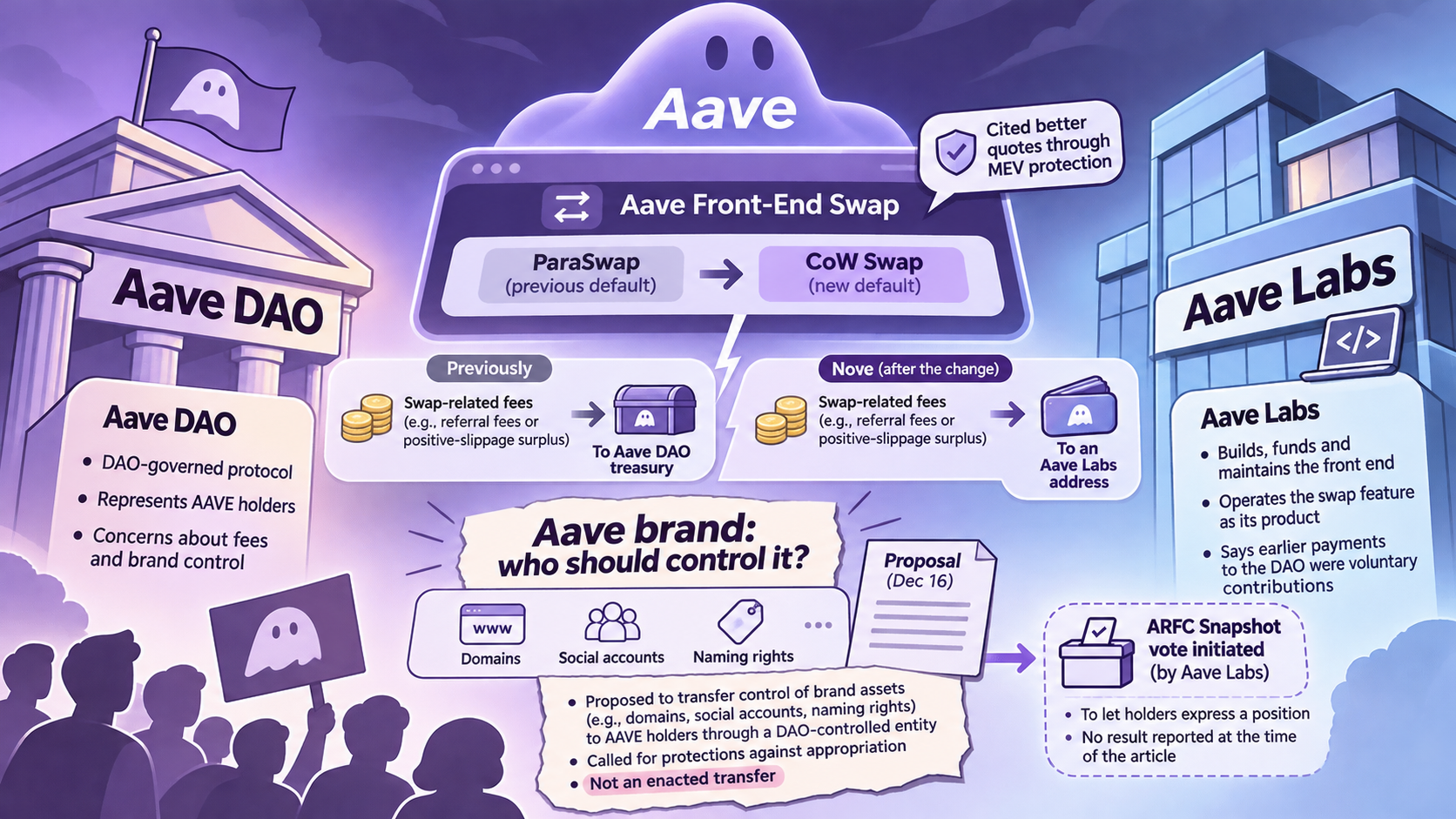
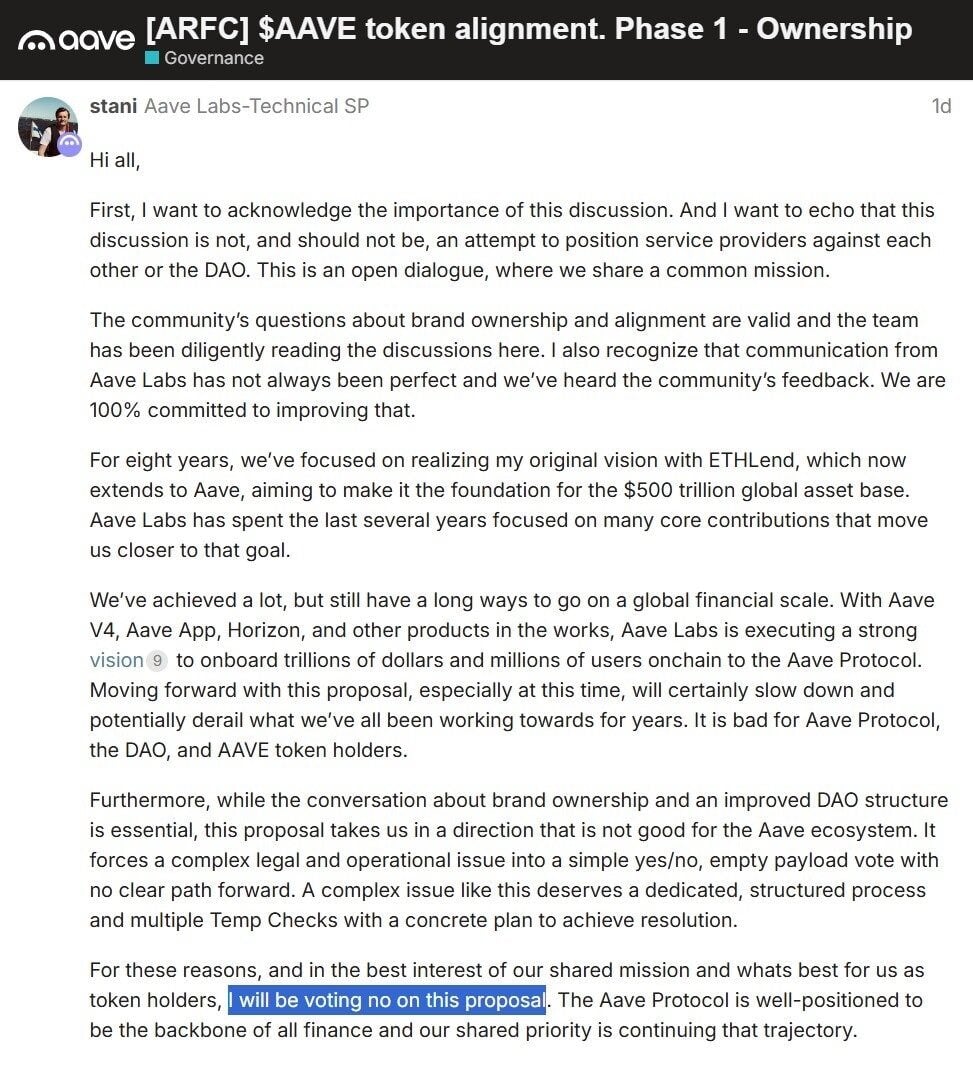
On December 16, former Aave CTO Ernesto Boado proposed transferring control of brand assets—including domains, social accounts and naming rights—to AAVE holders through a DAO-controlled entity whose form had yet to be determined. The proposal also called for protections against appropriation. Aave founder Stani said he would vote against it, arguing that a yes-or-no vote offered no clear route through a complex legal and operational issue. The proposal was not an enacted transfer. By publication, Aave Labs said it had initiated an ARFC Snapshot vote to let holders express a position; the source reported no result.
The dispute also coincided with a large holder’s exit. Odaily reported that, early on December 23, the second-largest AAVE holder outside project, protocol-contract and centralized-exchange addresses sold 230,000 AAVE, worth about $38 million. Odaily put the holder’s average purchase price at $223.40, average sale price at about $165 and loss at $13.45 million; it reported a short-term 12% fall in AAVE. Those figures document the reported sale and price move, but do not by themselves establish every cause of the decline.
The case illustrates a governance question for DeFi projects with both a DAO-governed protocol and a company-operated interface: participation in the same ecosystem does not, on its own, settle who controls each asset or revenue stream.
Source: panewslab.com (originally published 2025-12-23 08:00 UTC+8)