Originally reported by TechFlow on November 9, 2026, at 18:31 (UTC+8).
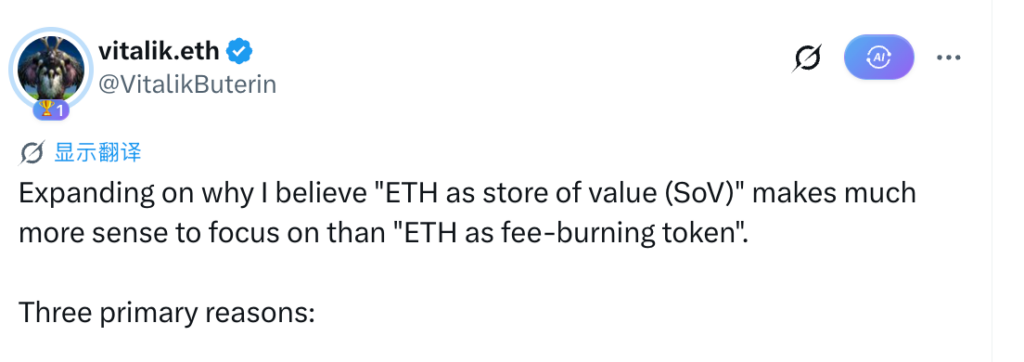
Ethereum’s fee burn was once central to a simple valuation story: more mainnet activity would destroy more ETH, supporting its value. TechFlow’s account of a November 8 essay by Vitalik Buterin argues that this story cannot provide a reliable price floor. The question is not whether EIP-1559 burns ETH, but whether that burn can sustain the valuation investors have attached to it.
The gap between the model and the burn
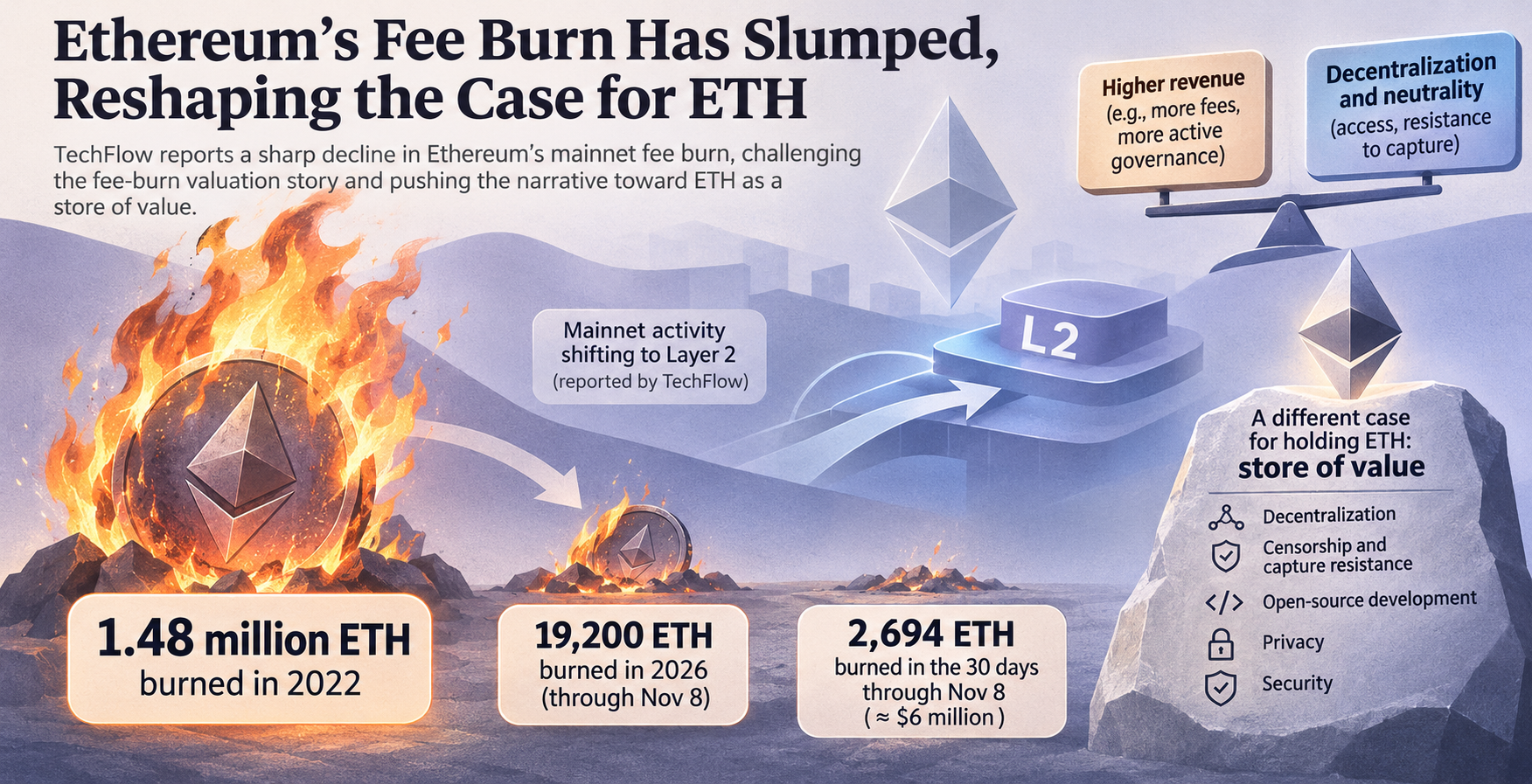
TechFlow reports that Ethereum burned about 1.48 million ETH in 2022, compared with 19,200 ETH so far in 2026. In the 30 days through November 8, it says, 2,694 ETH—approximately $6 million—was burned, less than the amount newly issued over the same period. The article links the decline in mainnet burn to activity moving to Layer 2 networks.
According to TechFlow’s account of Buterin’s argument, a fee-burn valuation also has a circularity problem: much of the fee demand has come from speculation within crypto. The article cites the Yuga Labs virtual-land sale, which it says generated $180 million in fees burned in one day, as an example. If ETH’s price falls, the profits and purchasing power behind that activity may fall too.
TechFlow says that, at a 4% discount rate, supporting an ETH market capitalization of roughly $272 billion through burn would require about 4.89 million ETH burned annually—a gap it puts at 149 times the recent rate. These are figures and a valuation framework presented in the original report, not a demonstrated floor for ETH’s price.
A different case for holding ETH
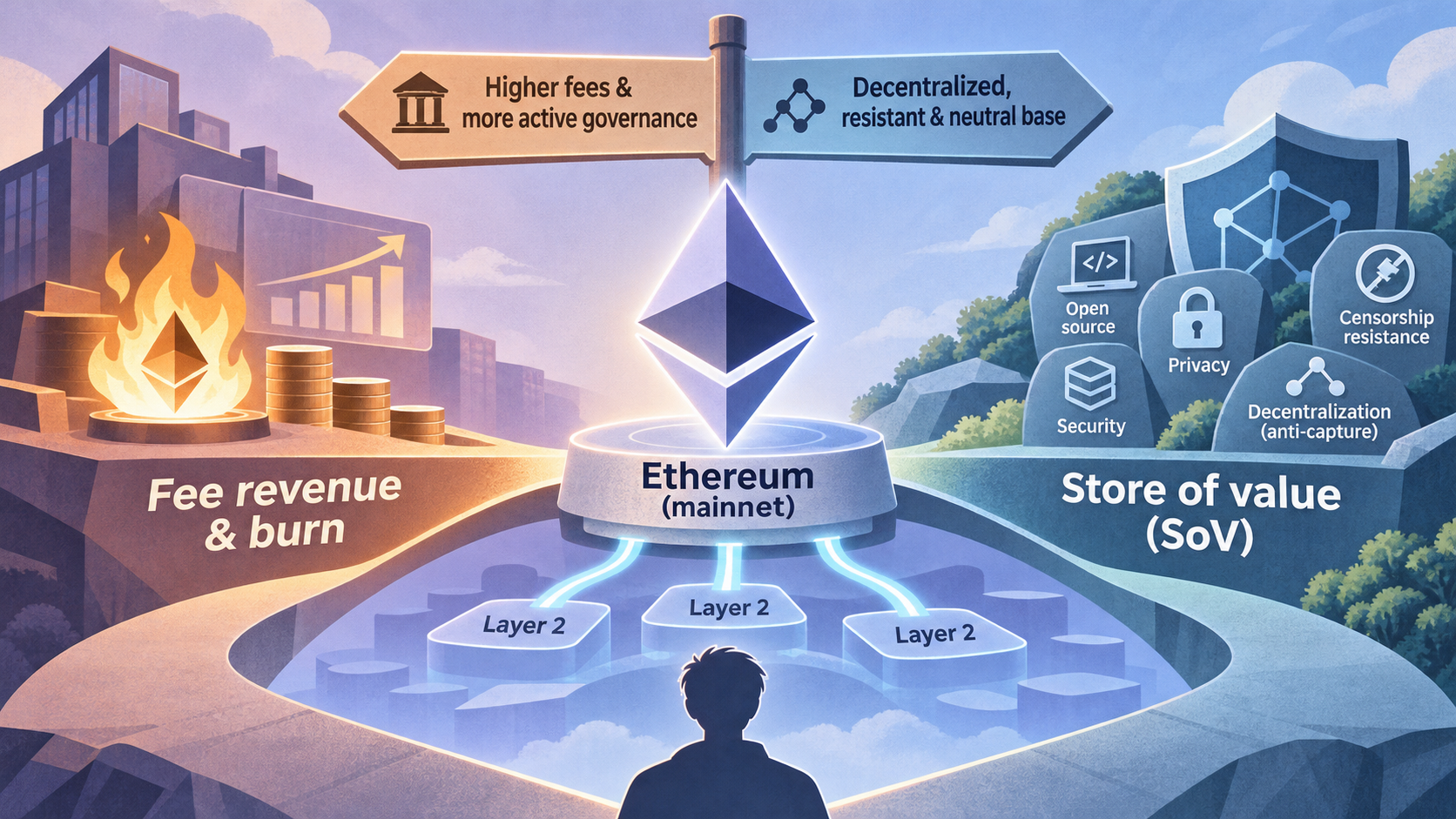
The report describes a hypothetical alternative: Ethereum could pursue revenue more aggressively. In a comparison with L’Oréal, it discusses roughly 700,000 ETH a year in protocol-level financing for research and market development, alongside more interventionist governance. This is not an enacted Ethereum policy or a reported proposal for adoption. The trade-off, as TechFlow presents it, is that pursuing higher fees and more active governance could undermine access, decentralization and resistance to capture.
TechFlow instead portrays Buterin’s preferred case for ETH as a store of value grounded in Ethereum’s decentralization, censorship and capture resistance, open-source development, privacy and security. That is a change in the narrative offered for ETH, not evidence that demand for it as a store of value has been established. The article’s conclusion—that the shift may bring market repricing—is the author’s interpretation, not a confirmed outcome.
Source: techflowpost.com (originally published 2026-11-09 18:31 UTC+8)