Historical report: Deep Tide TechFlow published the original article on November 11, 2026, at 20:46 (UTC+8).
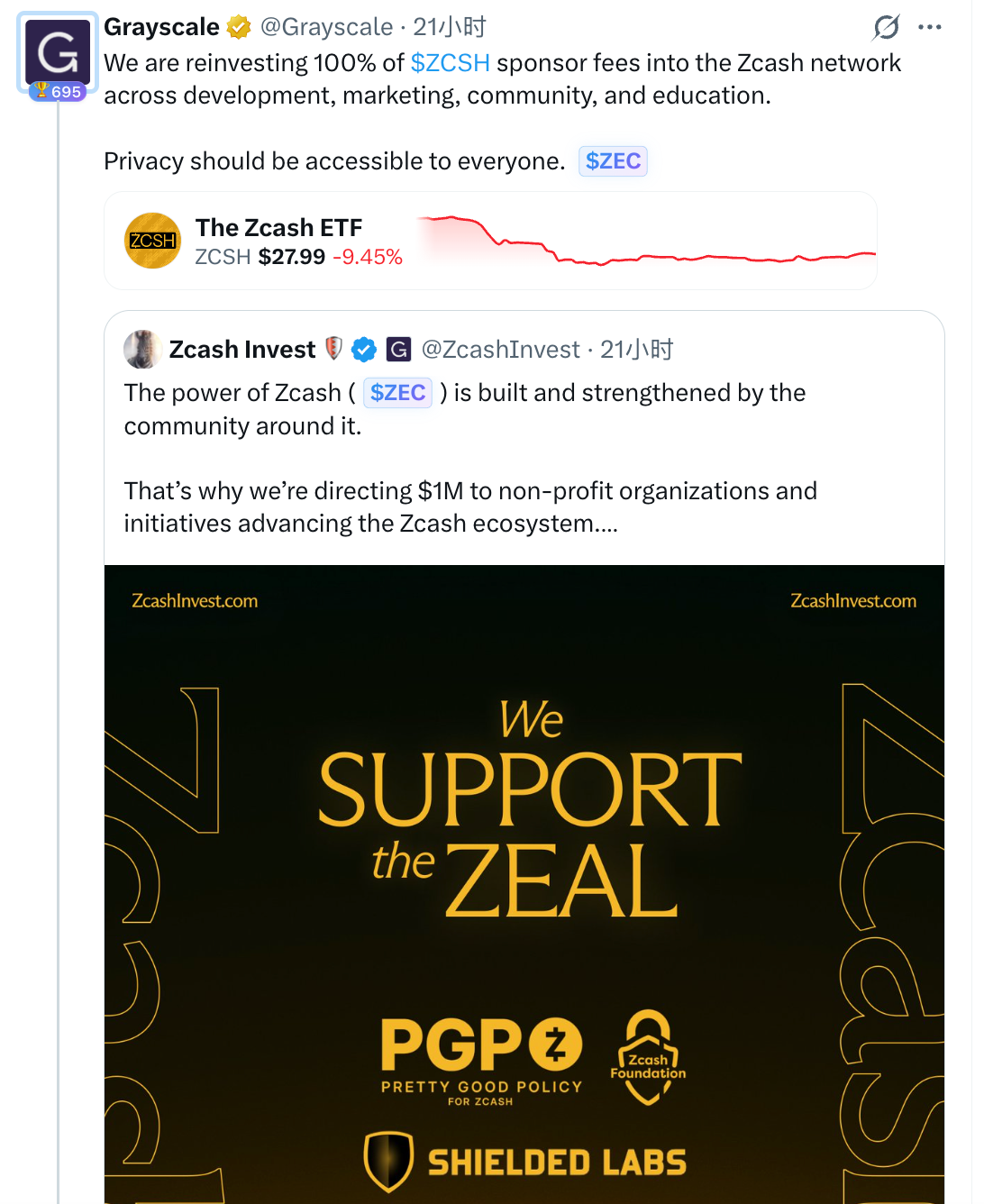
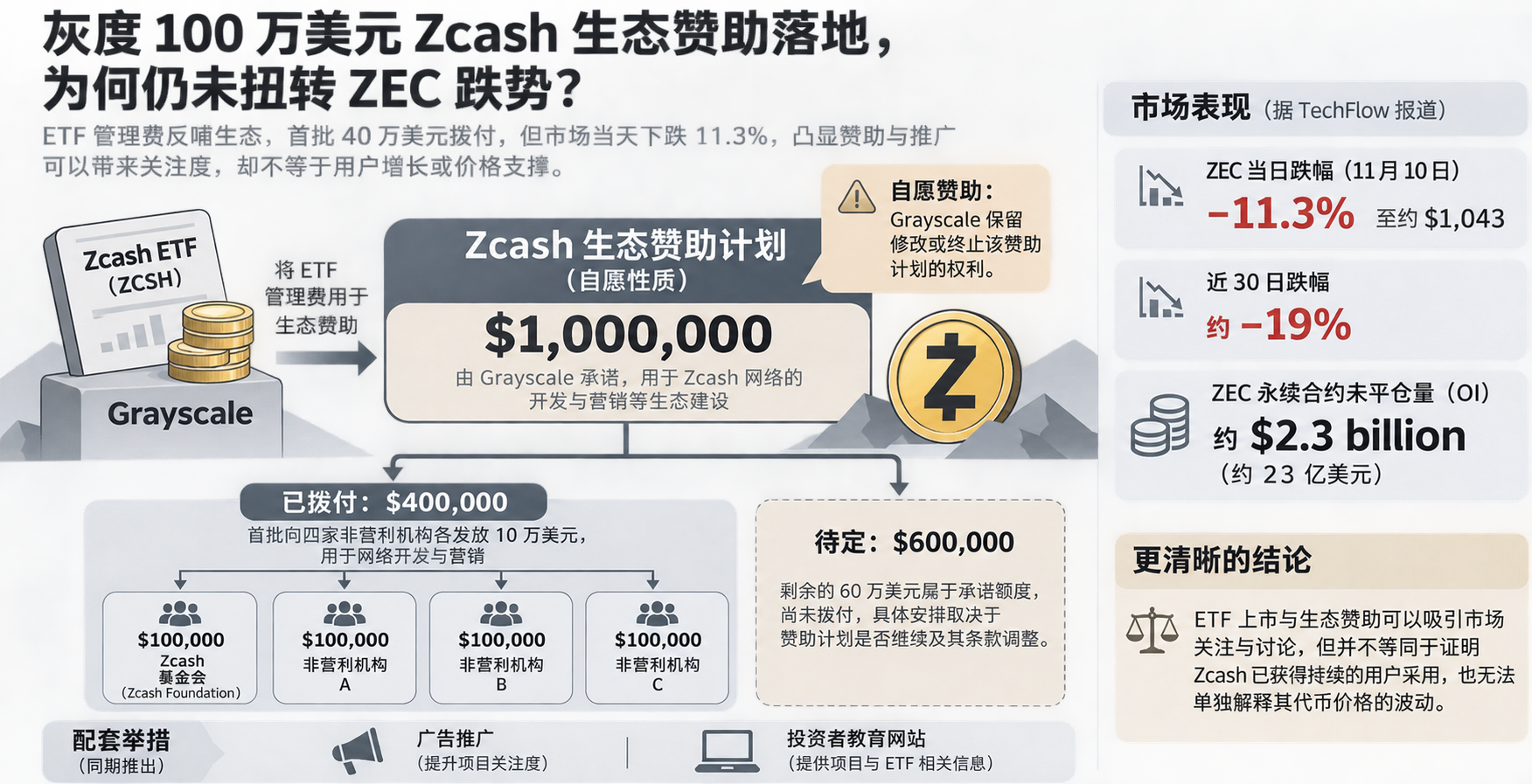
Grayscale’s support for Zcash was supposed to strengthen the case for the older privacy-focused network. According to TechFlow, Grayscale announced a voluntary $1 million ecosystem sponsorship plan on November 10, drawing on management fees from its Zcash ETF, ZCSH. The report says four nonprofits, including the Zcash Foundation, received an initial $100,000 each for network development and marketing. Grayscale also launched advertising and an investor-education website.
The reported market response went the other way. TechFlow says ZEC fell 11.3% on the announcement day to around $1,043 and was down roughly 19% over the preceding month. It also cites approximately $2.3 billion in open interest in ZEC perpetual futures. Those figures describe a sharp decline alongside substantial derivatives positioning; they do not, by themselves, establish who sold or why.
The limits of the funding matter to the narrative. TechFlow says Grayscale reserved the right to change or end the voluntary sponsorship. The reported $400,000 in initial grants is therefore distinct from the full $1 million pledge. Likewise, grants and advertising are evidence of support, not evidence that Zcash has gained lasting users or that investors are making sustained ETF allocations.
The article argues that leveraged speculation and promotion helped drive ZEC’s earlier enthusiasm. It also reports that a serious privacy-pool vulnerability was disclosed before the ETF’s August listing and repaired in July. Its claims about coordinated selling, weak user retention and the vulnerability’s effect on investor confidence are interpretations, not demonstrated conclusions in the supplied report. The clearer lesson from this episode is narrower: an ETF listing and an ecosystem pledge can attract attention without proving adoption or explaining a token’s price movement.
Source: techflowpost.com (originally published 2026-11-11 20:46 UTC+8)