Originally reported by imToken on November 12, 2026, at 09:19 (UTC+8). Original article
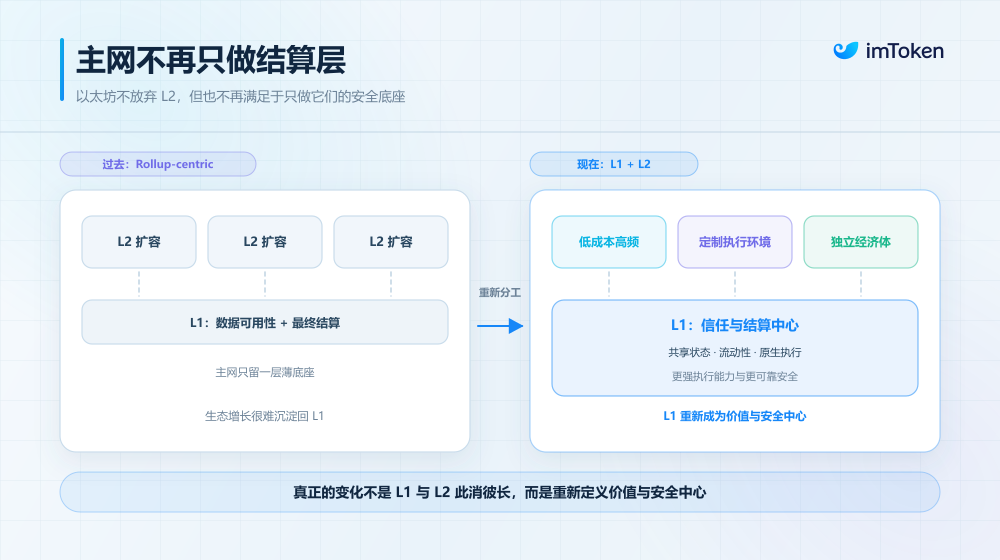
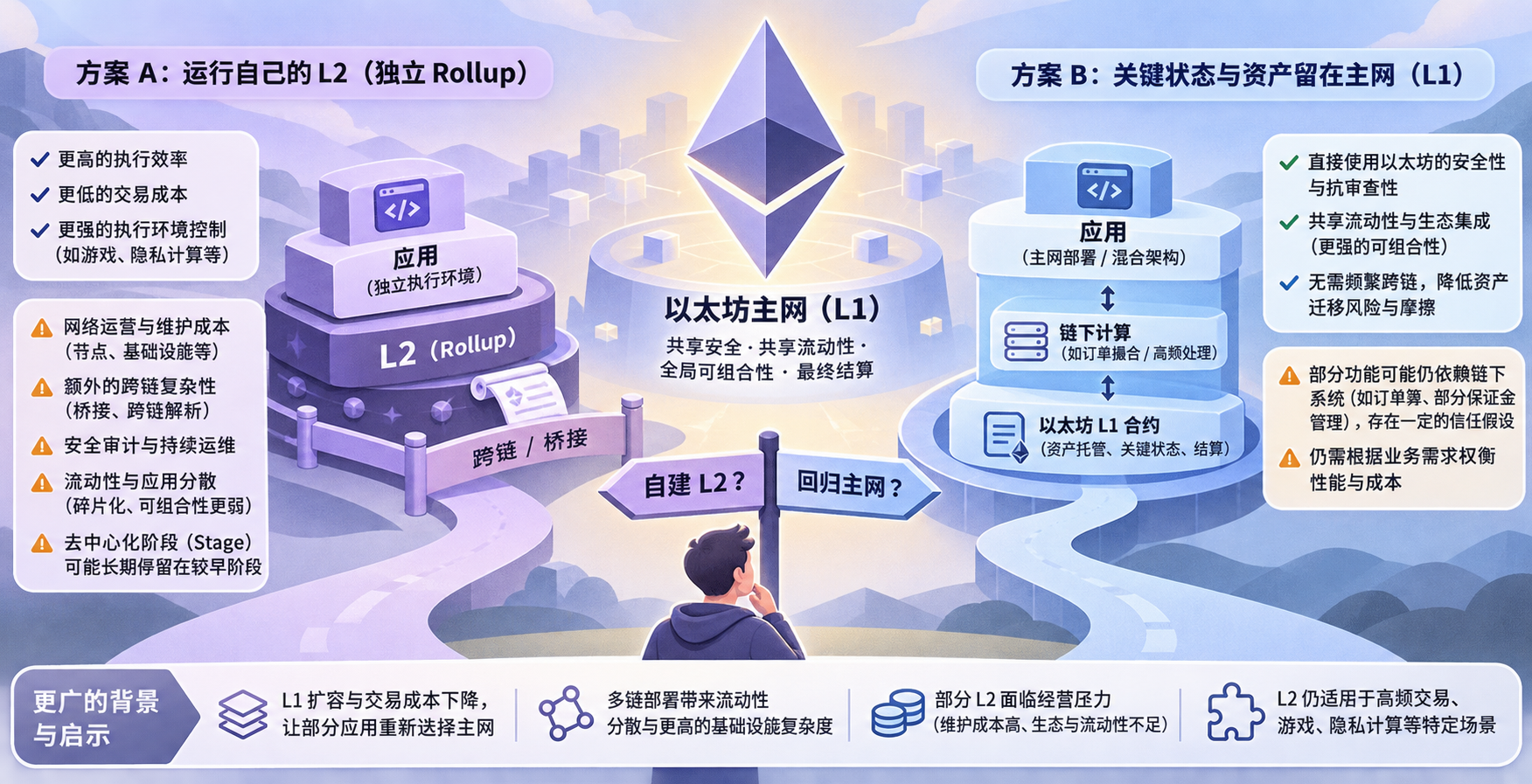
For years, high Ethereum mainnet fees made moving applications to layer-2 networks—or launching a dedicated rollup—an attractive proposition. The source describes a more selective calculation in 2026: some projects were deciding that the costs of operating across chains outweighed the savings on transactions. That is a change in how those projects choose infrastructure, not evidence that L2s as a category are disappearing.
The projects making a different choice
ENS Labs planned a dedicated ZK rollup, Namechain, for ENSv2 in 2024. In February 2026, ENS co-founder Nick Johnson said development would stop and ENSv2 would instead deploy on Ethereum mainnet. His stated reason was that L1 scaling had progressed much faster than expected. According to ENS Labs figures cited by the source, the average gas cost of an ENS name registration had fallen by about 99% over the preceding year, from nearly $5 to less than $0.05. A separate network would also have required cross-chain resolution, bridging, audits and ongoing operations.
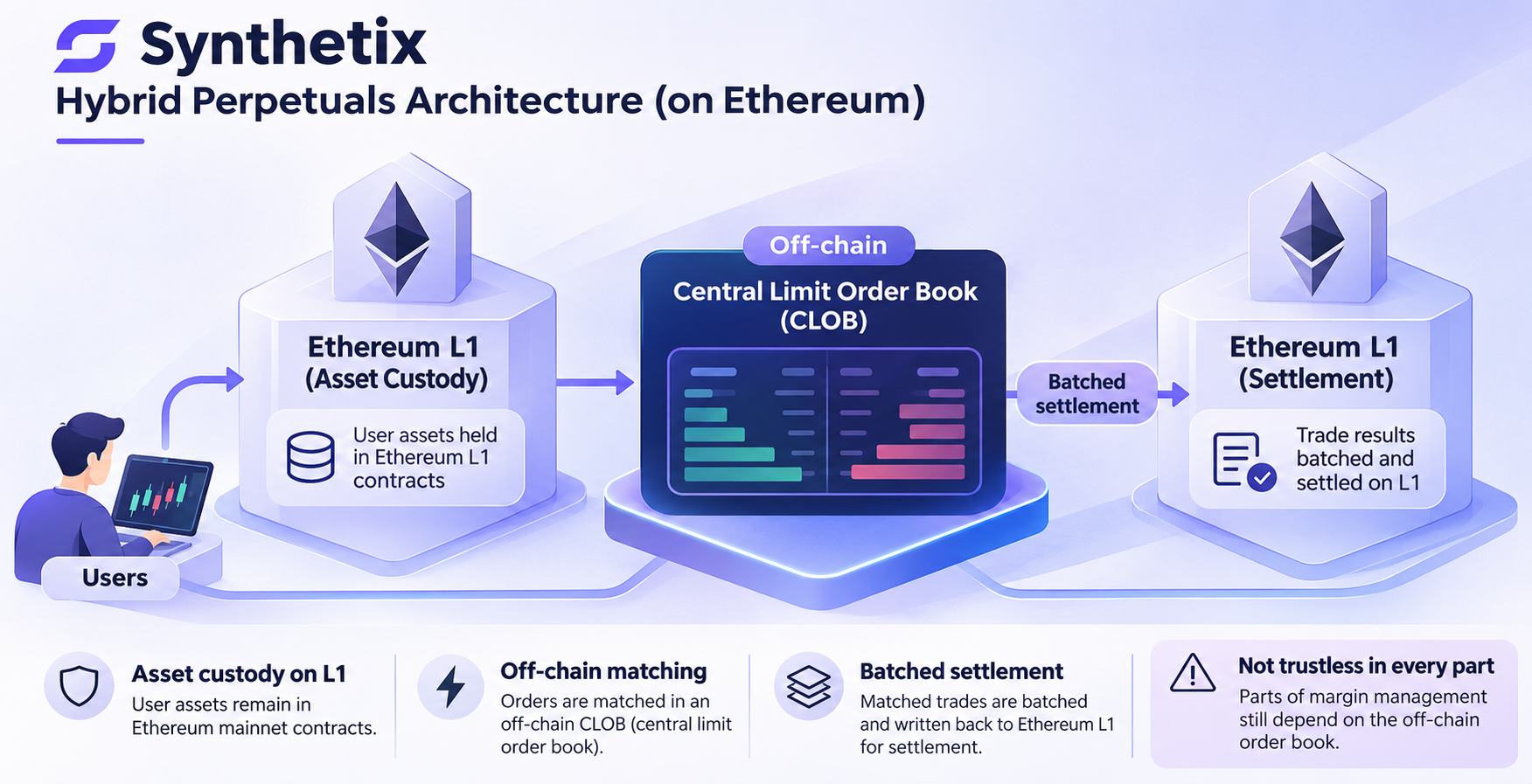
Synthetix made a related, but technically different, choice. After arguing in June 2025 that the L2 approach had created liquidity fragmentation and infrastructure problems for applications, it launched its next-generation perpetuals exchange on mainnet that December. Its hybrid design keeps user assets in Ethereum L1 contracts, handles order matching in an off-chain central limit order book and batches settlement back to L1. That reduces the need to bridge assets for trading, but it does not remove every trust question: the source notes that parts of margin management still depend on the off-chain order book.
The source also lists distinct moves by other teams in 2026. Trueo announced in September that it would move its primary deployment from Base to L1 for its prediction-market and outcome-oracle plans. ShapeShift moved its rFOX staking program from Arbitrum to mainnet on October 1, citing the fact that most FOX was already held there. Superseed stopped its L2 in August and planned to move core products to mainnet, while Nillion began moving node operations from its L2 to mainnet in October as it launched Blacklight L1. These are different product decisions, not a single coordinated migration.
Operating an independent chain presents a separate economic test. Blast announced on October 2 that it would wind down, saying network maintenance costs exceeded L2 revenue and that it saw no reliable route to sustainability. Abstract subsequently announced a planned network closure for December 15. The source says Abstract had integrated more than 144 applications and attracted over 400,000 users, but faced limited liquidity, a small DeFi ecosystem and insufficient institutional participation. Application and user counts alone did not establish a sustainable business model.
What remains for L2s?
The source points to fragmentation as a constraint: assets and applications spread across networks cannot automatically use the same shared liquidity and composability available on one chain. It also cites ETHBEAT data as of November 2026 indicating that only a single-digit number of tracked L2s had reached Stage 2, while Base, Arbitrum One and OP Mainnet remained at Stage 1. Those classifications matter when assessing claims that an L2 offers the same decentralization properties as Ethereum mainnet.
None of this rules out L2s for high-frequency trading, games, privacy computation or applications that need control over their execution environment. Native Rollup research and Ethereum Economic Zone proposals aim to improve connections between execution environments, but the source describes them as work at differing stages of research and validation—not deployed solutions to fragmentation.
A different question about ETH’s value
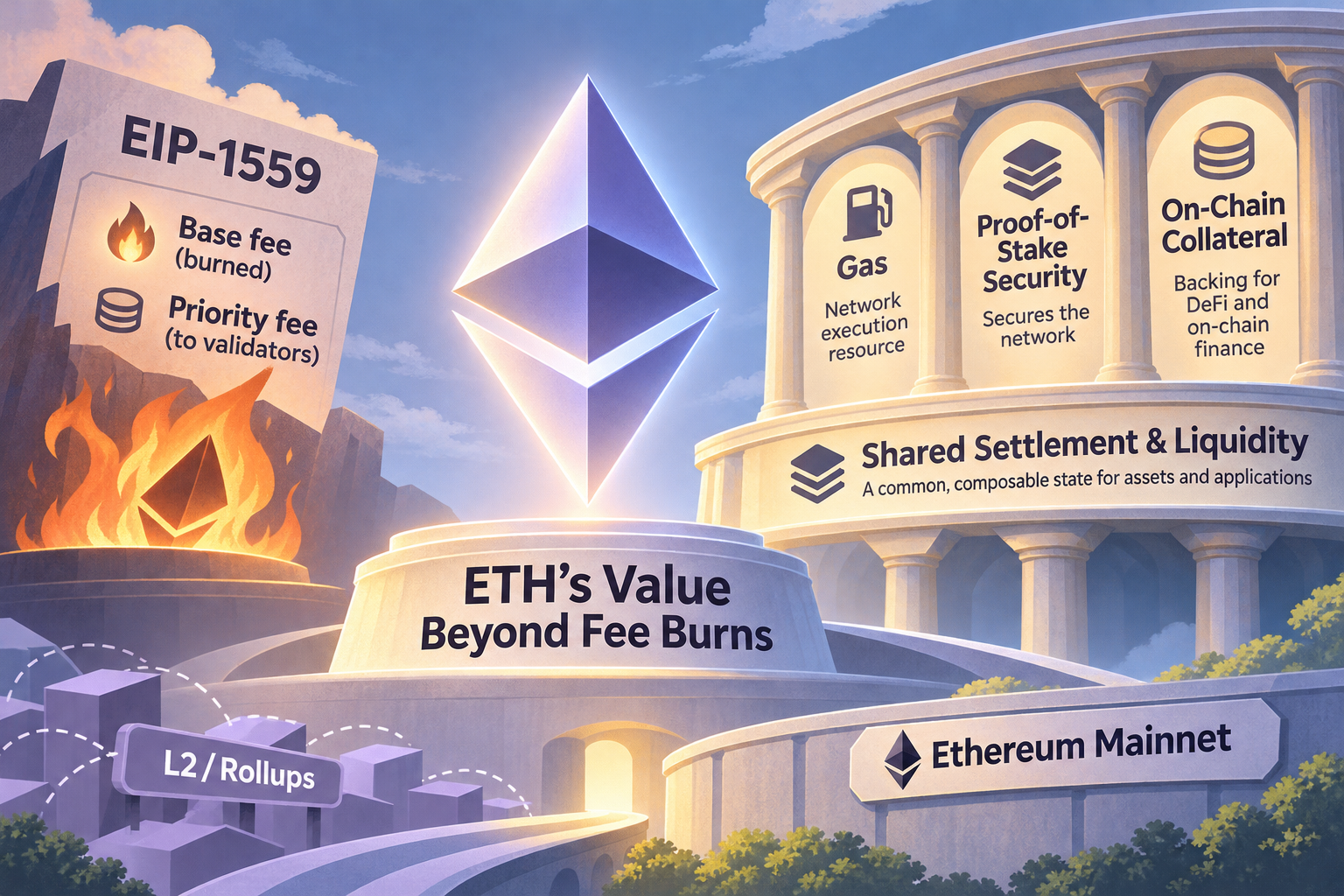
The infrastructure shift also complicates a familiar ETH narrative. Under EIP-1559, base fees are burned and priority fees go to validators. Cheaper transactions can benefit users without producing a proportionate increase in ETH burned, even if activity grows. The source cites the 2022 Otherdeed NFT mint—which it says generated about $180 million in fee burns in one day—as an example of why a burst of speculative demand is a weak foundation for long-term valuation.
Vitalik Buterin’s view, as presented in the article, is not that fee burning should end. Rather, he argues that ETH’s role as a store of value deserves greater attention even if burning offsets less than 10% of break-even issuance. He emphasizes Ethereum’s resistance to censorship and capture, open-source character, privacy and security. The article’s broader case is that shared settlement, liquidity and ETH’s roles in gas, proof-of-stake security and on-chain collateral may matter more than maximizing fees per transaction.
The evidence supports a narrower conclusion than “L1 has won”: several projects found reasons to return critical activity to mainnet, while others may still need specialized execution. The question for each is which functions require Ethereum’s shared state and security—and whether running another network earns its operational cost.
Source: techflowpost.com (originally published 2026-11-12 09:19 UTC+8)