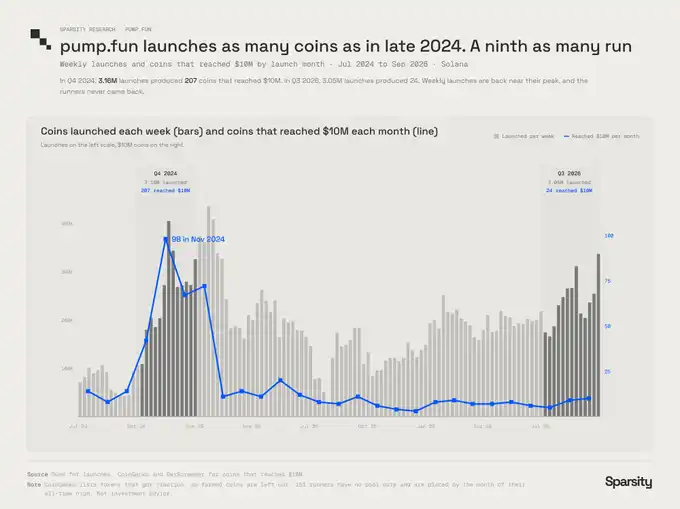
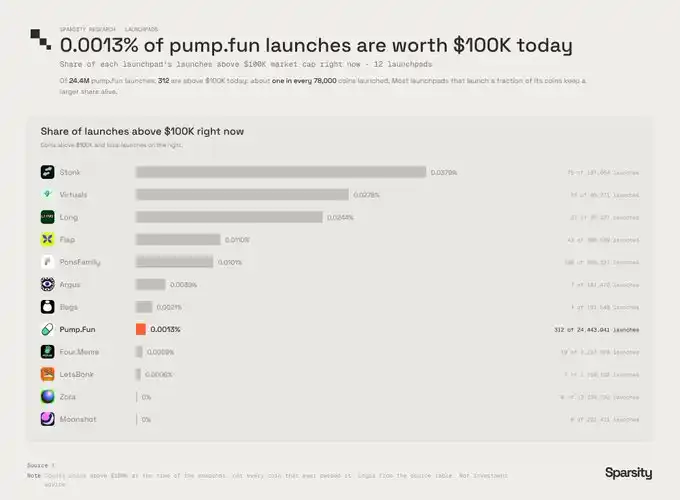
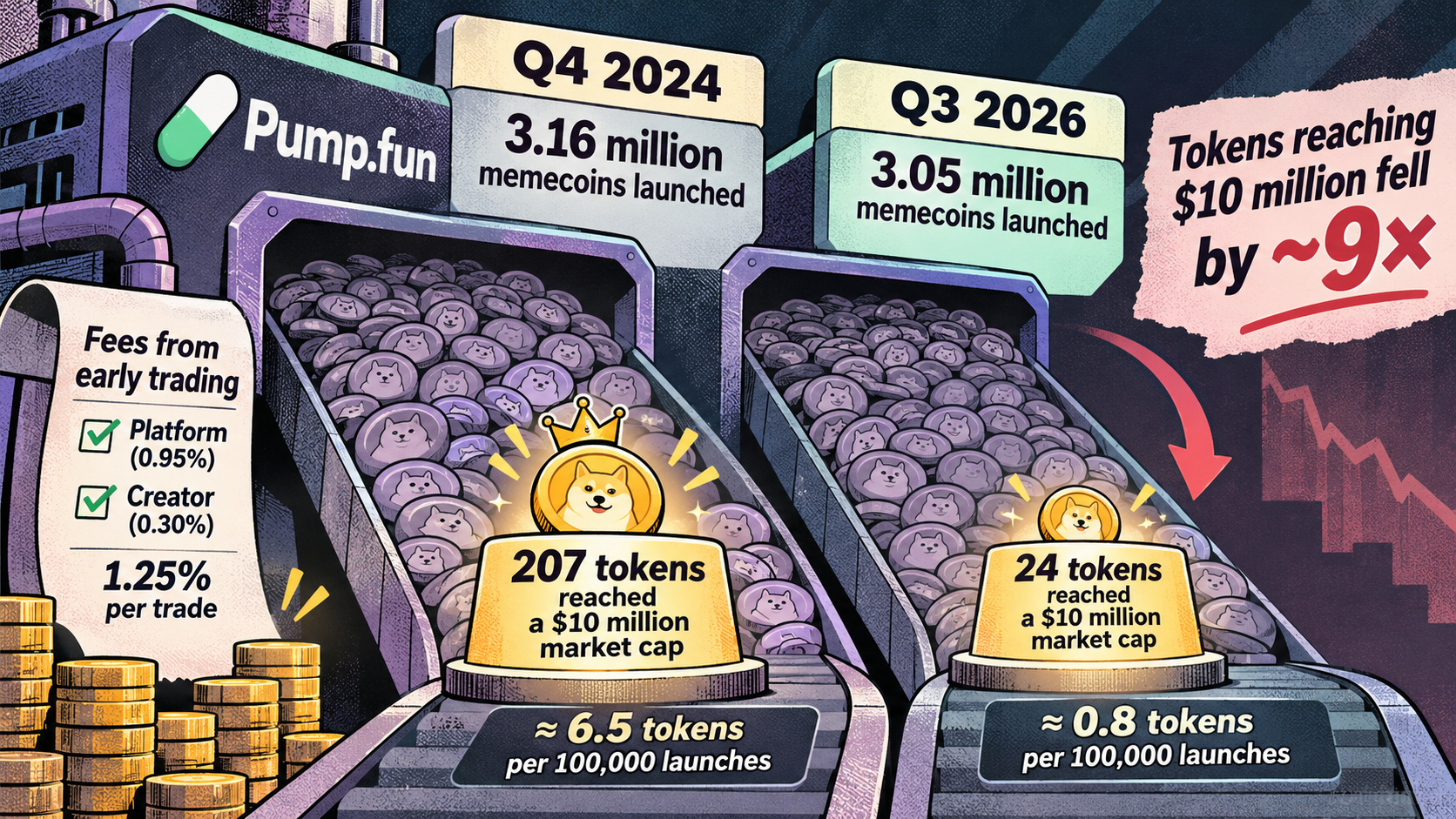
Pump.fun launched nearly as many memecoins in the third quarter of 2026 as it did in the fourth quarter of 2024, but far fewer reached a $10 million market capitalization. According to on-chain research team Sparsity, 24 of 3.05 million tokens launched in Q3 2026 reached that threshold, compared with 207 of 3.16 million in Q4 2024. That is roughly 0.8 versus 6.5 tokens per 100,000 launches.
Sparsity’s argument is not simply that too many tokens are being created. It is that the platform can earn fees from early trading even when a token fails to attract lasting demand.
Where the fees come from
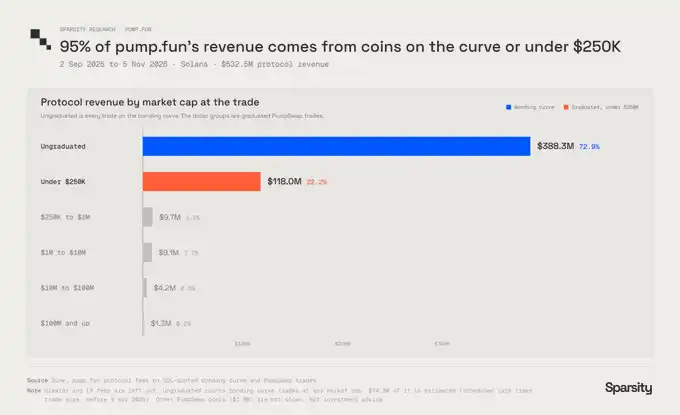
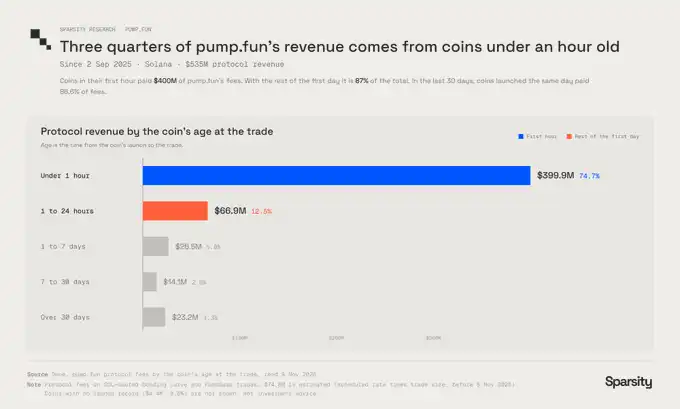
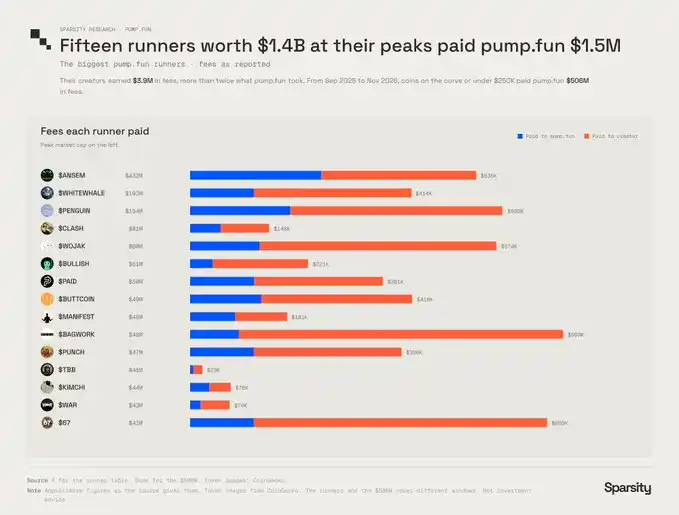
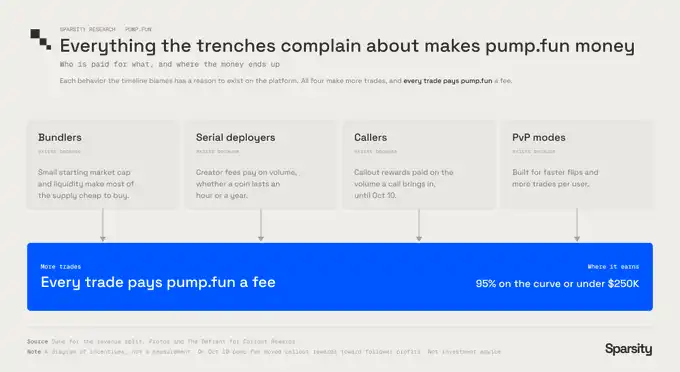
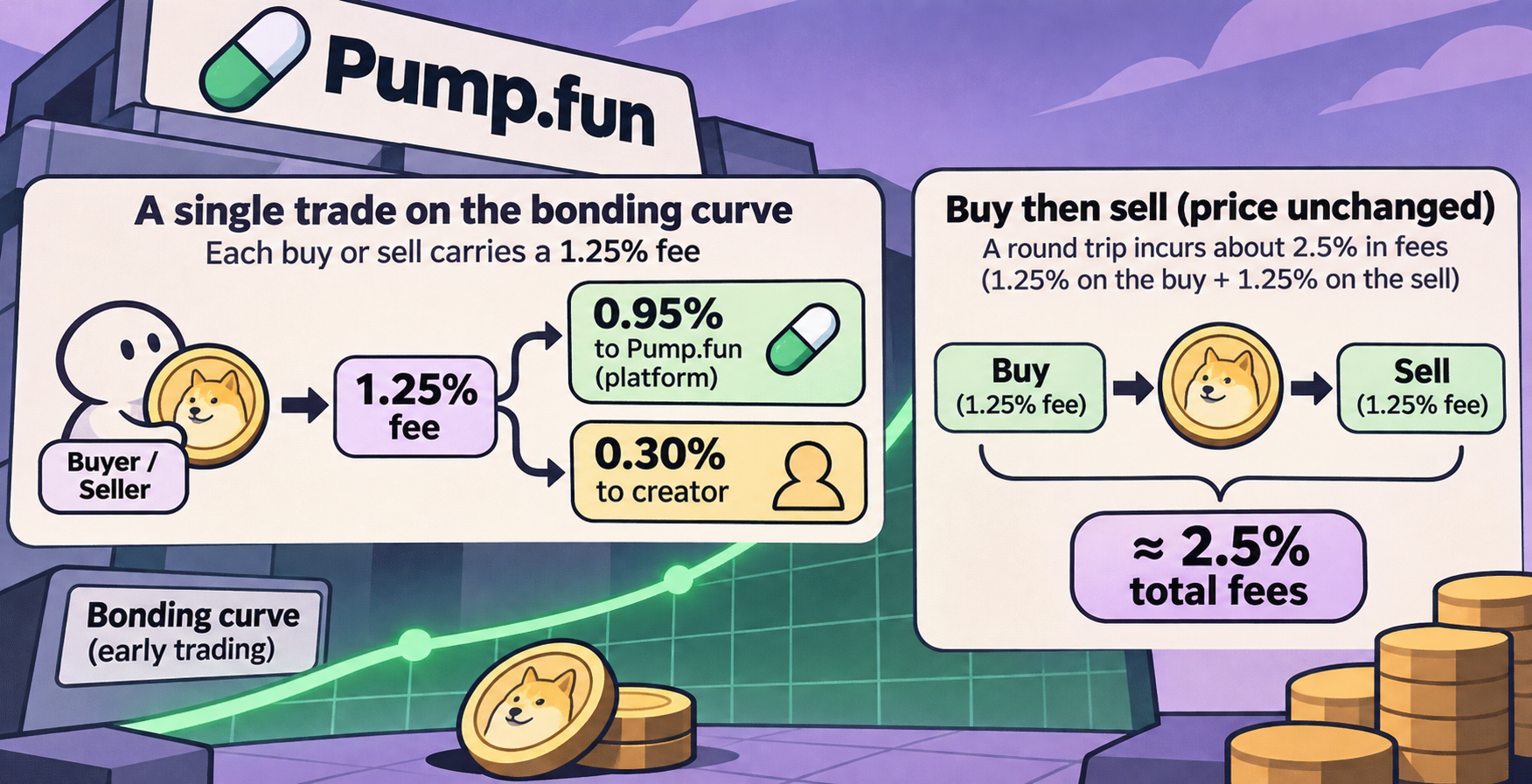
Sparsity estimates that about 95% of Pump.fun’s protocol revenue came from tokens still on the bonding curve or valued below $250,000. On the bonding curve, each buy or sell carried a 1.25% fee: 0.95% for Pump.fun and 0.30% for the creator. A buy followed by a sell therefore incurred about 2.5% in fees even if the price did not move. By token age, roughly three-quarters of the revenue examined came from tokens less than an hour old, Sparsity reported.
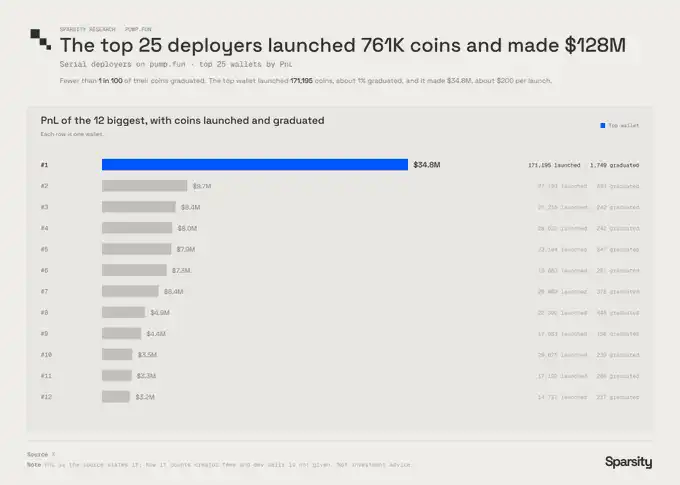
That structure pays the platform and creator when early trading occurs. A buyer, by contrast, needs someone willing to buy later at a higher price. Sparsity found that the 25 highest-volume token-issuing wallets had launched 761,000 tokens and earned a combined $128 million, although fewer than 1% of those tokens graduated from the bonding curve. These figures describe the wallets Sparsity studied, not every creator on the platform.
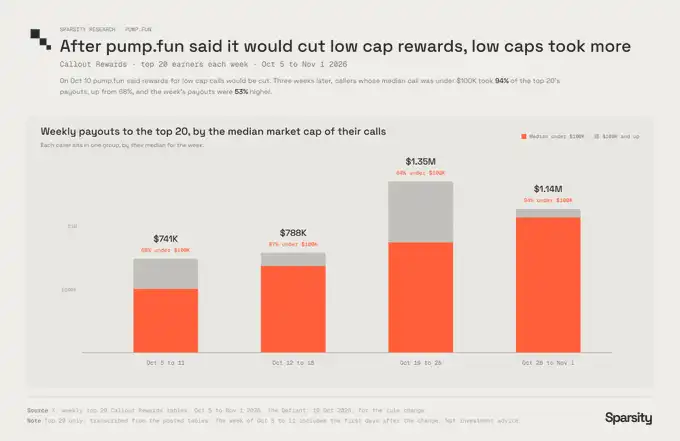
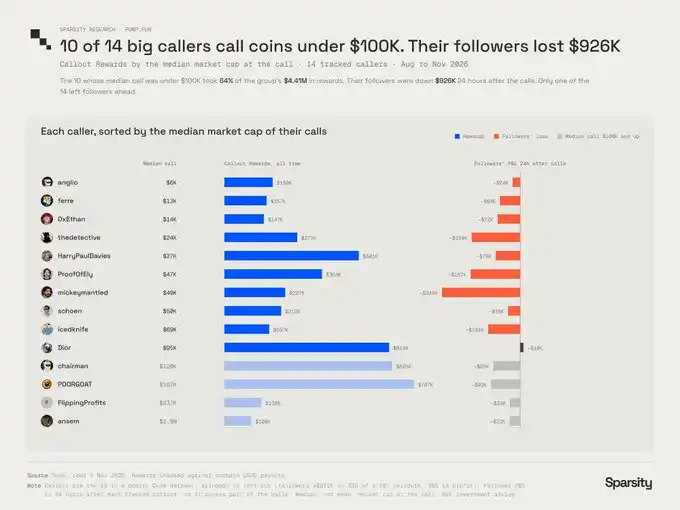
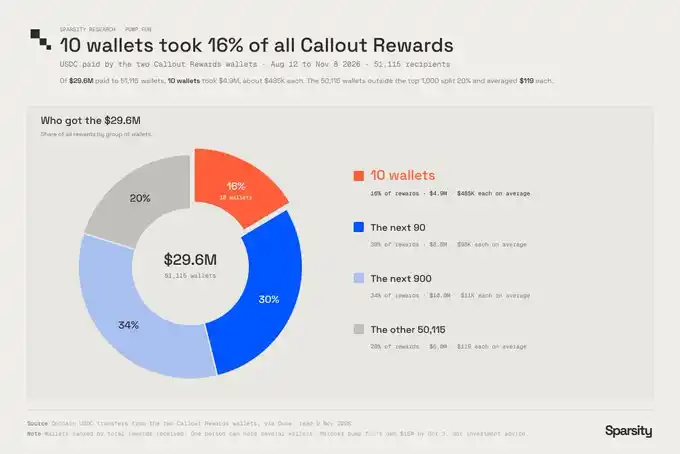
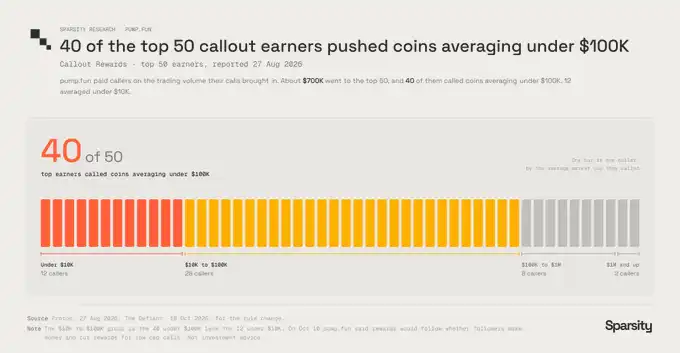
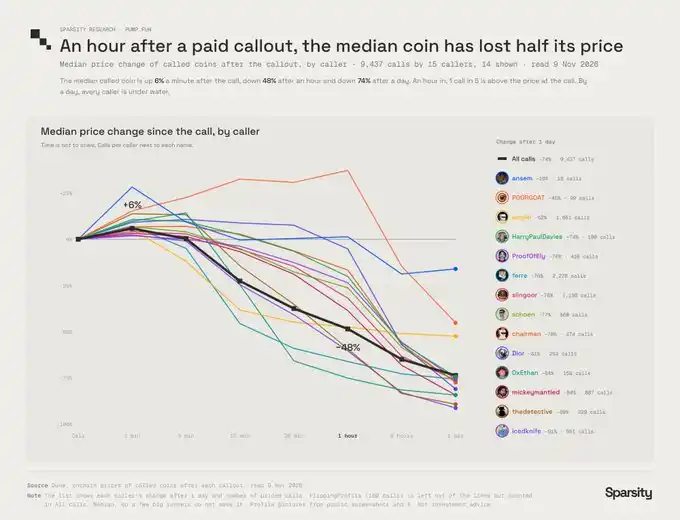
Promotion rewards present another test of the incentive system. Pump.fun said on October 10 that it would account for whether followers made money and reduce rewards for promoting low-cap tokens. Yet over the following three weeks, Sparsity found that promoters of tokens with a median market cap below $100,000 received 94% of rewards paid to the top 20 promoters, up from 68%. In a separate sample of 14 promoters, the median price change for promoted tokens was up 6% after one minute, down 48% after an hour and down 74% after a day. Those observations do not establish that every promotion had the same result.
A proposed change to the launch model
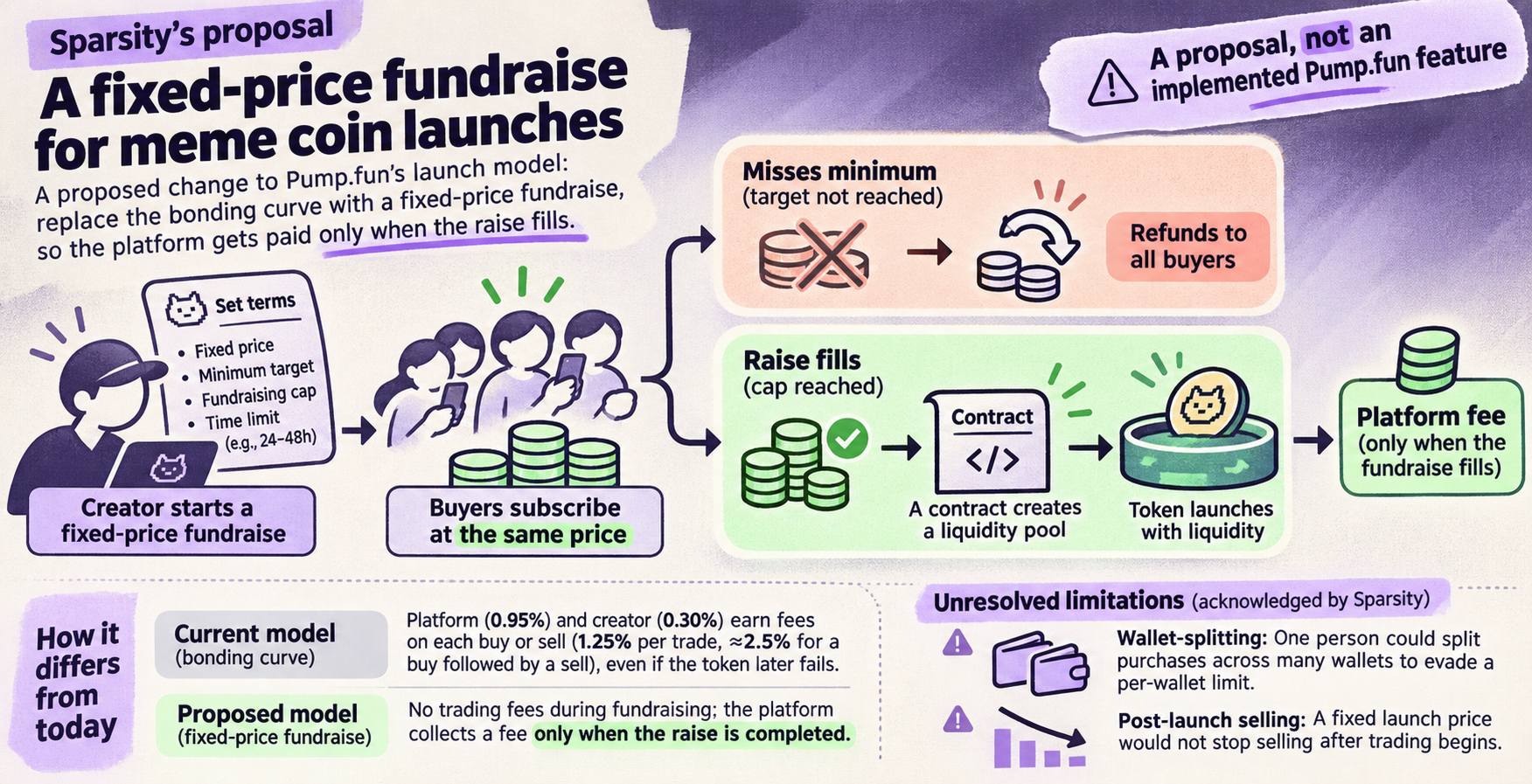
Sparsity proposes replacing the bonding-curve launch with a fixed-price fundraise. Buyers would subscribe at the same price; a sale that missed its minimum target within a set period would refund them. If the fundraising cap were reached, a contract would create a liquidity pool, and the platform would collect a fee only when the fundraise filled. The proposed shift is in when the platform gets paid: for a completed raise rather than for each early trade.
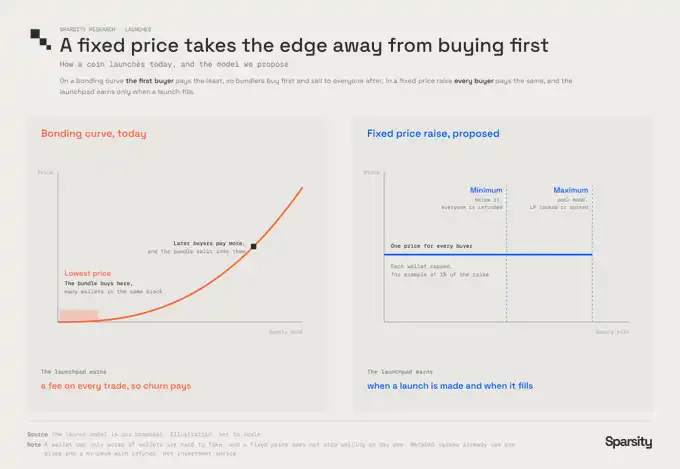
This is a proposal, not an implemented safeguard. Sparsity acknowledges that one person could split purchases across many wallets to evade a per-wallet limit, and a fixed launch price would not stop selling after trading begins. The reported launch figures show a sharp decline in tokens reaching the specified market-cap threshold; whether a different fee model would reverse that decline remains untested.
Source: theblockbeats.info (originally published 2026-11-12 15:00 UTC+8)