Originally published by ChainCatcher on November 11, 2026, at 13:59 (UTC+8). The four-layer credit desk described here is a proposal, not a service reported to be operating.
A payment fintech may be able to borrow $30 million in USDC through Aave or Morpho in a transaction. That does not give it a bank-style commitment to make the same amount available tomorrow—and throughout the following year—at a known price. In an article translated by ChainCatcher, DeFi writer nikos argues that this distinction limits the usefulness of onchain lending for working capital.
Four gaps beneath the proposal
The author identifies four problems above the lending-market layer. A borrowing limit does not guarantee that funds will be available when drawn. Existing forms of market isolation do not necessarily put a first-loss investor between a borrower and senior capital. Holders of tokenized working-capital credit may finance their positions with floating-rate USDC debt, making that funding vulnerable to rate spikes. And receivables, with reported valuations and redemption queues measured in days, cannot necessarily be sold through a rapid onchain liquidation.

The article estimates that roughly $600 million of tokenized working-capital credit is held by investors using that floating-rate financing. It presents this as part of the case for a borrowing-rate cap, while saying that a liquid, standardized cap on Aave or Morpho borrowing indexes does not yet exist.
What the proposed credit desk would do
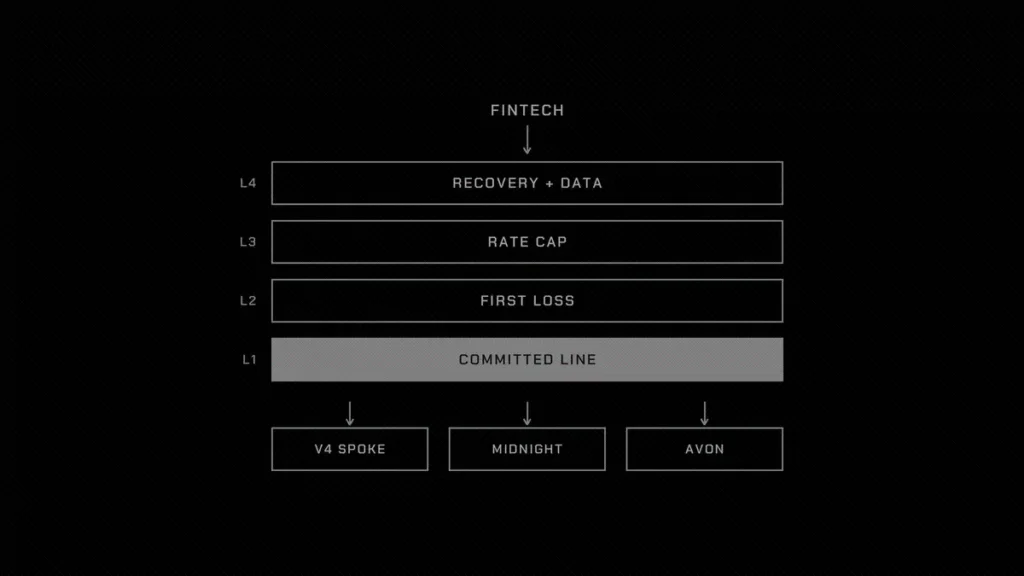
Nikos proposes an intermediary between fintech borrowers and lending markets, built in four layers:
- A committed facility. A funded vault would promise a borrower up to an agreed amount for 6–12 months, with draws and repayments through an API. The borrower would pay a spread on drawn funds and a commitment fee on unused capacity. Routing a draw to a lending venue would not remove the vault’s obligation to have funds available under stress.
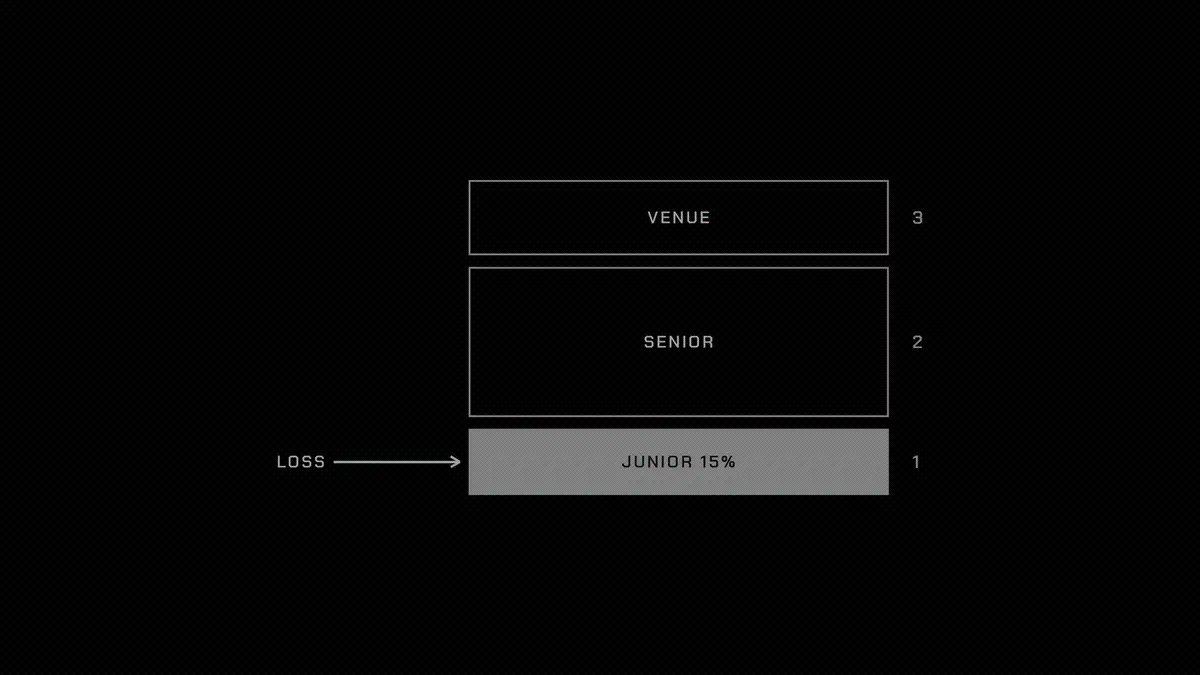
- Facility-specific first-loss capital. A junior tranche, funded by an originator, specialist credit fund or both, would absorb losses before senior depositors and the underlying market. In the author’s example, a junior tranche equal to 15% of an $18 million drawn balance would be $2.7 million; a 5% loss on that balance would consume $900,000 of it.
- A borrowing-rate cap. This would pay when a specified borrowing index exceeded a strike rate. The article’s illustration—a 9% average rate for 30 days against a 7% strike on $100 million of notional—produces a payment of about $164,000. The illustration is not evidence that such a product is available or liquid.
- Receivables recovery and data. Proposed measures include precommitted buyers for troubled collateral, valuations adjusted for expected losses and the age of reports, and verified operational data that could reduce borrowing limits when a receivables pool deteriorates.
The author points to Wildcat and 3Jane as examples of existing components, not complete versions of this desk. According to the article, lenders in Wildcat’s Kinto default expected to recover 76% of principal; 3Jane divides lenders into 85% senior and 15% junior positions. Neither example establishes that a committed, receivables-backed fintech facility has been built.
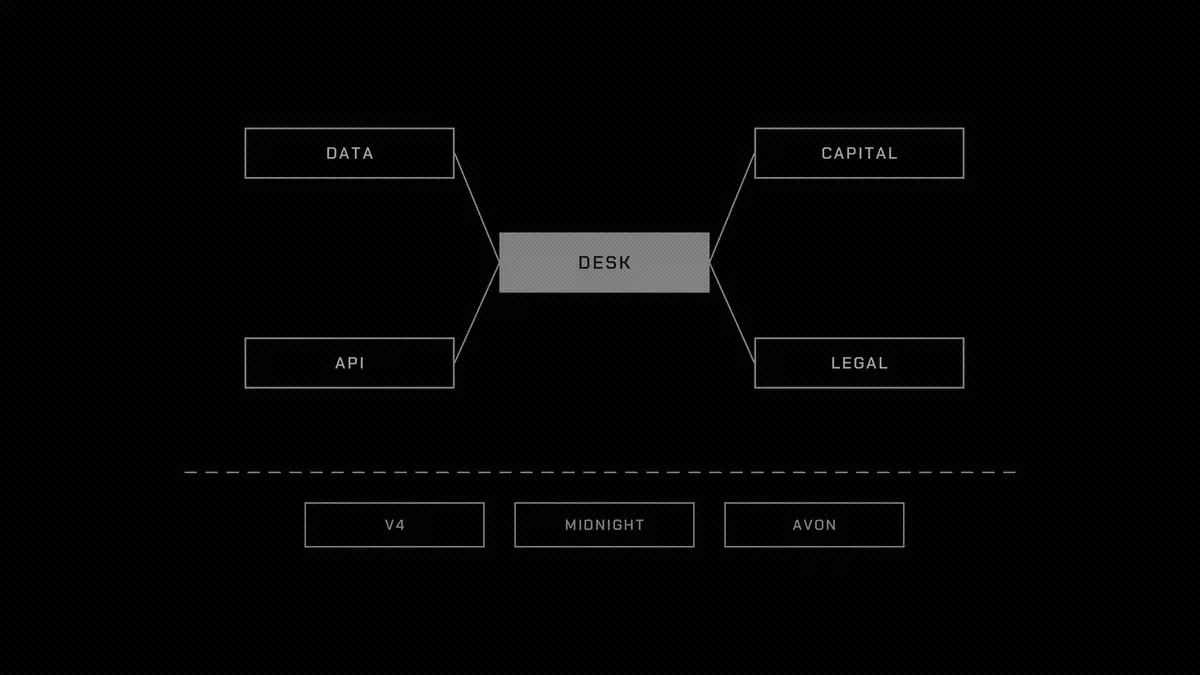
For the proposed desk, the harder-to-copy assets would be underwriting history, relationships with senior and junior capital and standby buyers, borrower integrations, and workable legal arrangements—not merely its contracts. Those advantages would have to be earned. The central risk remains the commitment itself: borrowers may draw most heavily just as liquidity becomes hardest to secure, while receivables recovery can be slow and dependent on legal processes.
Source: chaincatcher.com (originally published 2026-11-11 13:59 UTC+8)