On November 14, 2026, automated trading service HyprEarn said a small number of Hyperliquid users who had authorized its Agent Wallet experienced unauthorized trades. HyprEarn asked users to revoke the old agent’s authorization and reconnect. The wallet could neither withdraw funds nor transfer them to an external address, but it could place trades on a user’s behalf.
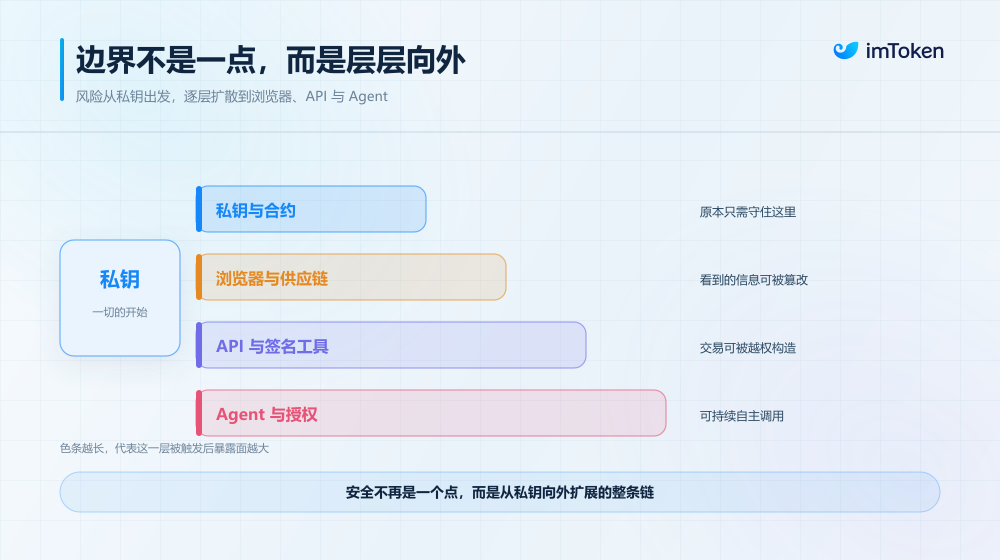
That distinction is central to imToken’s November 26 analysis of AI agents in crypto. Keeping a private key safe does not settle who controls an account’s trading decisions. A signature might approve one transaction; an agent authorization can let software act for hours or days, adjusting positions as market conditions change. The security question is what the agent can do during that time, and whether the user can stop it.
Risks beyond the wallet
Two other incidents illustrate why imToken looks beyond the wallet itself. In the Optimizely incident, imToken reported that attackers used the third-party service’s content delivery network to distribute malicious browser scripts to more than 100 corporate websites worldwide. The scripts could alter a copied crypto address before a user sent a payment and collect payment card details and cookies. The user’s wallet did not have to be compromised for the destination address to change.
At Lighter on November 16, the weakness was in a custom signing program used by affected trading accounts. According to the subsequent disclosure cited by imToken, the program reused a value that should have been unique to each signature, exposing API signing keys. Attackers used the accounts’ existing public-pool permissions to move funds. About 10.39 million USDC was observed flowing out onchain. Lighter then suspended withdrawals and the creation of new pools; its Security Council helped recover about 5 million USDC. The observed outflow was not a final loss figure.
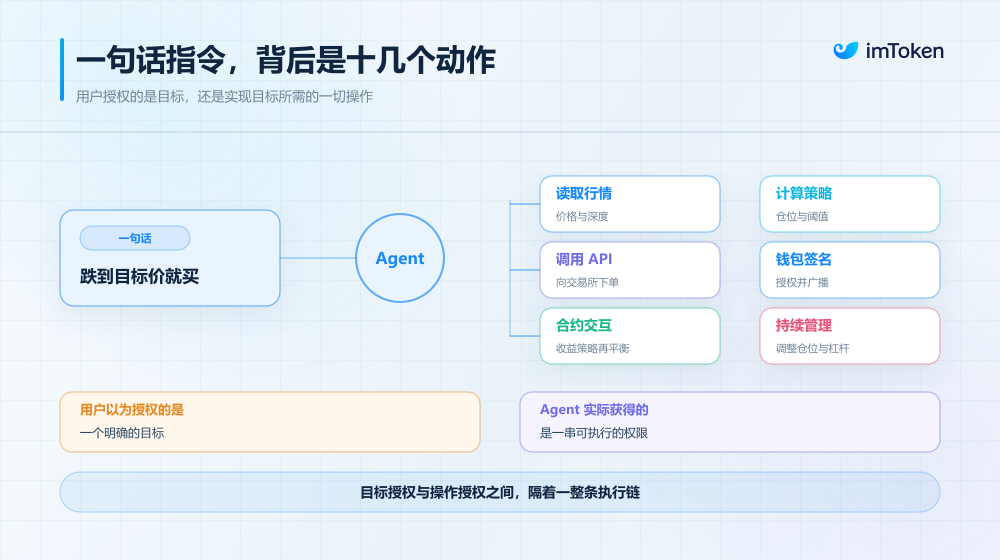
Neither case requires an AI explanation. Their relevance, imToken argues, is that an agent can connect several such dependencies in one task. A request to buy ETH on Uniswap at a target price and put the remaining funds into an Aave strategy entails reading prices, calling tools, preparing transactions and obtaining signatures. A compromised input or tool can change what reaches the wallet even if the user’s instruction never changes.
What a limited authorization would look like
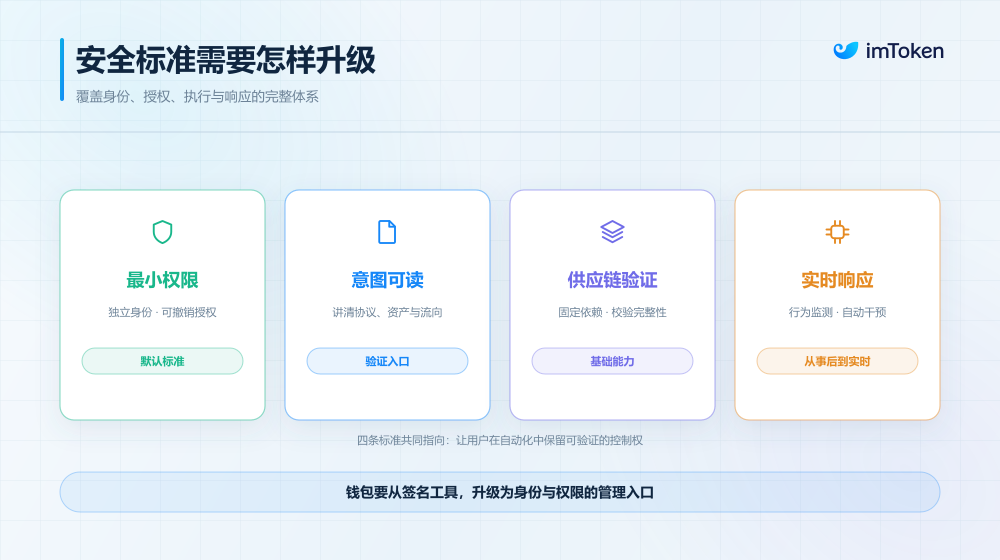
imToken proposes four safeguards for wallets, exchanges and agent services. These are recommendations, not rules already in force.
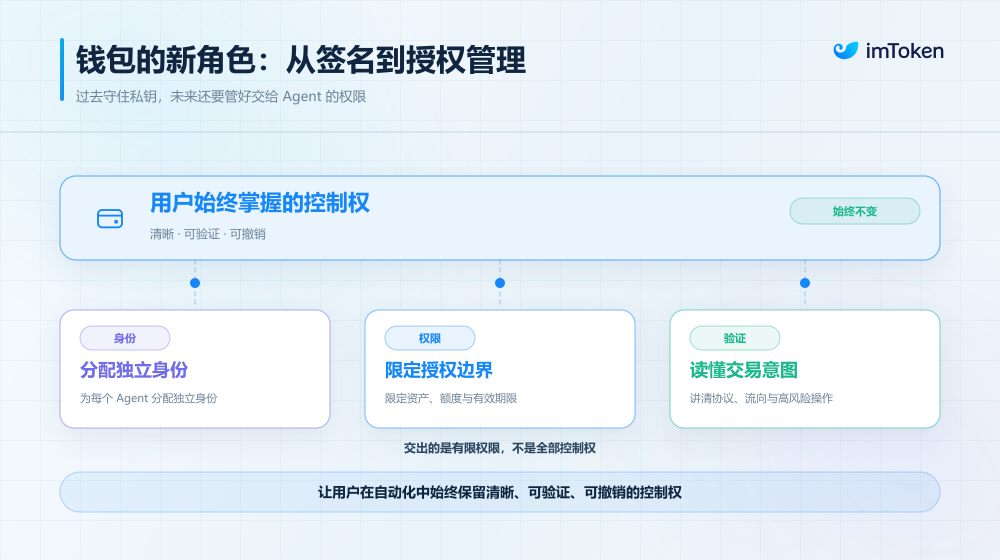
- Give the agent its own permissions. An agent tasked with recurring ETH purchases need not be able to change leverage. Its authorization should specify permitted actions and tokens, per-transaction and cumulative limits, maximum exposure and an expiry. Any tool or sub-agent it calls should receive no broader authority. The user should be able to revoke access immediately without waiting for a service provider.
- Verify the transaction, not the model’s description. Before signing, the wallet should independently decode the actual transaction parameters locally and show the protocol, contract, assets, amounts and recipient. It should flag unlimited approvals and permission changes, explain effects on collateral or leverage, and use simulation where useful to show expected balance changes. Large, irreversible or authority-expanding actions should still require explicit human confirmation.
- Check the tools that can influence execution. Verification should cover plugins, software packages, third-party APIs, data sources and agent tools, including MCP servers. imToken recommends checking provenance and package integrity, pinning dependency versions and isolating tools so that a signing task does not also grant access to unrelated files, credentials or network resources.
- Intervene before an anomalous trade executes. A low-frequency spot agent that starts opening leveraged positions or calling unfamiliar contracts may have departed from its mandate. Platforms could set thresholds for trading frequency, amounts, positions and leverage, then pause a task or restrict its permissions when a limit is crossed. A record of the instruction, authorization, tool calls, parameters and outcome would let the user trace what happened.
The common principle is that the model choosing an action should not also decide whether that action is permitted. A wallet can delegate execution while leaving the user in control, but only if the limits are independently enforced, visible to the user and revocable.