Originally reported by PANews on November 11, 2026, at 16:40 UTC+8.
The familiar Bitcoin principle “not your keys, not your coins” puts control of private keys at the center of ownership. But PANews reported that some large holders were exchanging directly held bitcoin for shares of BlackRock’s IBIT fund. Their stated concern was security—not a change in Bitcoin’s underlying network.
The security argument
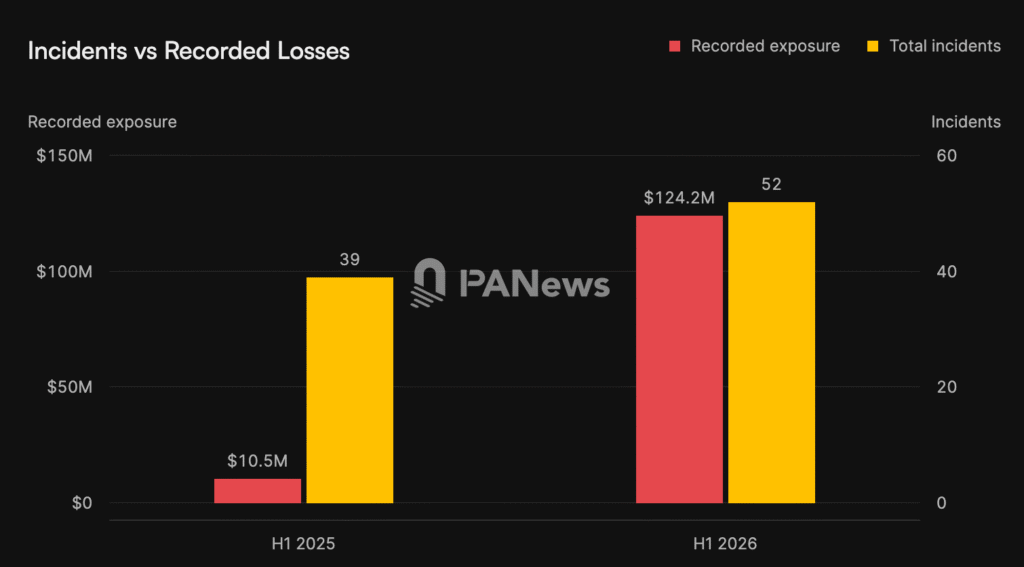
PANews cited a CertiK report recording 52 violent attacks against crypto holders worldwide in the first half of 2026, up 33.3% year over year. The report put recorded funds exposed in those incidents at about $124.1 million, versus $10.5 million a year earlier. France accounted for 33 of the reported attacks. Physical coercion is a risk that keeping a private key offline cannot, by itself, eliminate.
PANews also described reported hardware-wallet and exchange security incidents. It said an earlier key-generation vulnerability in Coldcard was linked to a theft of more than $100 million in August 2026. It reported that devices sold through Ledger distributor CryptoBilis were found with unauthorized hardware in October, with estimated losses of up to about $93 million; Trezor subsequently confirmed suspected similar tampering in devices sold through that channel. The article also described major security incidents involving Bitget and Binance in recent months. These accounts concern different types of risk and do not establish that every self-custody setup—or every exchange—has the same exposure.
In an interview cited by PANews, BlackRock digital-assets head Robbie Mitchnick said demand to convert directly held bitcoin into ETF shares had been growing, with security and peace of mind the leading reasons customers gave. He said BlackRock had recorded roughly $3.6 billion in in-kind conversions into IBIT since regulators approved such conversions in 2025. Because BlackRock does not handle every transaction or necessarily see every conversion, he said the total could be higher. According to Mitchnick, IBIT’s minimum in-kind conversion size had fallen from about $30 million to roughly $1 million–$2 million, though costs remained an obstacle to lowering it to a single share.
Analyst PlanB said in October 2026 that he had moved his bitcoin holdings into an ETF in 2025. He cited relief from managing hardware wallets and private keys, and said subsequent wallet-security controversies had not made him regret the decision. ABCDE Capital partner Du Jun likewise said some family offices he had previously introduced to BTC and ETH had exchanged BTC for IBIT after exchange thefts and cold-wallet supply-chain incidents; others had sold crypto for physical gold.
A different custody model, not the absence of risk
Bitwise chief investment officer Matt Hougan argued that an attack on an exchange hot wallet does not imply a flaw in Bitcoin itself. He described professional custody, personal cold wallets and ETFs as distinct options. Using Bitwise as an example, he said ETF assets are kept in offline cold storage, transfers require multiple authorizations, and withdrawals are restricted to a small set of preapproved addresses. He also noted a constraint: although ETF shares can be traded during the trading day, holders cannot immediately withdraw or transfer the corresponding bitcoin.
Self-custody advocates object that ETF ownership gives up direct control and can reintroduce institutional risks, including potential asset restrictions or freezes. Concentration is another concern: PANews cited Coinbase disclosures putting its share of Bitcoin ETF custody at about 90%. OneKey founder Yishi warned about that concentration and raised a suspected potential threat to IBIT from North Korean attackers—not a confirmed attack plan. Coinbase, for its part, says its custody assets are held in segregated cold storage, with controls including split keys, transfer limits and activity monitoring, and that customer assets are held 1:1 and are not lent without instruction.
The reported conversions show demand for a way to hold Bitcoin without personally safeguarding its keys. They do not settle the broader custody debate: physical safety, direct control, operational safeguards, access to bitcoin and concentration of custodians remain different trade-offs.
Source: panewslab.com (originally published 2026-11-11 16:40 UTC+8)