Historical report: originally published November 11, 2026, at 09:55 UTC+8.
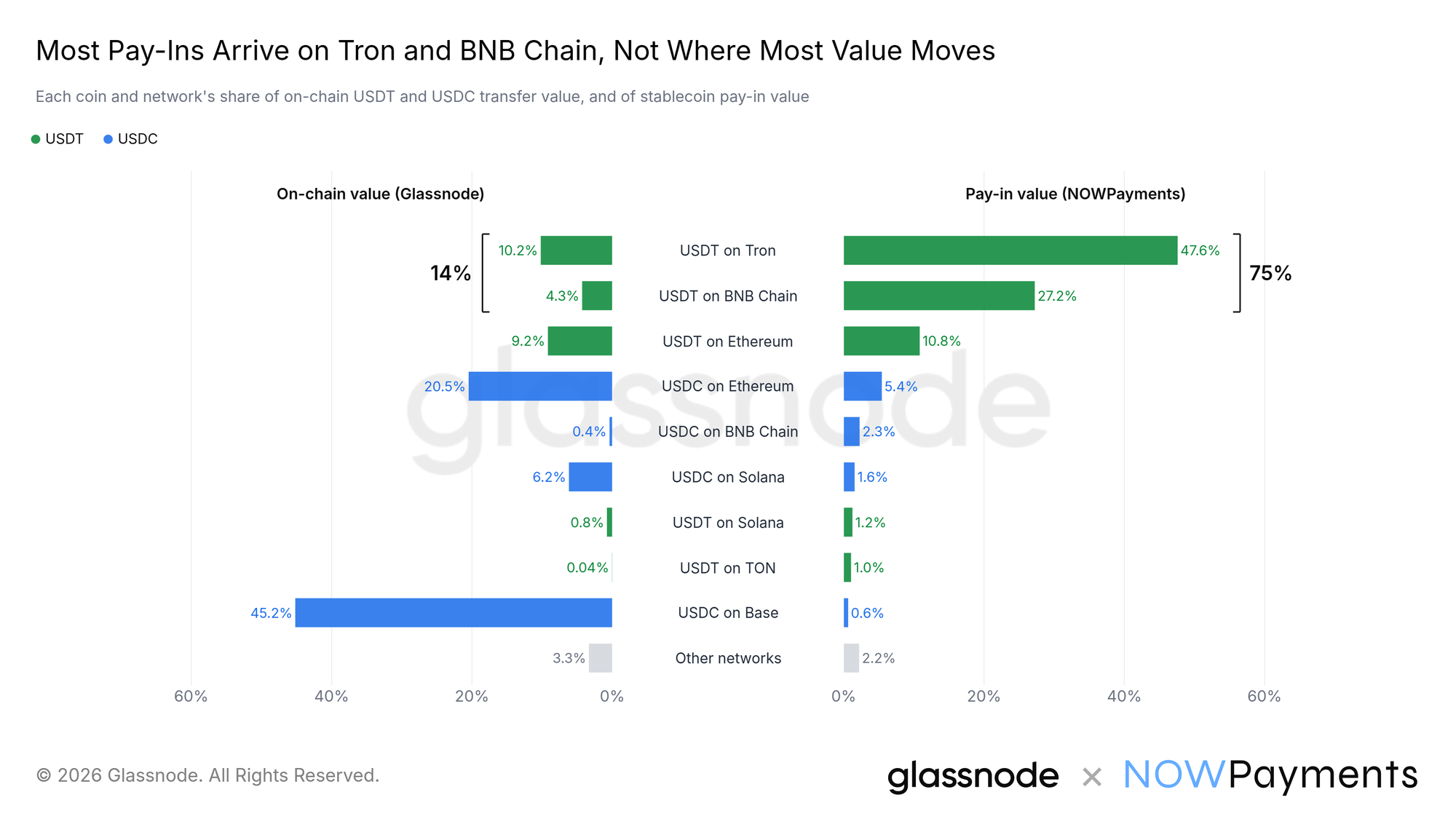
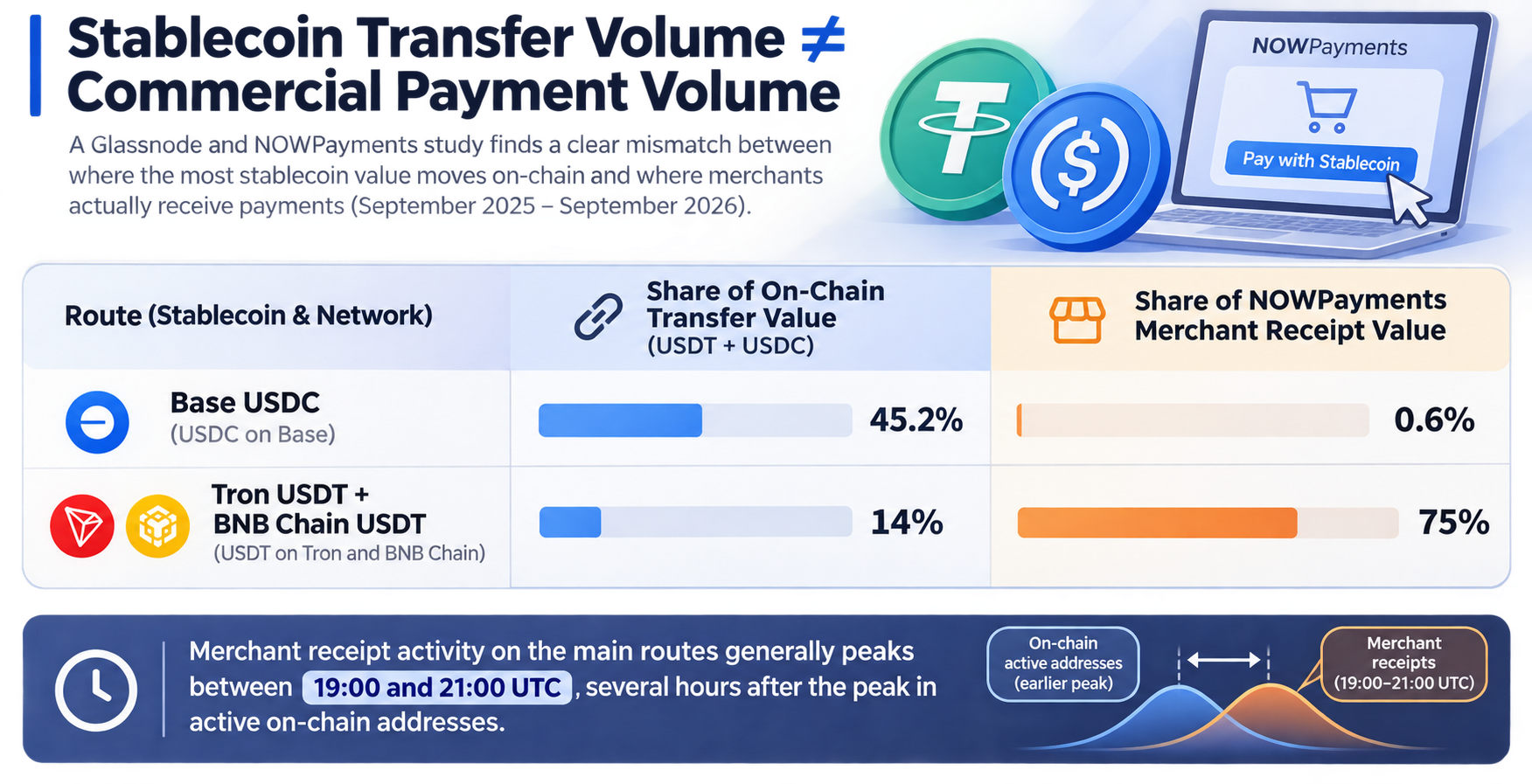
Stablecoin transfer volume is not the same as commercial payment volume. A Glassnode and NOWPayments study compared USDT and USDC activity across blockchains with payments received through NOWPayments merchant checkouts. Its central finding is a mismatch between the networks moving the most value on-chain and those bringing in the most merchant receipts within that payment gateway’s data.
Where merchants received payments
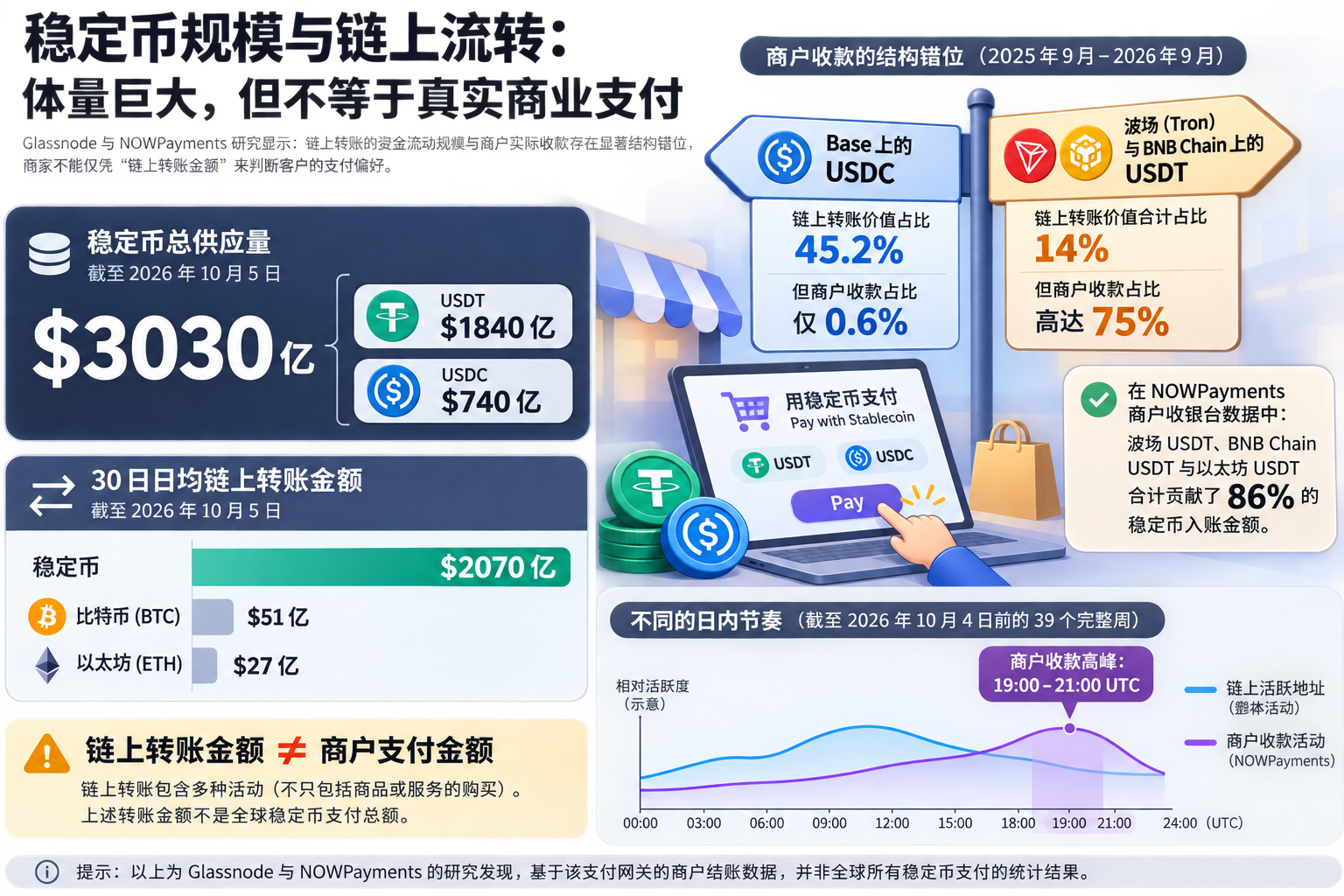
From September 2025 through September 2026, USDC on Base accounted for 45.2% of the on-chain transfer value measured across USDT and USDC, but just 0.6% of NOWPayments merchant receipts. USDT on Tron and BNB Chain showed the reverse pattern: together, they represented 14% of measured on-chain transfer value and 75% of merchant receipts.
Adding Ethereum-based USDT, those three USDT routes accounted for 86% of stablecoin value received by NOWPayments merchants. By contrast, the three largest routes by on-chain transfer value—Base USDC, Ethereum USDC and Tron USDT—accounted for 54% of merchant receipts. The study also reported that the distribution of active on-chain addresses was about twice as effective as total transfer value at indicating merchants’ most-used receipt routes.
These are findings from one gateway’s checkout data, not a measure of every stablecoin payment worldwide. They illustrate why a merchant choosing supported coins and networks cannot treat aggregate on-chain volume as a direct proxy for customer payment preferences.
A different daily rhythm
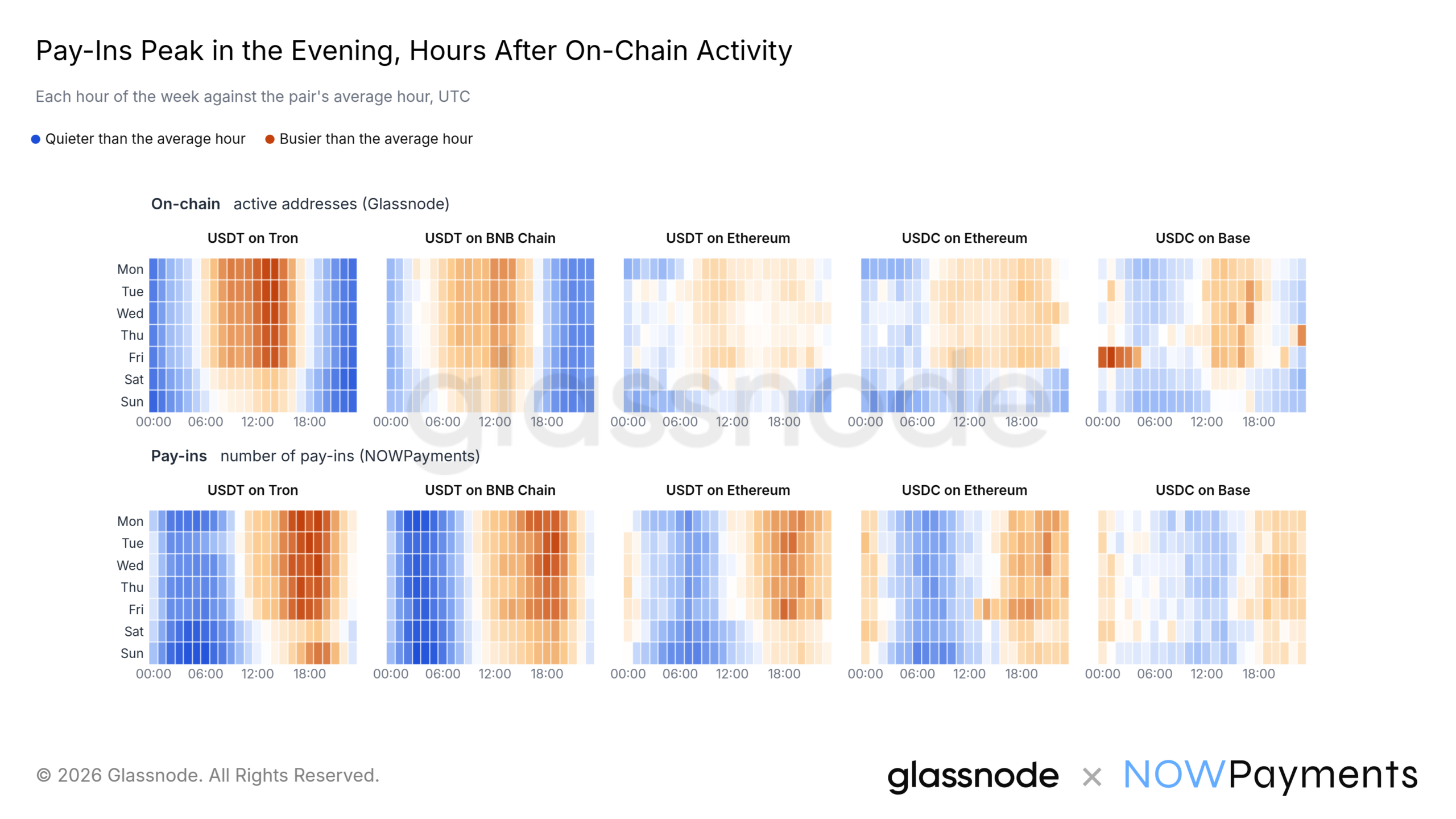
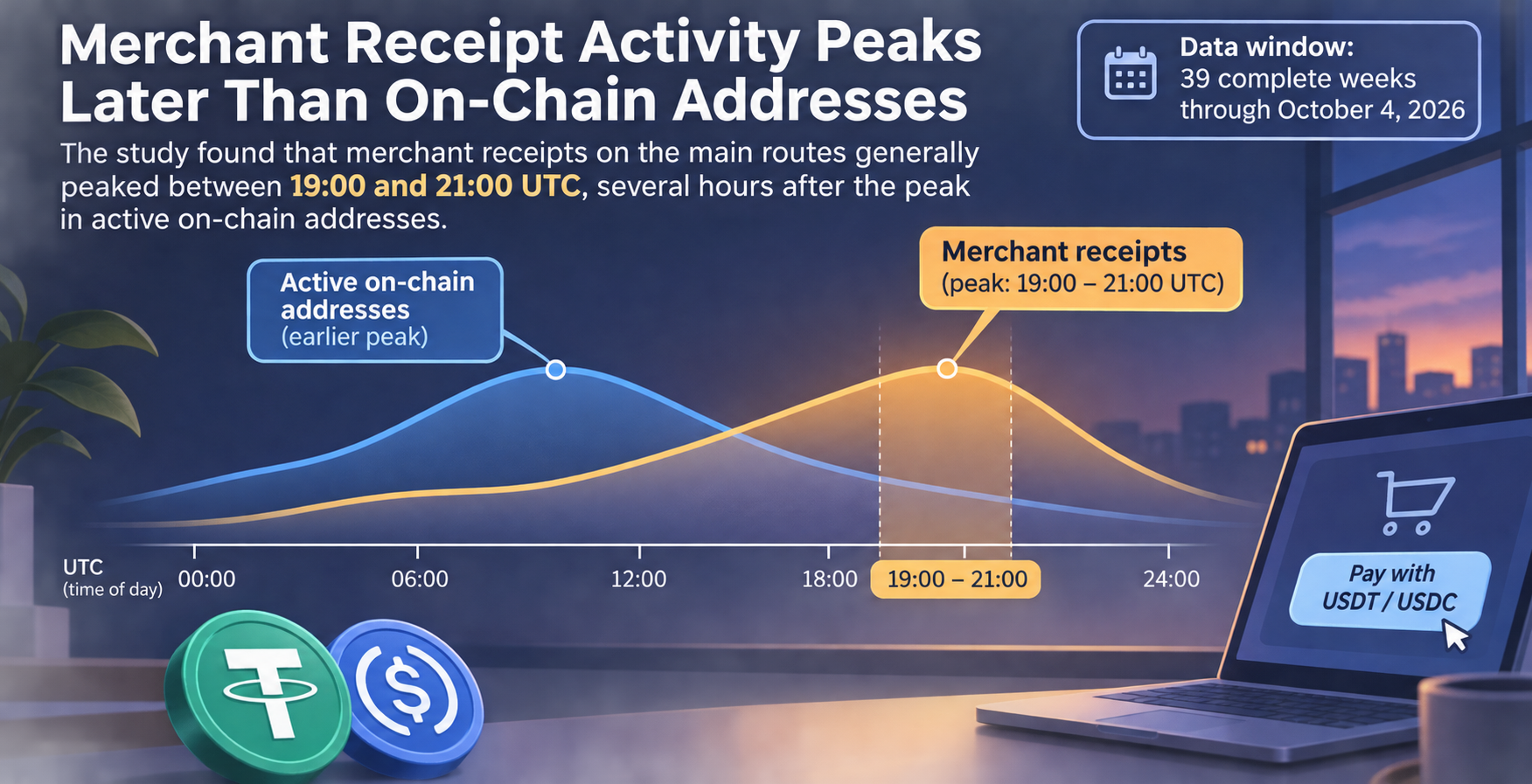
Using hourly data from 39 complete weeks through October 4, 2026, the study found that merchant receipt activity on the main routes generally peaked between 19:00 and 21:00 UTC—several hours after the peak in active on-chain addresses. That distinction matters when interpreting network activity as a sign of payment demand or planning checkout support.
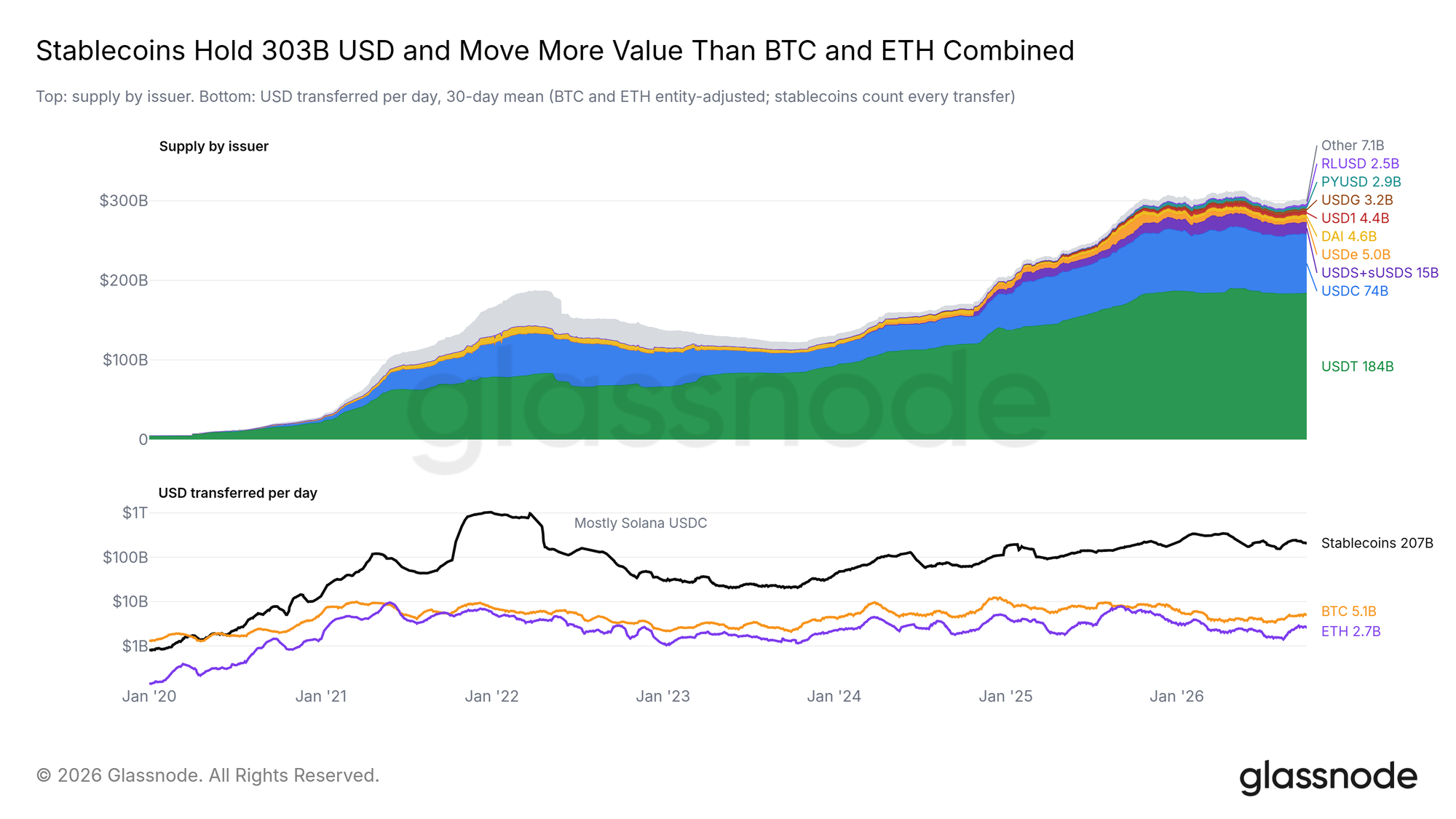
The broader market figures provide scale, but not a merchant-payment total. As of October 5, 2026, the study put stablecoin supply at $303 billion, including $184 billion in USDT and $74 billion in USDC. Its 30-day average daily on-chain transfer values were $207 billion for stablecoins, $5.1 billion for Bitcoin and $2.7 billion for Ethereum. Those transfer figures include activity other than purchases.
Source: techflowpost.com (originally published 2026-11-11 09:55 UTC+8)