Historical report: This article is based on Alea Research’s analysis, translated and published by Deep Tide TechFlow on November 11, 2026, at 09:41 (UTC+8). The figures and plans below reflect that reporting period.
Robinhood Chain offers a test of two different crypto-sector narratives: whether a broker-operated Layer 2 can earn substantial network fees, and whether tokenized stocks serve a purpose when conventional markets are closed. Alea Research’s third-quarter 2026 figures support both questions being asked, but the quarter’s fee total needs context.
A fee lead dominated by a launch wave
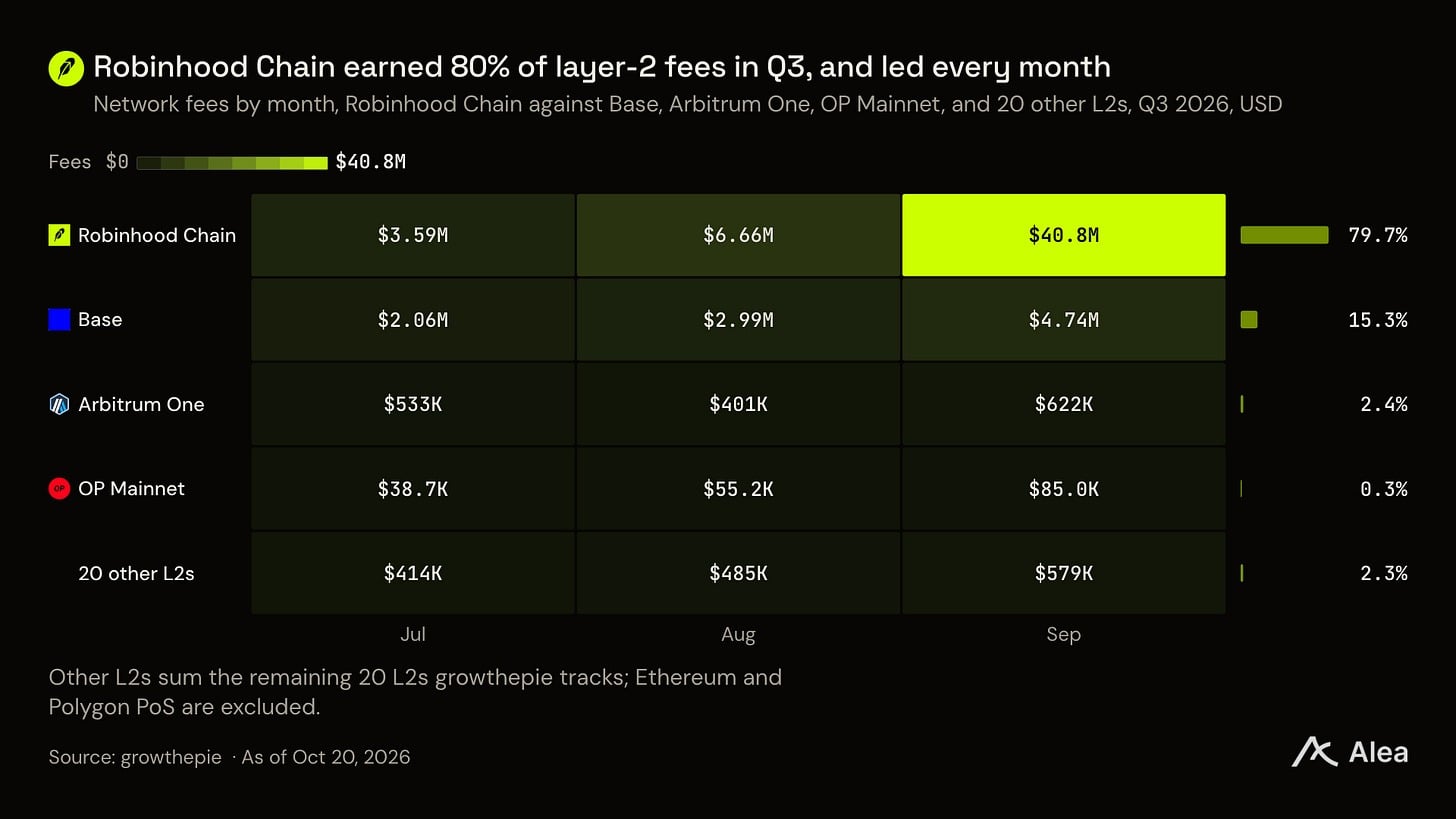
In its first full quarter after mainnet launch, Robinhood Chain generated $51 million in network fees, accounting for about 80% of Ethereum Layer 2 network fees, according to the analysis. Its on-chain exchange volume reached $90.7 billion, compared with a combined $50 billion in crypto volume through the Robinhood app and Bitstamp.
A 12-day token-launch wave from August 30 to September 10 produced 74% of the chain’s quarterly network fees. The report links the surge to Pons V2, whose factory contract launched on August 4 and recorded 648,701 token launches. On September 4 alone, network fees reached $8.36 million. After the wave, average daily fees fell to $121,000 in September’s final week and $54,600 from October 1–19.
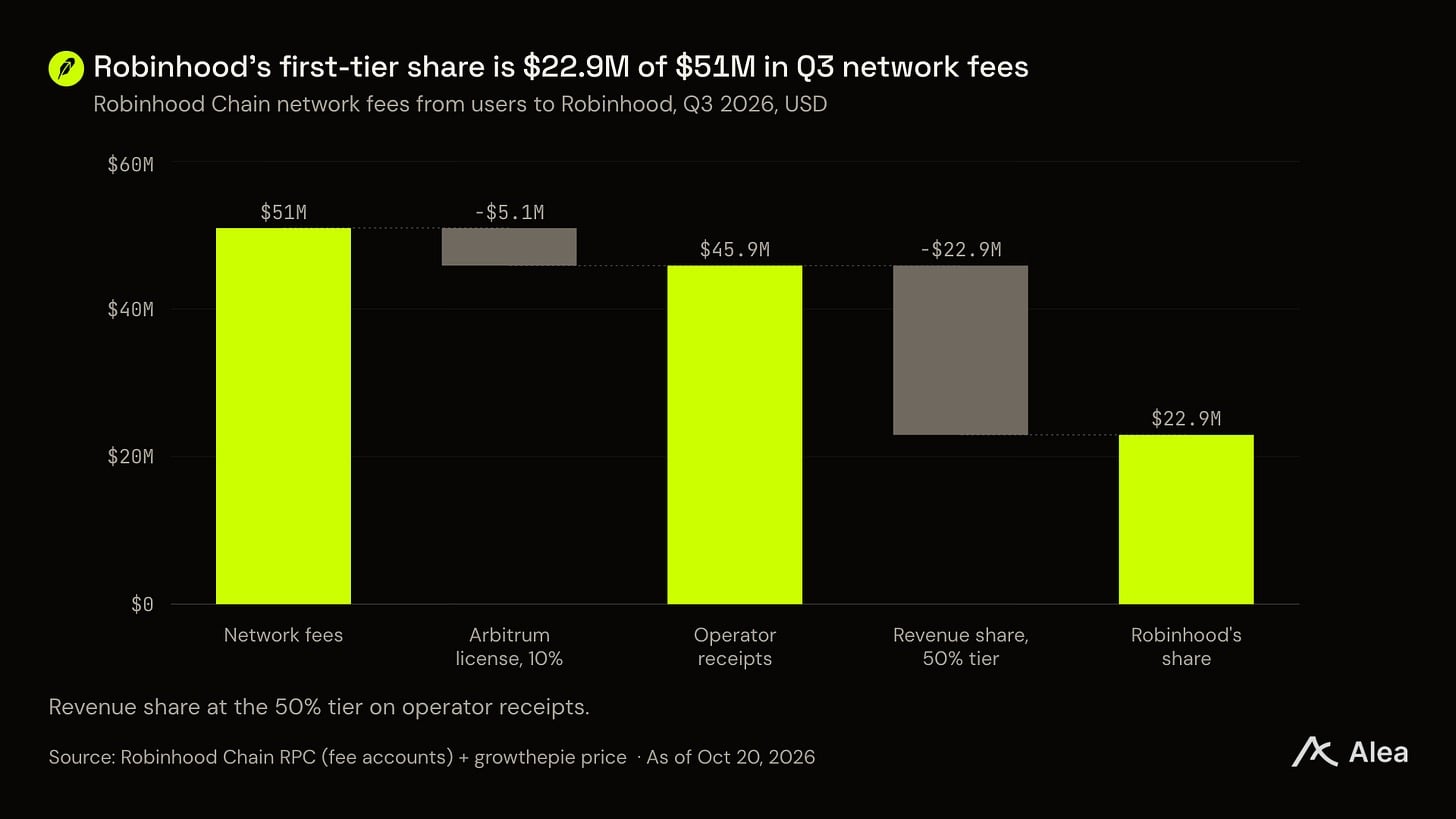
The lead was not solely a product of those 12 days: across the quarter’s other 80 days, the chain accounted for 57.7% of Layer 2 network fees, versus 30.7% for Base. Robinhood Chain uses Arbitrum technology and has no native token. Under the fee-sharing terms described in the report, Arbitrum receives a 10% technology fee; applying Robinhood’s initial 50% share to the remainder puts its estimated Q3 share at $22.9 million. That is an estimate of Robinhood’s share, not the chain’s $51 million gross fee total.
What stock-token trading showed
Stock tokens represented 2.6% of the chain’s DEX volume in July and 15.6% in September. The report describes them as debt claims fully backed one-to-one by underlying shares and minted exclusively by Robinhood-owned Bitstamp—not as shares that currently carry voting or dividend rights.
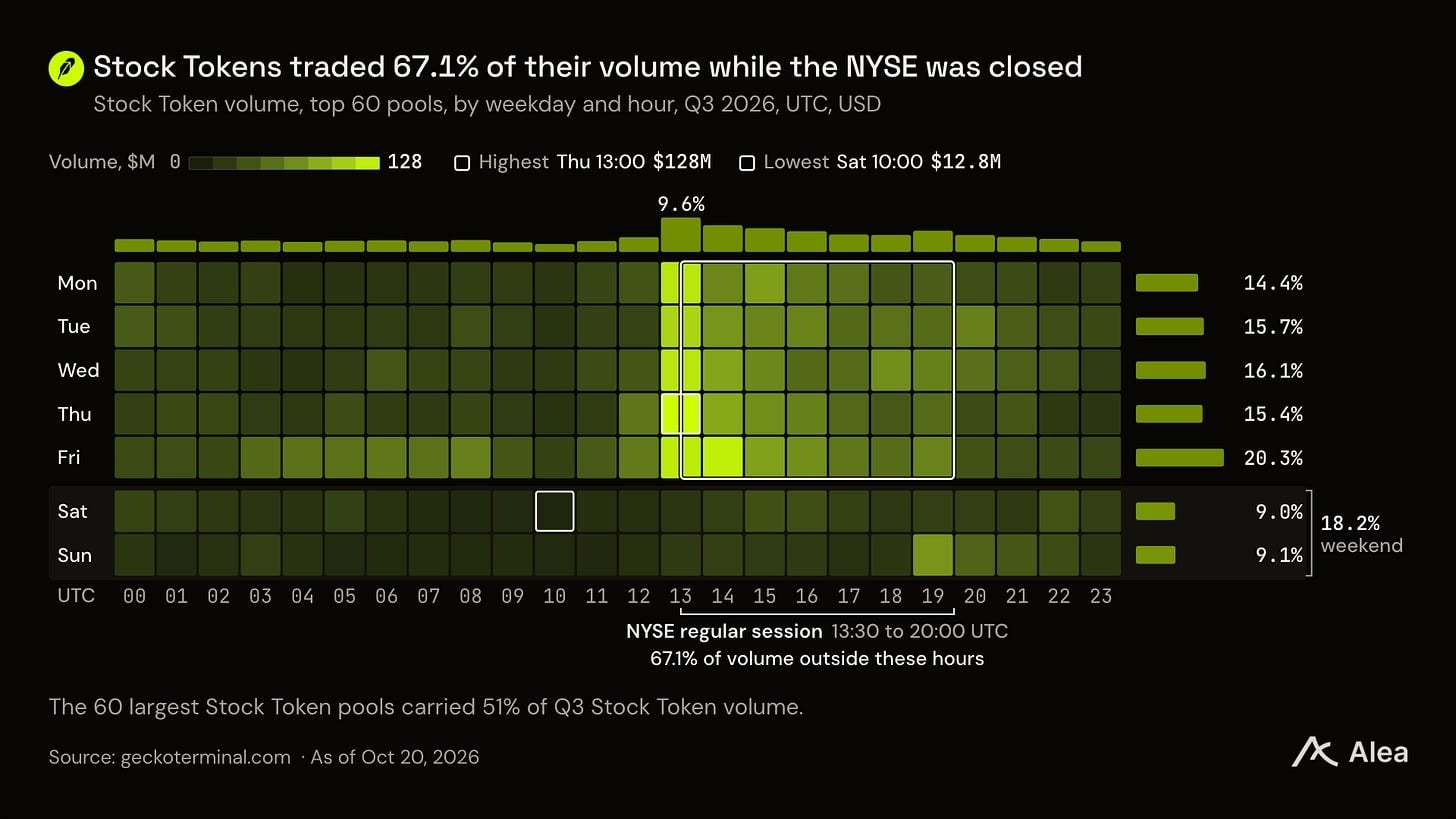
Among the 60 highest-volume stock-token pools, 67.1% of Q3 volume occurred outside regular New York Stock Exchange hours, including 18.2% on weekends, when minting and redemption of the underlying shares were closed. In the report’s sample of 37 weekend or holiday price gaps of at least 1%, token prices pointed in the correct direction before Monday’s open; their median pricing of the gap’s magnitude was 86%. Those observations indicate off-hours price discovery in that sample, rather than a guarantee of future accuracy.
The report also describes developments after Q3: Morpho and Robinhood launched a stock-token collateral lending market on October 22, and Ondo brought 15 tokenized stocks and ETFs to the chain on October 27. Robinhood’s proposed stock-token voting and share-redemption features had no stated timetable. Its planned weekend stock trading for US users in early 2027 remained subject to regulatory approval.
The distinction for this sector narrative is between a quarter of unusually high fees, continued activity after a launch wave, and demonstrated demand for the underlying financial products. Alea Research reported that returning active addresses remained resilient after gas prices fell; the planned end of Robinhood Wallet’s gas subsidy on December 31, 2026 was still ahead and would provide a further test of unsubsidized demand.
Source: techflowpost.com (originally published 2026-11-11 09:41 UTC+8)