Originally reported on November 11, 2026, at 18:43 (UTC+8). This article summarizes an analysis by Sparsity, translated into Chinese by Saoirse for Foresight News; its findings and conclusions are attributed to that analysis.
The meme-coin story often begins with community: a token attracts attention, finds committed holders and grows beyond its launch. Sparsity’s analysis of Pump.fun argues that the platform’s economic incentives point in another direction—toward frequent launches and early trading, whether or not a token lasts.
Where the fees come from
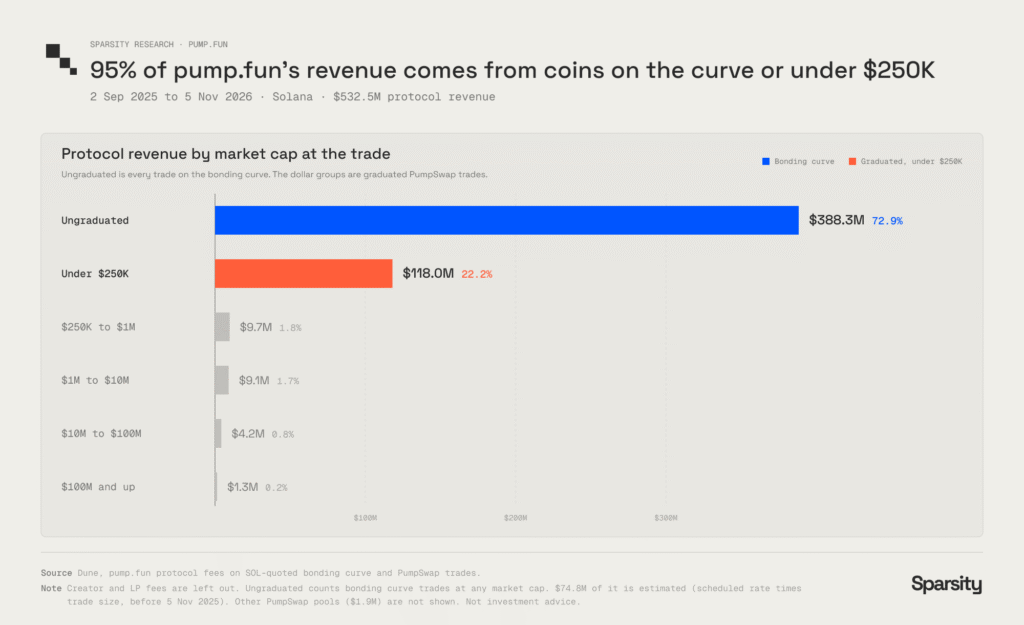
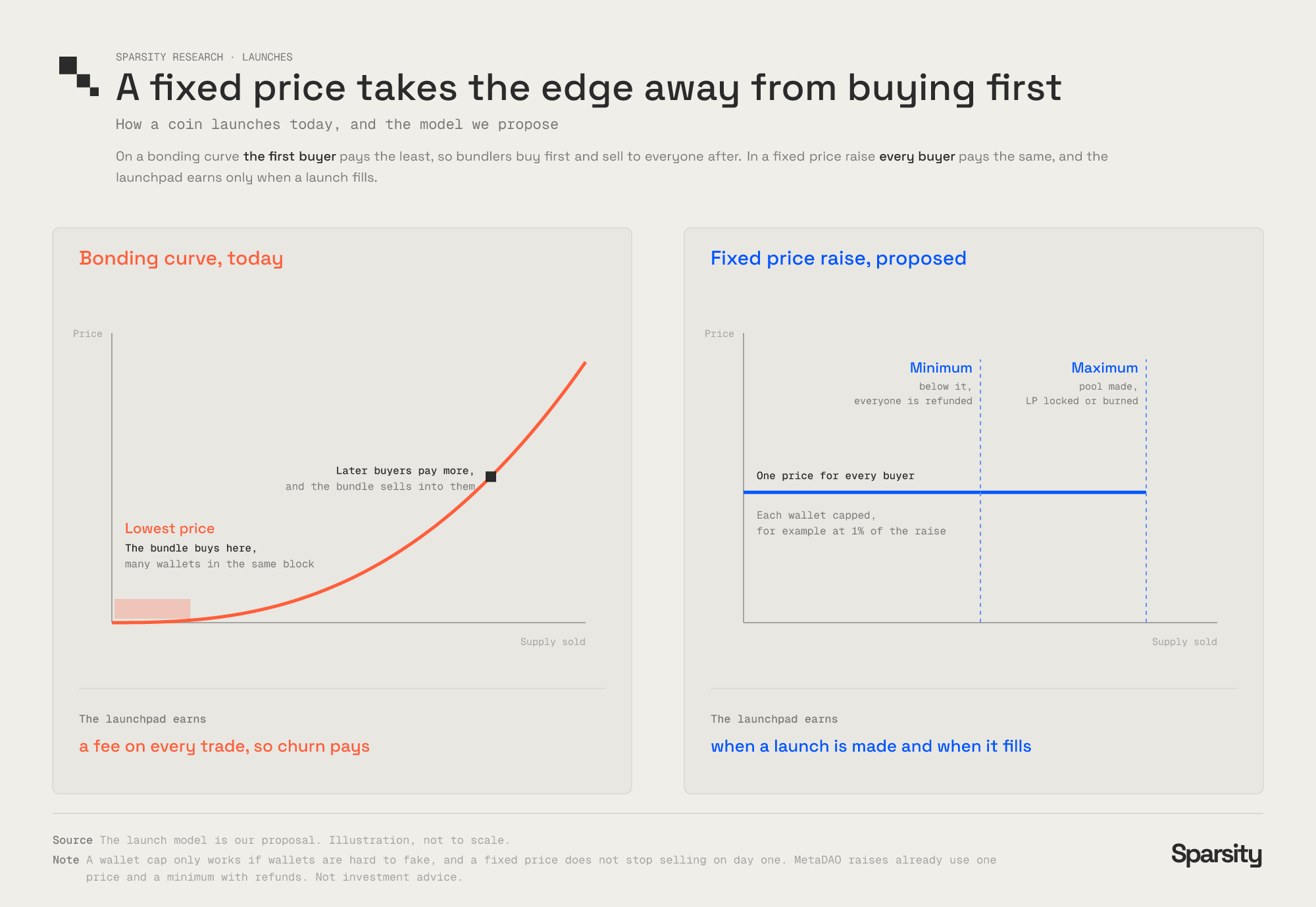
According to the analysis, Pump.fun accounted for 92% of meme-coin launches and 84% of launch-sector trading volume across chains in the preceding 30 days. It estimates that 95% of the platform’s protocol revenue came from tokens still on their bonding curves or valued below $250,000, using data from September 2, 2025, through November 5, 2026. On the bonding curve, each purchase or sale incurred a 1.25% fee: 0.95% for Pump.fun and 0.30% for the token creator. A buy followed by a sale therefore cost 2.5% in fees before any price change.
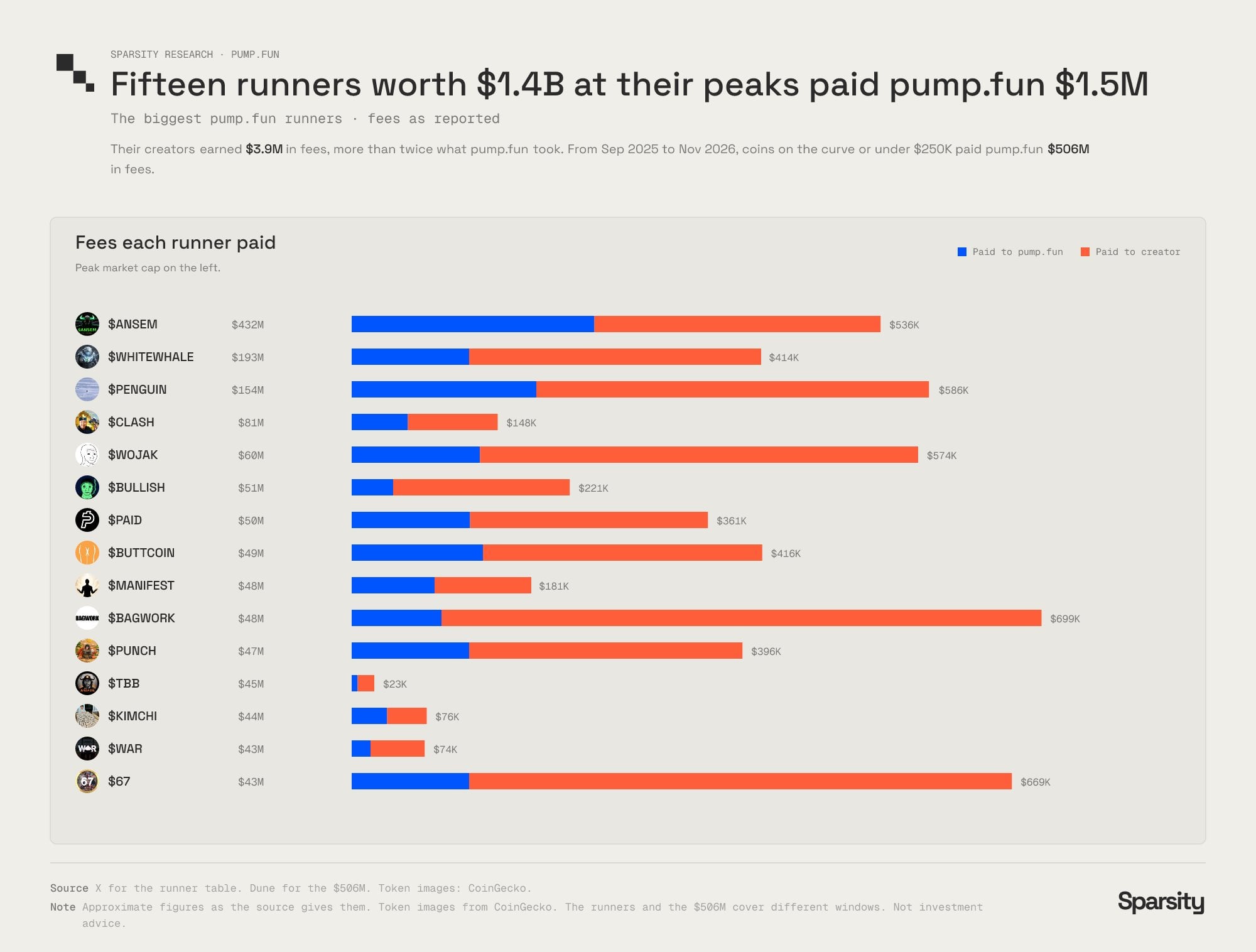
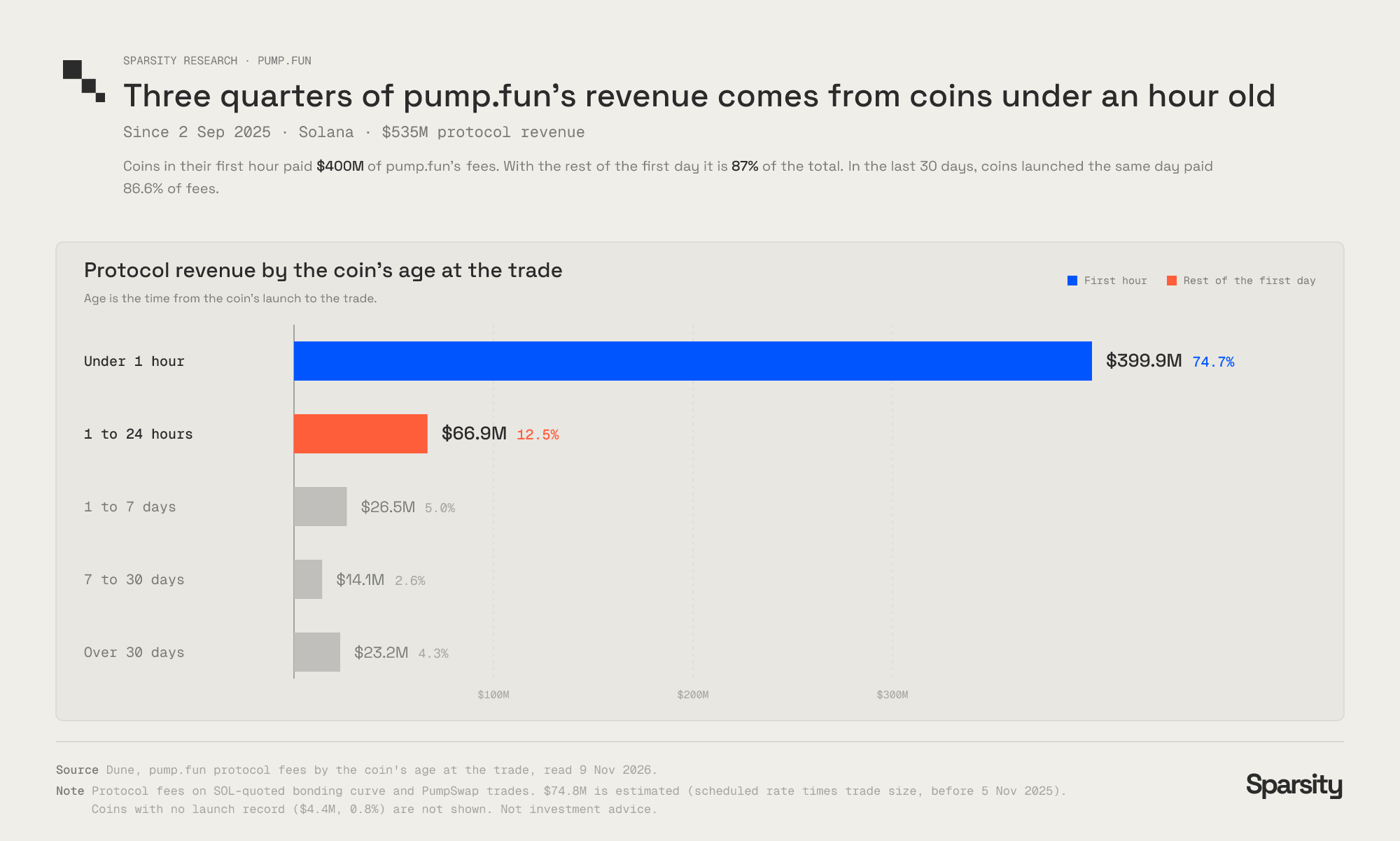
The revenue window was short. The analysis attributes nearly three-quarters of Pump.fun’s revenue to tokens less than an hour old and 87% to tokens less than a day old. It says 15 standout tokens with a combined peak market capitalization of $1.4 billion generated about $1.5 million in fees, compared with $506 million from tokens on bonding curves or below $250,000 in market value. These figures underpin the author’s argument that launch volume and early turnover matter more to the platform’s current revenue than a few durable successes.
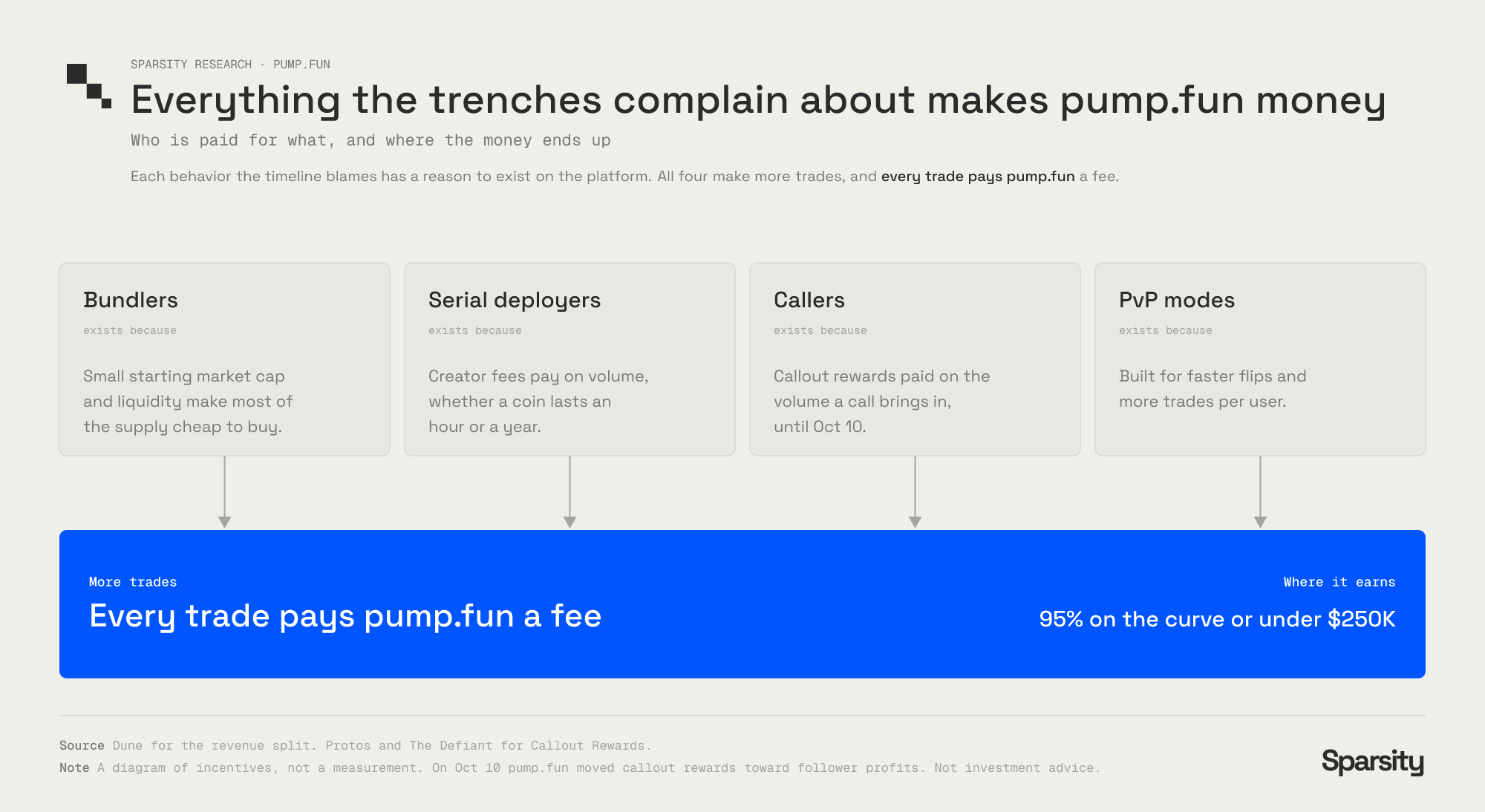
Who benefits from early turnover?
Sparsity connects that fee structure to several behaviors the meme-coin community criticizes. Low initial valuations and liquidity, the author argues, make it cheaper for bundlers to buy substantial allocations across multiple wallets at launch. Creator fees, meanwhile, are paid on trades rather than on a token’s longevity. The analysis says the 25 most prolific launching addresses issued 761,000 tokens, fewer than 1% of which “graduated,” while those addresses earned a combined $128 million.
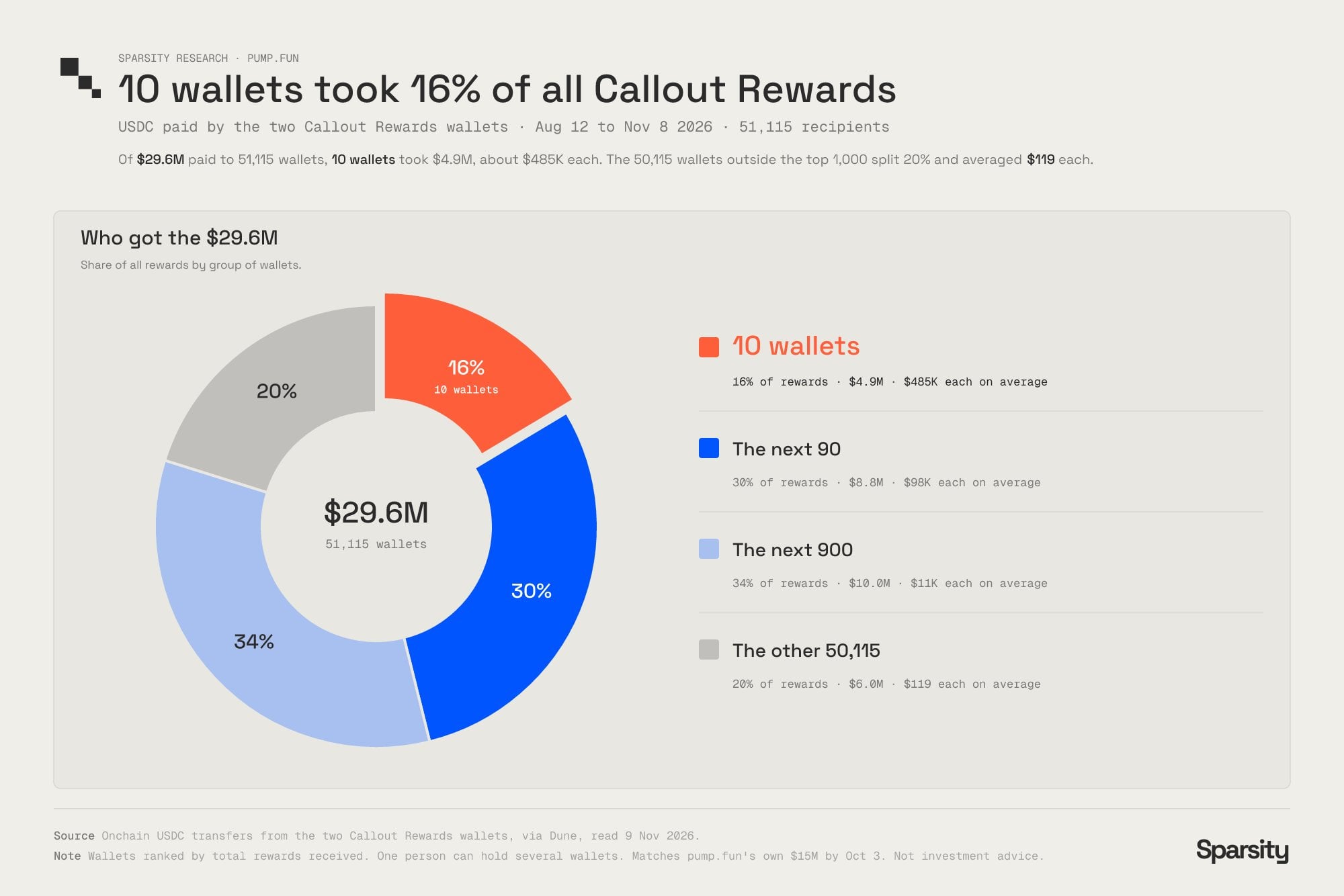
Promotion rewards show a similar tension. The analysis reports that Pump.fun paid $29.6 million in promotional rewards to 51,115 wallets from August through November 8, 2026; ten wallets received 16% of the total, while the median recipient received $13. It says rewards were tied to trading volume. Among the 50 highest-earning promoters in August, 40 primarily promoted tokens whose average market capitalization was below $100,000.
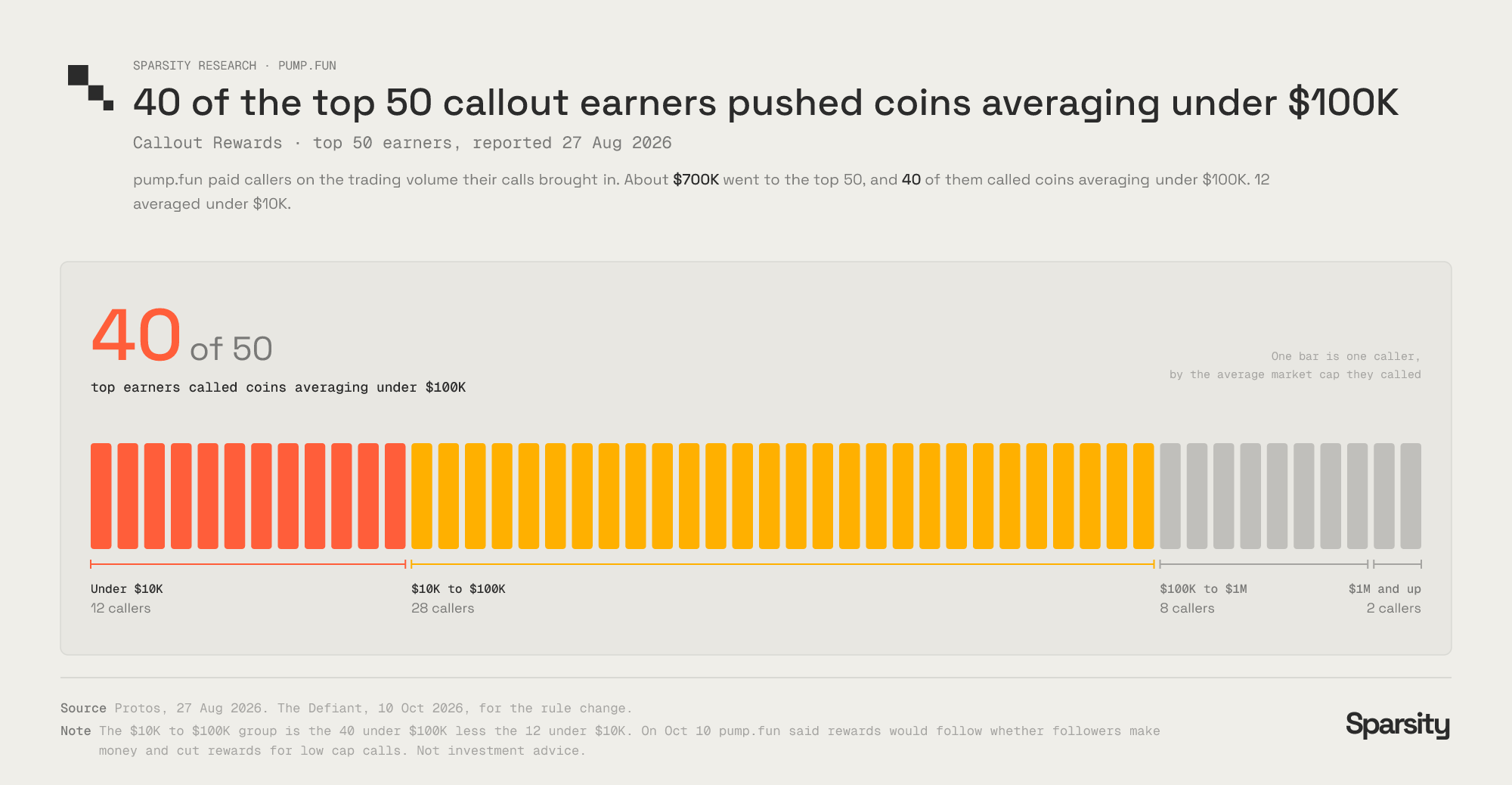
Pump.fun said on October 10 that future incentives would account for followers’ gains and losses and reduce the reward weight for small-cap tokens. The analysis nevertheless found that, over the following three weeks, the share of rewards to the top 20 promoters associated with tokens whose median market capitalization was below $100,000 rose from 68% to 94%; total weekly rewards rose 53%. That is the author’s assessment of the period after the announcement, not evidence that the announced approach was never implemented.
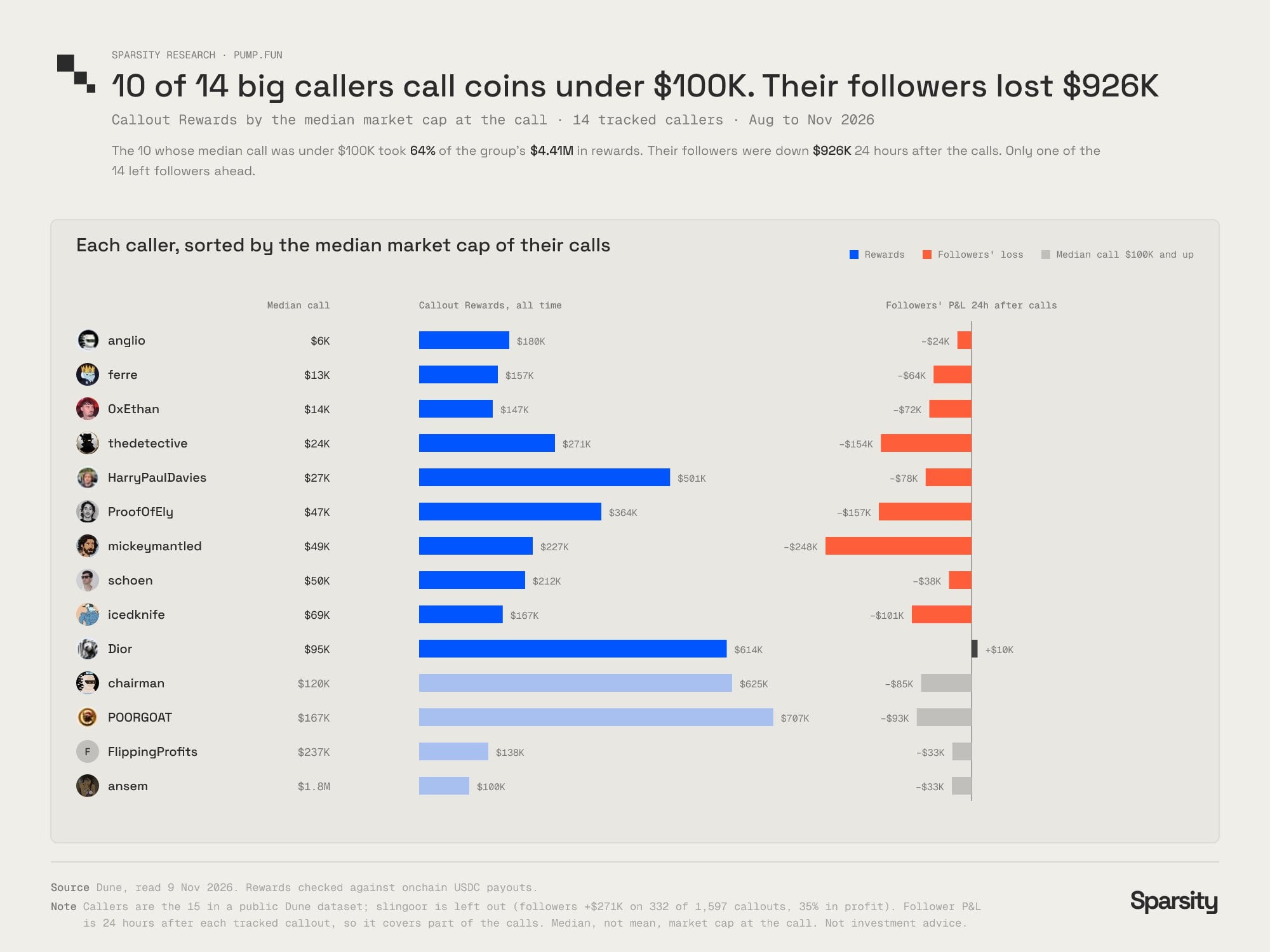
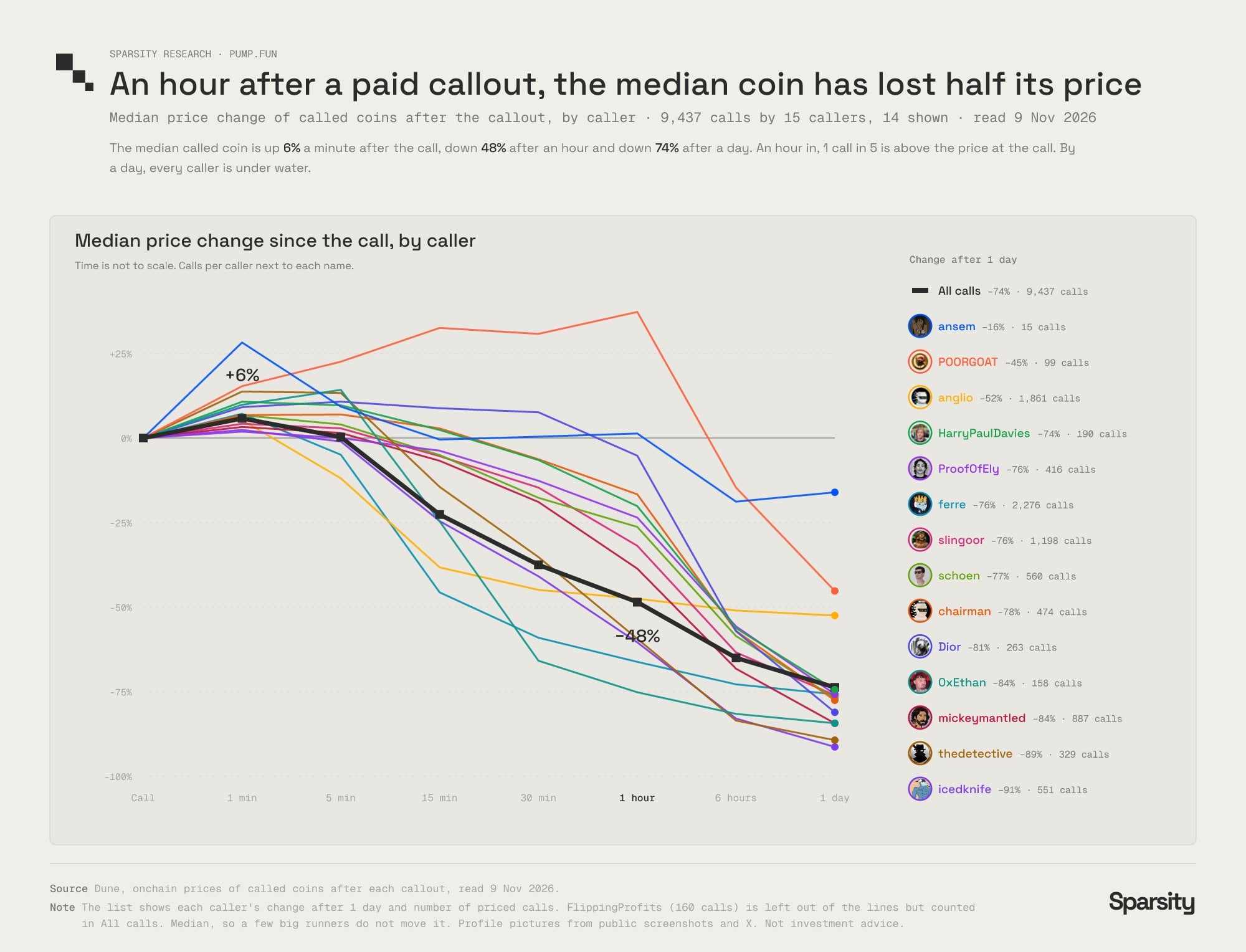
In the author’s tracking of 14 promoters, ten focused on tokens with median market values below $100,000; their followers lost a combined $926,000 by the day after promotion. Only one of the 14 generated a small follower profit of about $10,000. Across the promoted tokens, the analysis reports a median price rise of 6% one minute after a post, followed by declines of 48% after an hour and 74% after a day. These are results for the tracked sample, not a forecast for every promoted token.
Launches versus lasting tokens
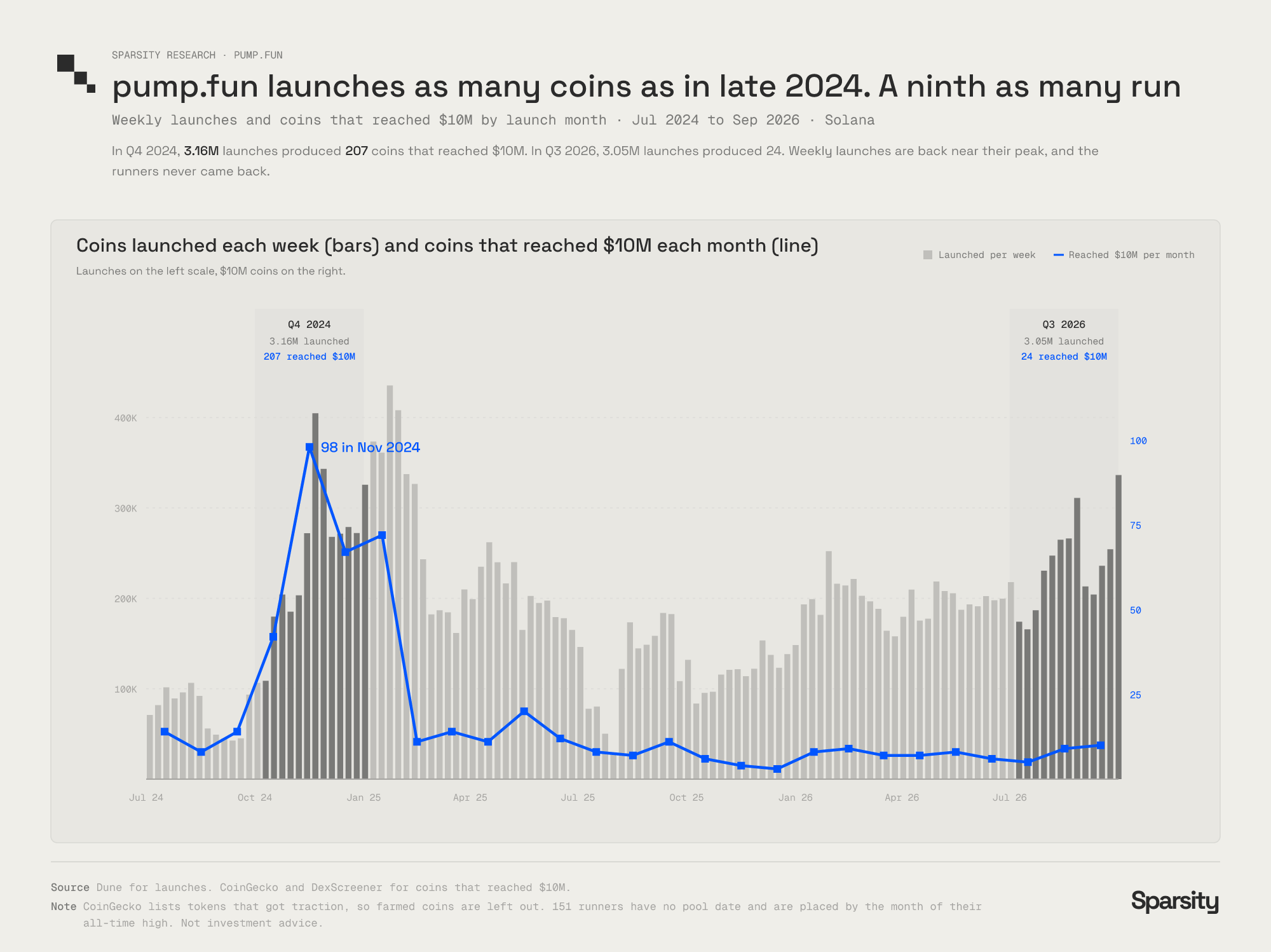
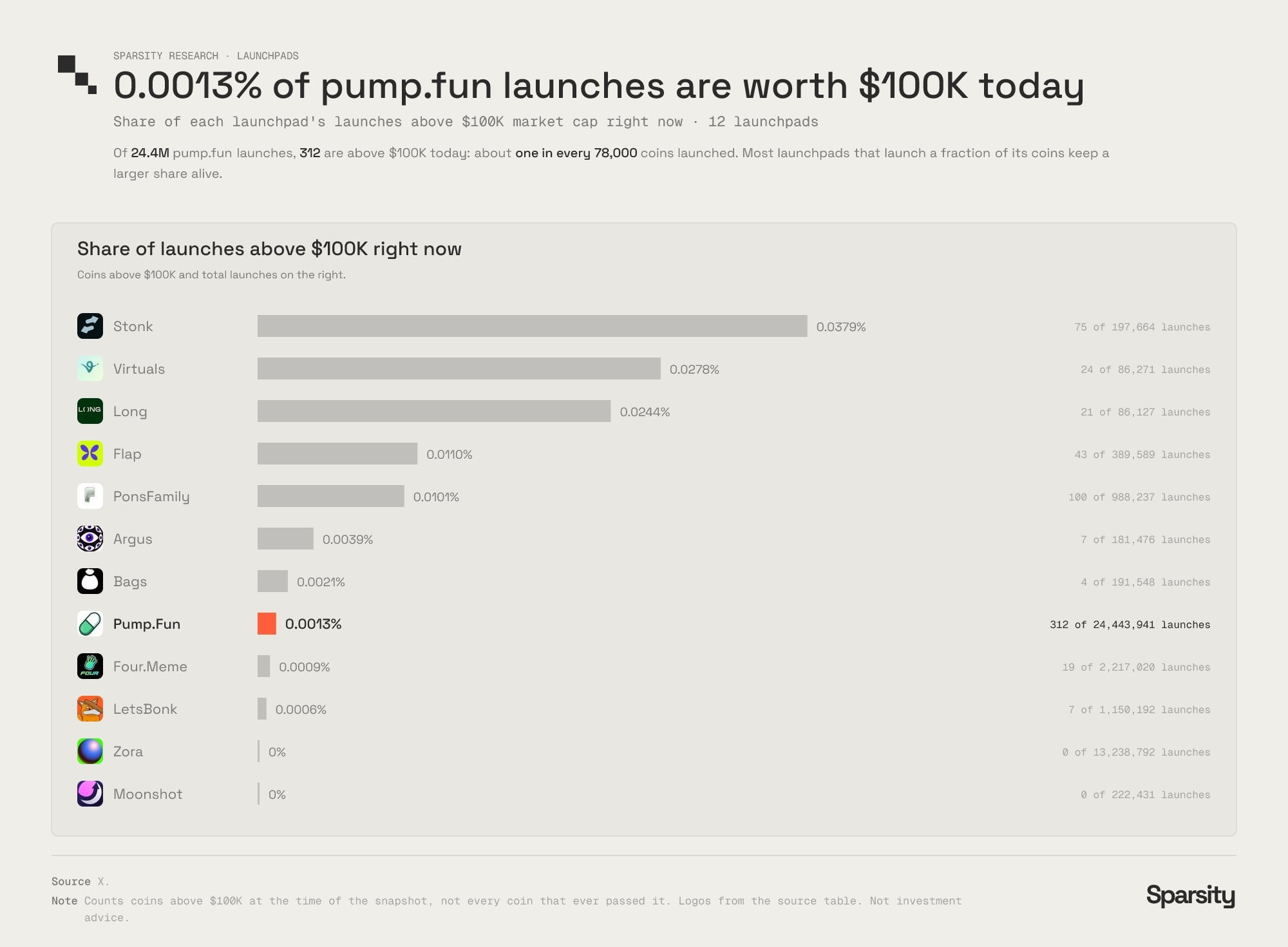
The analysis contrasts 3.16 million launches in the fourth quarter of 2024, which produced 207 tokens exceeding $10 million in market capitalization, with 3.05 million launches in the third quarter of 2026, which produced 24. It also says that, among 24.4 million cumulative Pump.fun launches, just 312 tokens were still above $100,000 in market value when measured—approximately 0.0013%, or one in 78,000. A token’s market value at one measurement point is not, by itself, a complete measure of community or utility, but the figures illustrate the gap between issuance and persistence.
Sparsity proposes changing the incentives: deeper initial liquidity, creator fees released over time, rewards linked to followers’ later outcomes, and potentially a fixed-price fundraising model instead of a bonding curve. Under the proposed model, a launch would have funding thresholds, a 24- or 48-hour window and refunds if the minimum were missed; the platform would charge for successful fundraises rather than each trade. These are proposals, not Pump.fun rules. The author also acknowledges that wallet limits could be evaded with multiple wallets and that equal subscription prices would not prevent selling after launch.
The central distinction is between attention and adoption. Launch counts, trading activity and promotional reach show that participants are active; they do not show that buyers can sustain a token or that a community will remain after the first rush of trades.
Source: panewslab.com (originally published 2026-11-11 18:43 UTC+8)