Originally reported by PANews on November 10, 2026, at 15:55 (UTC+8). The figures below reflect the article’s reporting period, not current conditions.
Ethereum co-founder Vitalik Buterin said on November 8 that he preferred to frame ETH as a store of value rather than anchor its value to transaction-fee burns. As PANews reported, that view challenges the “ultrasound money” narrative: the idea that network use would burn enough ETH to strengthen its scarcity.
The alternative case is that a secure, neutral financial network could make ETH an asset people want to hold, stake and use as collateral. Bitmine chairman Tom Lee endorsed that framing, describing ETH as trusted collateral rather than a “cash-flow” token like HYPE or LIT. It is a proposed way to understand demand for ETH, not proof that greater Ethereum activity will produce more ETH buying.
Network use is not the same as token demand
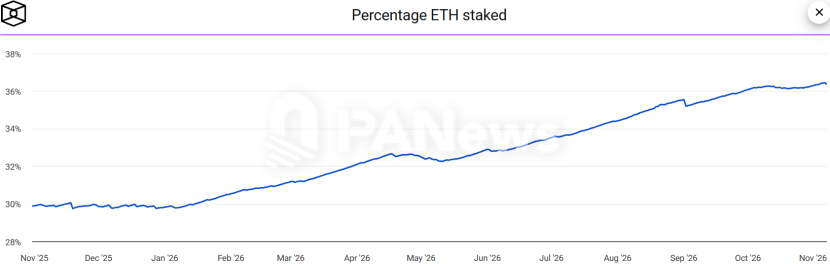
Staking is one direct use for ETH. Citing The Block, PANews said 36.36% of circulating ETH was staked at the time of reporting, compared with 29.91% a year earlier. ETH can also serve as collateral in lending markets such as Aave.
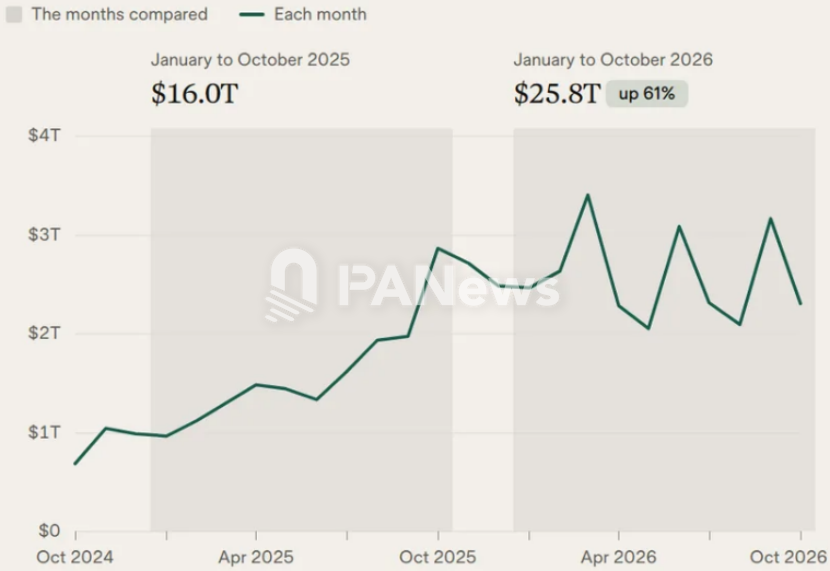
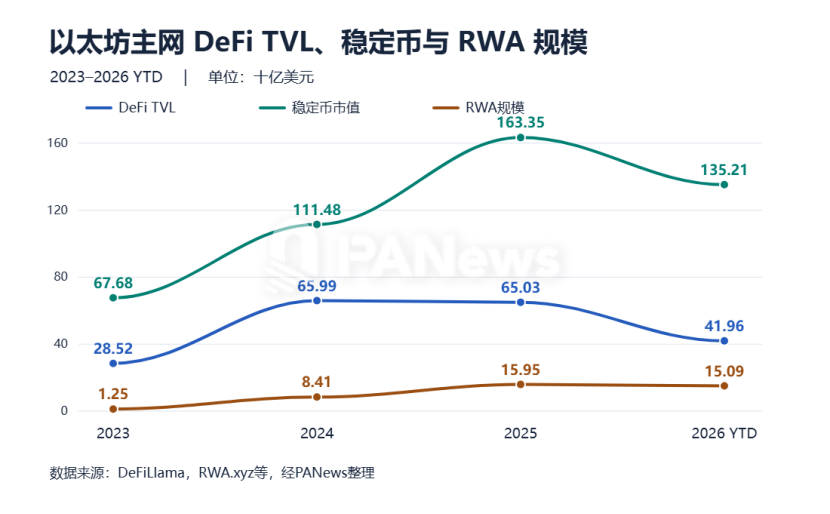
Ethereum’s broader financial activity was substantial. Citing Ethereum Institutional research, PANews reported $25.8 trillion in mainnet stablecoin transfers during the first ten months of 2026, up 61% year over year. DeFiLlama figures cited in the article put mainnet DeFi total value locked at roughly $42 billion, stablecoin market value above $135 billion and real-world assets at $15 billion.
Those measures describe activity and assets on Ethereum; they do not establish sustained demand to buy ETH. PANews illustrated the distinction with a hypothetical institution issuing $1 billion of tokenized Treasury bonds: the backing and yield would come from the bonds, settlement could use USDC, and ETH might be needed only for relatively small gas payments.
What lower fees mean for the burn thesis
Buterin offered a valuation thought experiment: $1 billion in annual fee burns, discounted at 4%, would imply a theoretical present value of about $25 billion. PANews noted that transaction fees are not a stable cash flow. Applying the same calculation to ETH’s roughly $260 billion market value at the time would require about $10.4 billion in annual burns—far from the level described in the article.
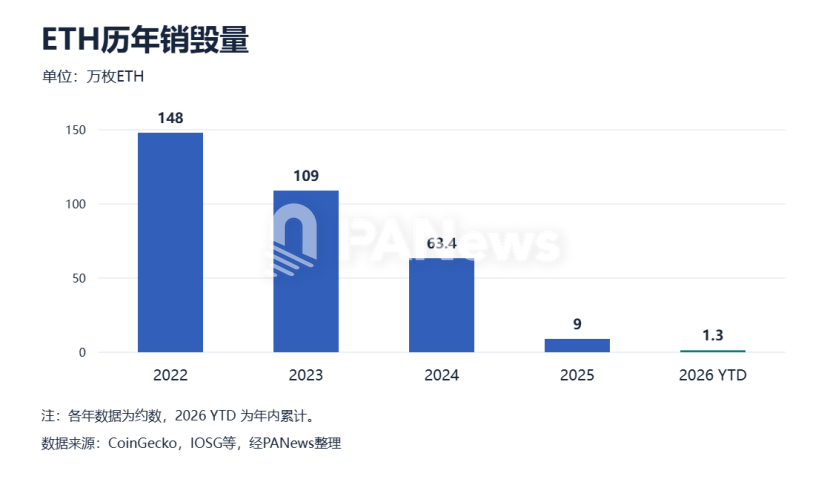
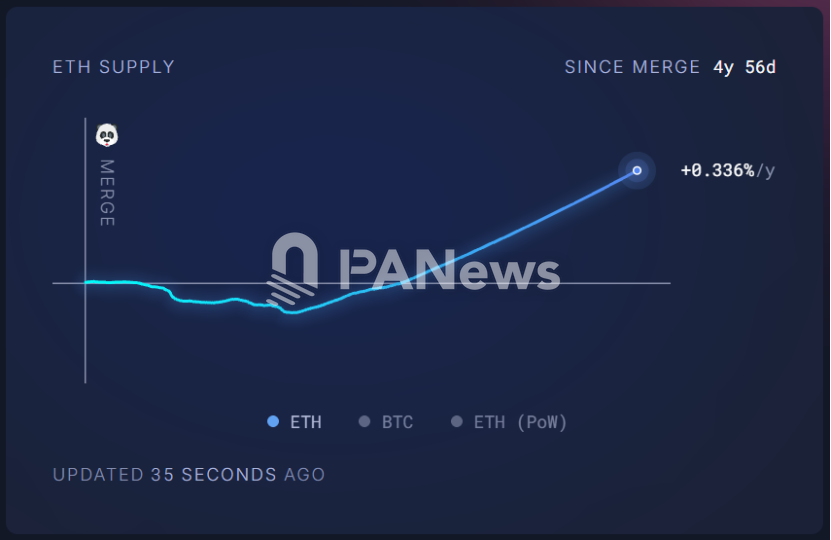
PANews reported that Ethereum burned about 1.48 million ETH in 2022, versus approximately 13,000 ETH, worth around $27.3 million at the cited market price, so far in 2026. That is a decline of more than 99% by token count. The article also said ETH returned to net inflation in February 2025.
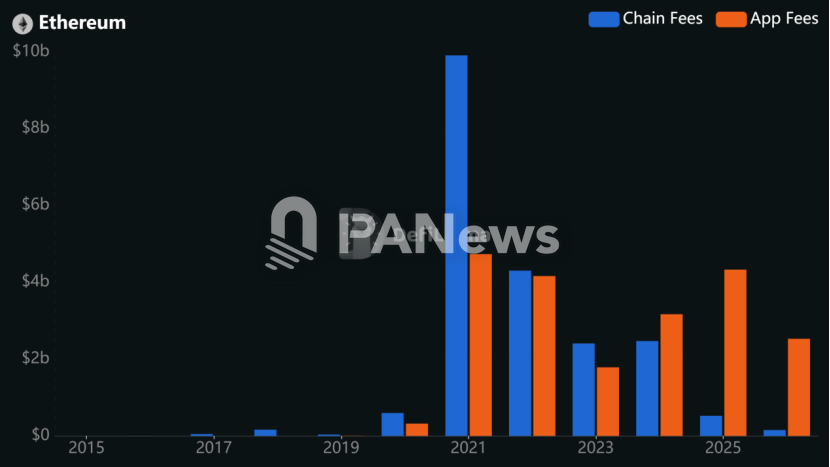
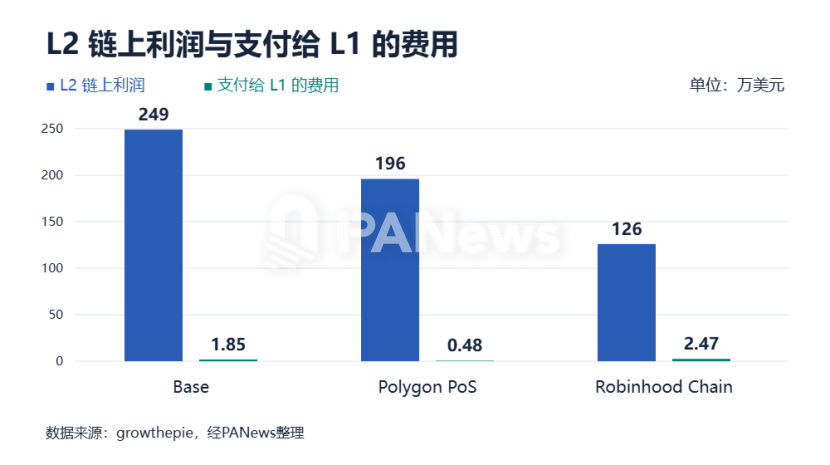
Fee distribution matters too. According to the DeFiLlama data cited by PANews, Ethereum mainnet had generated about $152 million in fees so far in 2026, compared with $2.529 billion for applications on the network. Citing growthepie’s preceding 30-day figures, PANews said the top three Ethereum layer-2 networks made about $5.71 million in onchain profit while paying roughly $48,000 in settlement fees to mainnet. Base accounted for $2.49 million of that profit and about $18,500 of those payments.
Lower transaction costs may make frequent, small payments and automated activity more practical. Whether such uses will generate enough volume to offset lower fees remains unproven. The central question for the store-of-value narrative is therefore narrower than whether Ethereum hosts more activity: will that activity create a durable reason to hold ETH, rather than merely use small amounts when paying for transactions?
Source: panewslab.com (originally published 2026-11-10 15:55 UTC+8)