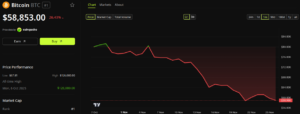
Bitcoin and physical gold compete for investors’ money, but that does not make them substitutes in a central bank’s reserves, according to Mario Stifano, chief executive of Galantas Gold. In a Crypto.news interview published November 24, 2026, he described Bitcoin as a “growth asset” with greater upside potential and volatility. For investors buying gold-linked tokens, he said, the distinction is a legal one: exposure to the gold price does not necessarily come with a claim on the metal.
A test portfolio is not a reserve allocation
Stifano pointed to the Czech National Bank, which he said bought Bitcoin as part of a US$1 million digital asset test portfolio held outside its official reserves. He called that “exploration, not allocation.” By contrast, central banks bought a net 675 tonnes of gold in the first nine months of 2026, according to the World Gold Council. A record 45% of reserve managers expected their own bank to add to its gold holdings.
Stifano acknowledged the advantages of Bitcoin’s fixed issuance schedule and the ability to hold it without a custodian. His argument was that scarcity alone does not tell a reserve manager how an asset will behave when liquidity is needed.
What does a gold token holder own?
Gold tokens let buyers trade fractional amounts around the clock on crypto platforms. The World Gold Council estimates that the market grew roughly fivefold in value from late 2024. Stifano cautioned against reading that figure as a measure of adoption: a higher gold price accounted for part of the increase.
He identified three questions that the label tokenized gold leaves unanswered:
- Ownership: Does the token convey a legal interest in allocated bullion, and what can the holder recover if the issuer fails?
- Control: Can the issuer freeze transfers, and under what conditions? Stifano said Tether reportedly froze tokens within an hour of the October 29 Binance hack. That power can protect theft victims, he said, but it also means self-custody does not guarantee control.
- Redemption: Can the holder take delivery of physical gold? Holding a token does not necessarily confer that right.
Stifano called for issuers to disclose those terms upfront. He noted that the US GENIUS Act covers payment stablecoins and Canada’s Stablecoin Act covers stablecoins tied to a single fiat currency. In Europe, the Markets in Crypto-Assets regulation can apply to gold-linked tokens depending on their structure.
Gold in the ground is not vaulted bullion
Stifano drew a further distinction between a token backed by vaulted metal and one linked to an unmined resource. Gold in the ground still has to be mined and sold, and some tokens give holders no claim on either the metal or the proceeds, he said.
Galantas’s own Andacollo project in Chile illustrates the difference between an estimated resource and gold available for sale. Galantas acquired the past-producing project in June 2026 and says Chile’s National Geology and Mining Service has issued key restart approvals. The resource estimate includes 1.47 million ounces in the indicated category and 4.54 million ounces in the inferred category. The company has not made a production decision.
Galantas targeted the fourth quarter of 2026 for its preliminary economic assessment. Its agreement with Ocean Partners secures a buyer for all refined gold and silver in Andacollo’s product and gives Galantas the option to request advances of up to US$10 million at any one time, subject to conditions. Its target of starting gold production in 2027 remains subject to technical work, financing and board approval.