RootData Research’s report, published on November 13, 2026, examines a distinction often blurred in the crypto-stock narrative: trading a stock-linked perpetual contract is not the same as holding a tokenized share. Its data cover August 1 through October 31, 2026, across eight exchanges and five tokenized-stock issuers.
Derivatives dominated trading
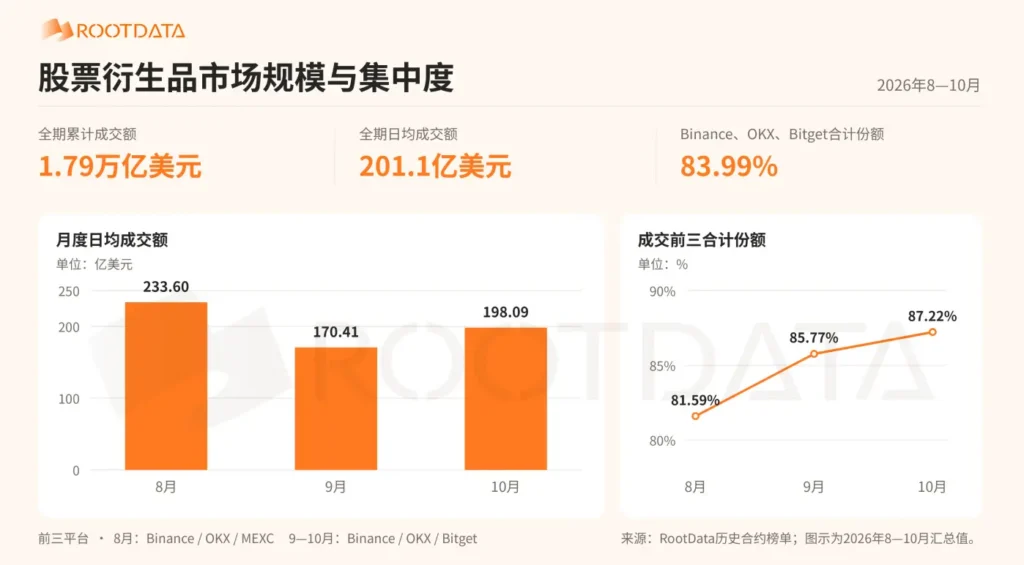
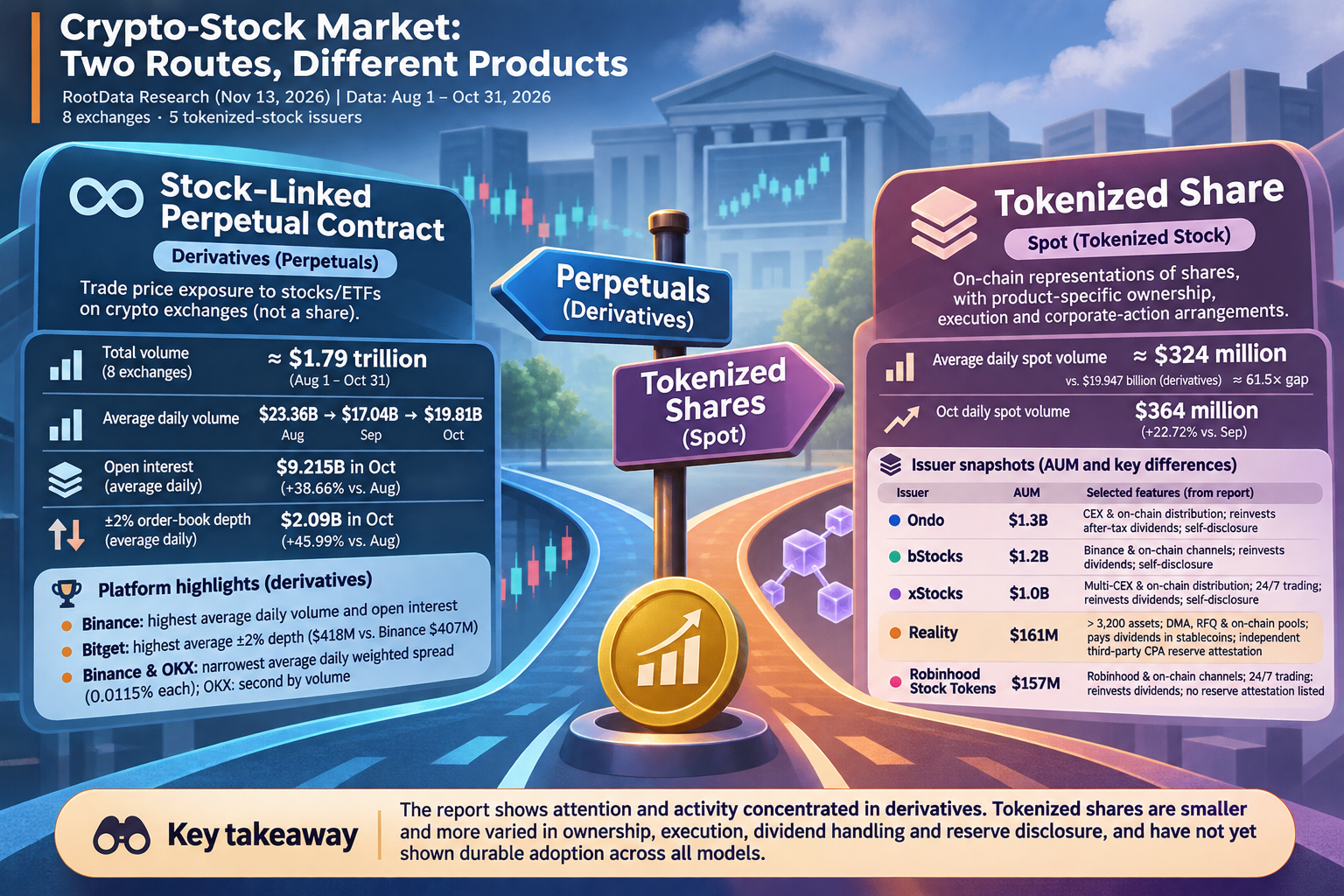
Across Binance, OKX, Bitget, Bybit, Gate, MEXC, KuCoin and HTX, stock and ETF perpetual contracts generated about $1.79 trillion in reported volume over the period. Average daily volume fell from $23.36 billion in August to $17.04 billion in September, then recovered to $19.81 billion in October—still below August’s level. Binance, OKX and Bitget together accounted for 83.99% of derivatives volume.
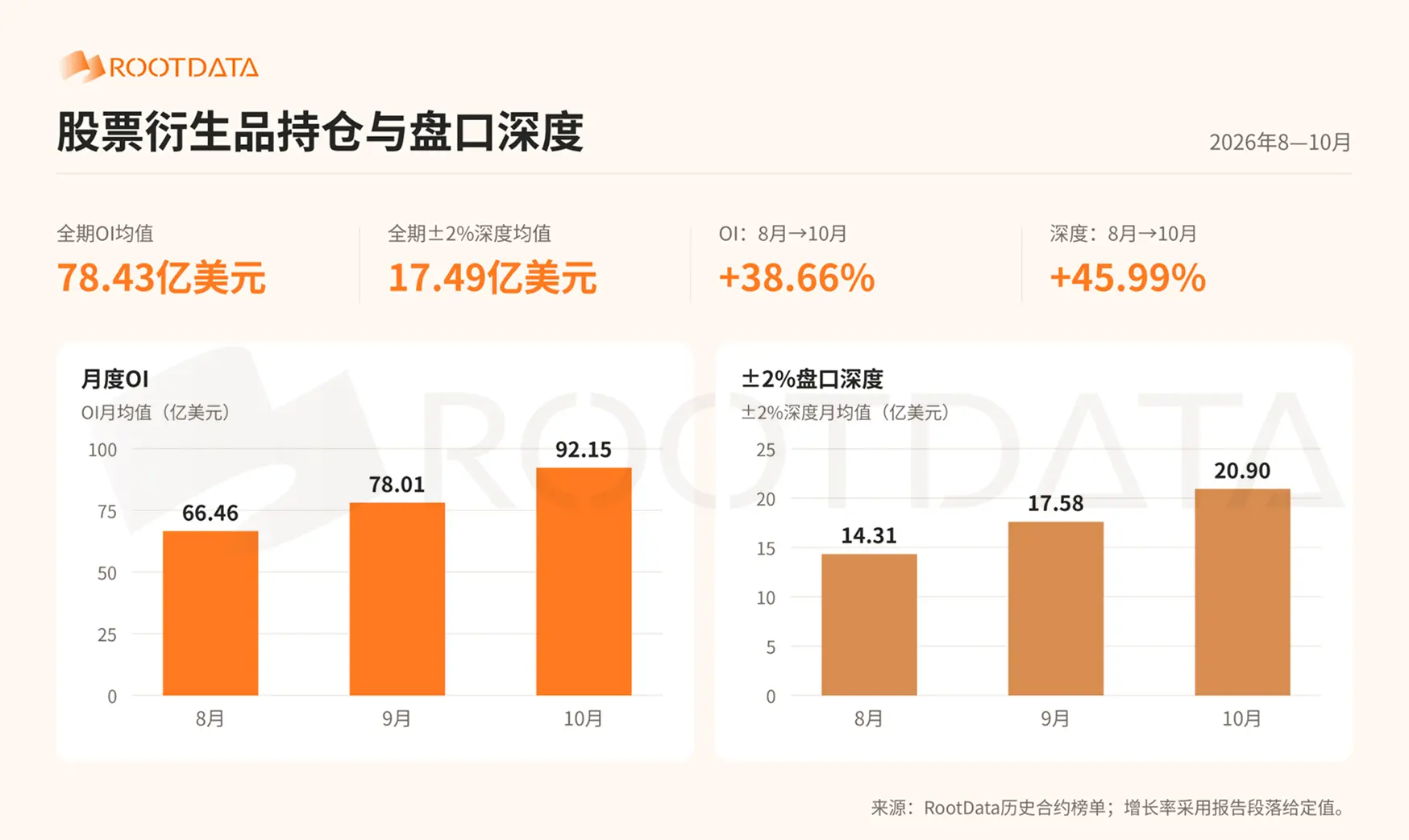
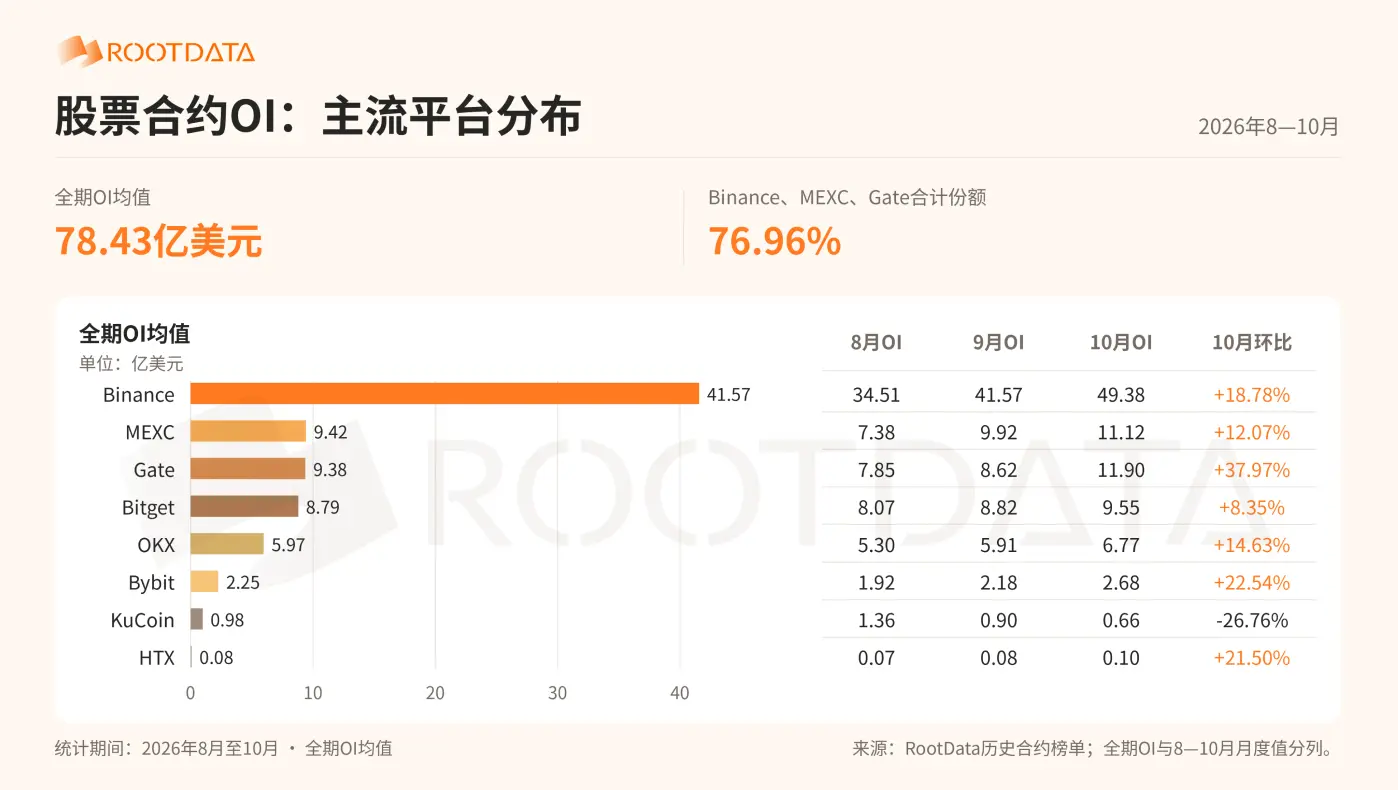
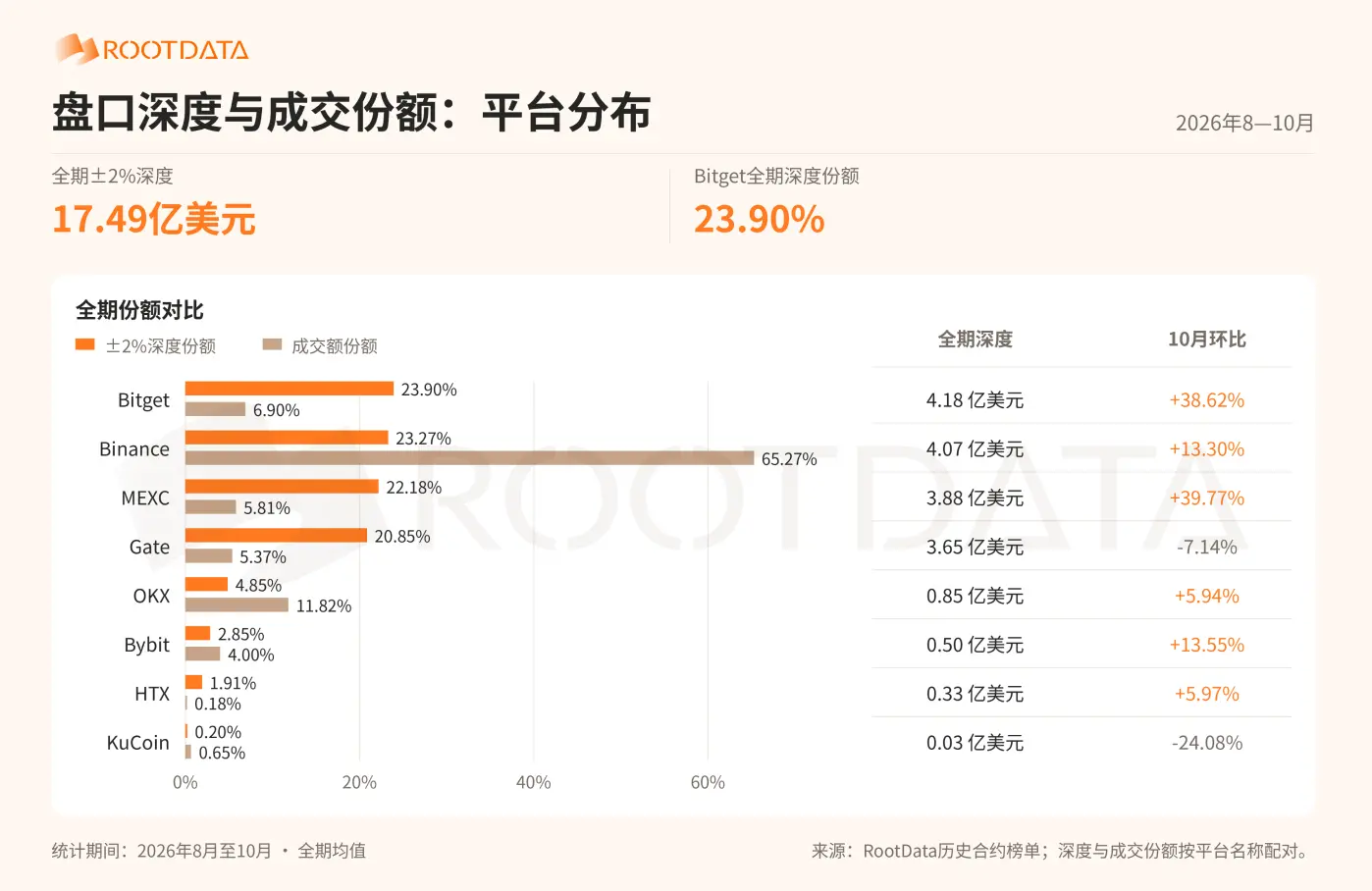
Open interest and visible order-book liquidity followed a different path. In October, average daily open interest reached $9.215 billion, up 38.66% from August; average daily order-book depth within 2% of the quoted price reached $2.09 billion, up 45.99%. RootData interprets the combination of lower September turnover and rising open interest as a shift toward holding positions rather than widespread exits. That is the report’s interpretation, not a direct measure of traders’ intentions.
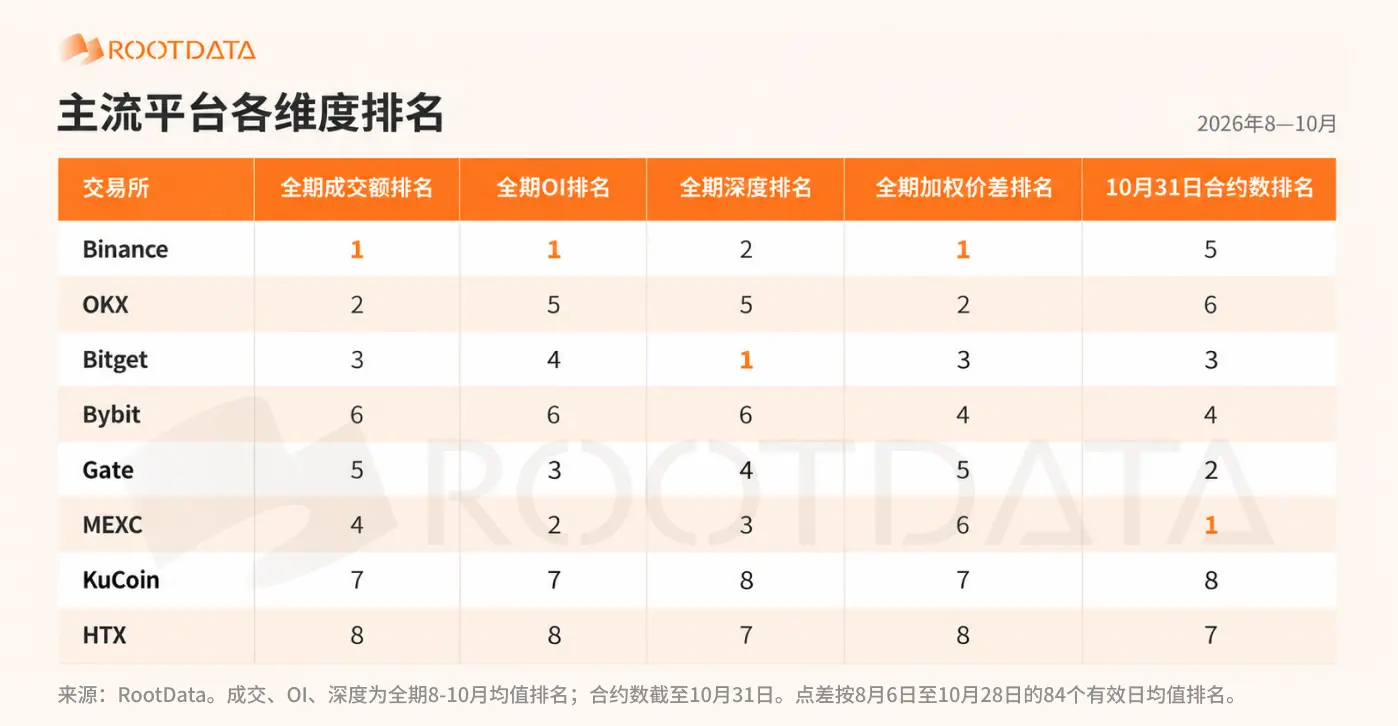
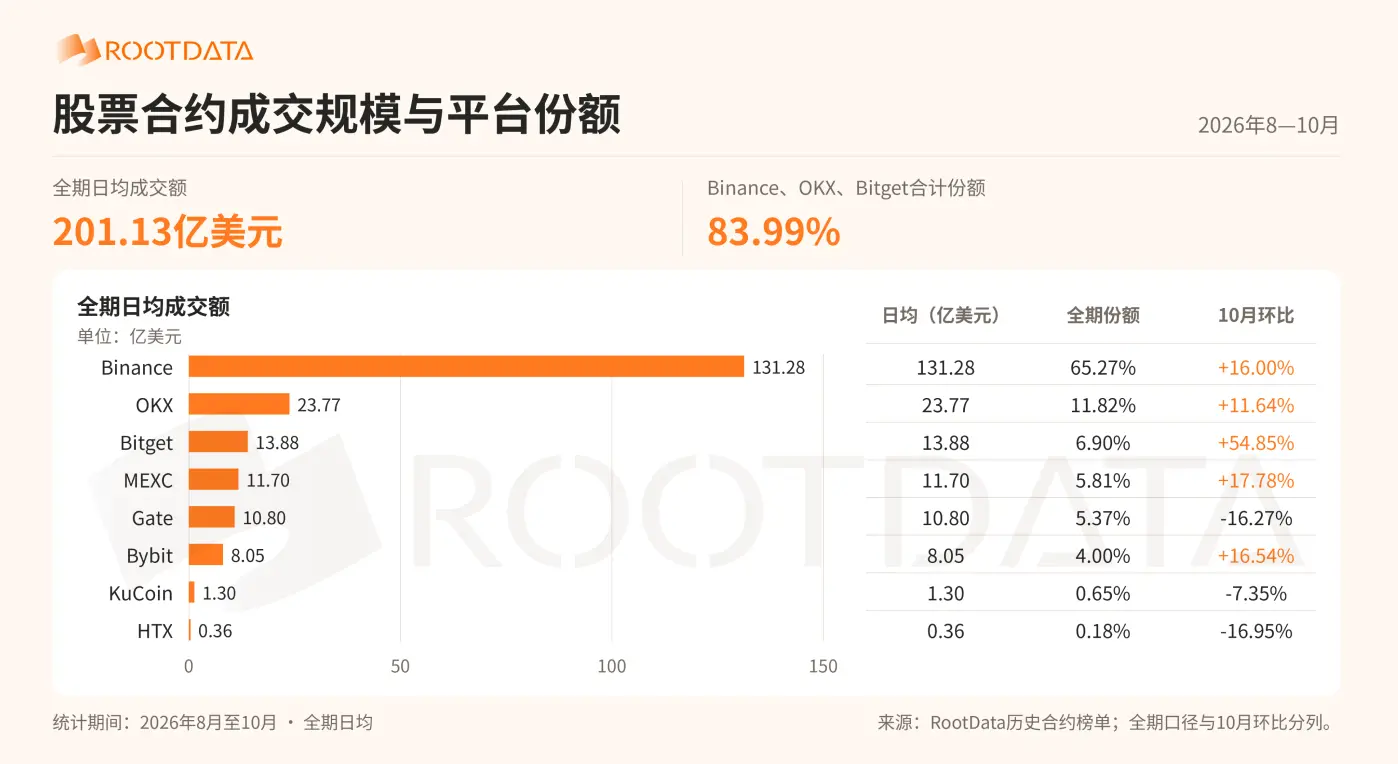
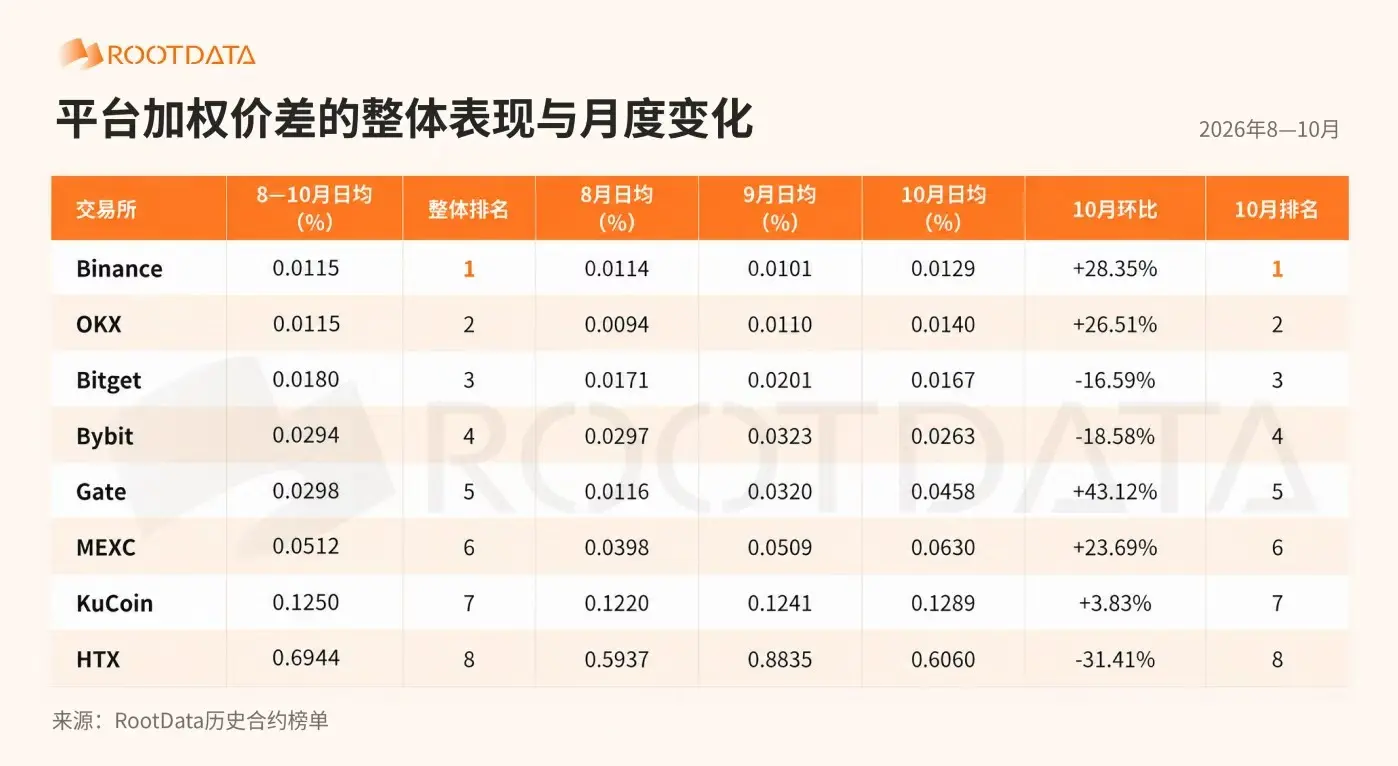
Scale did not translate into leadership on every metric. Binance led average daily volume and open interest. Bitget had the highest average ±2% depth, at $418 million versus Binance’s $407 million. Binance and OKX shared the narrowest reported average daily weighted spread, at 0.0115% each; OKX ranked second by volume.
Tokenized shares had a smaller, less uniform market
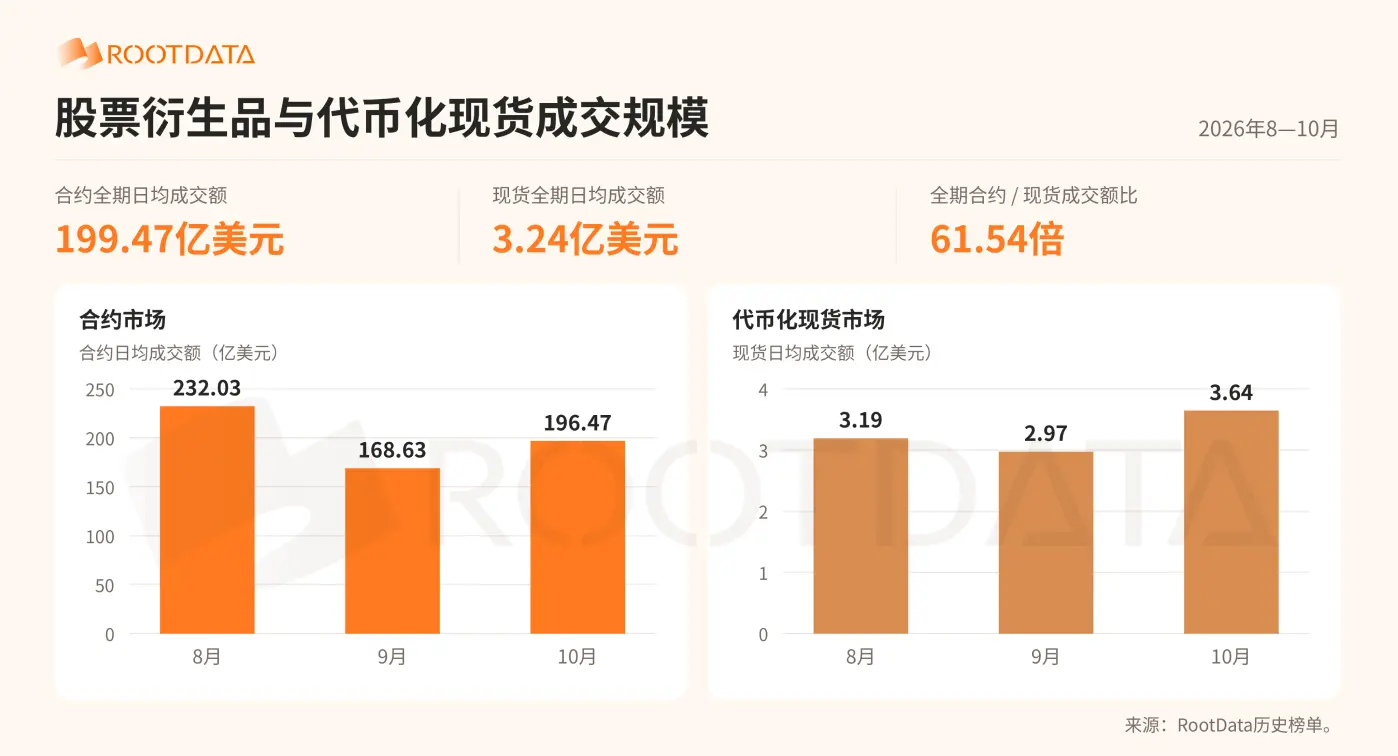
RootData puts average daily tokenized-stock spot volume at roughly $324 million, compared with $19.947 billion in daily stock-derivatives volume on the platforms used for that comparison—a gap of about 61.5 times. Spot volume rose to $364 million a day in October, up 22.72% from September. Trading activity, however, should not be treated as evidence that every tokenized-stock product offers the same ownership or execution experience.
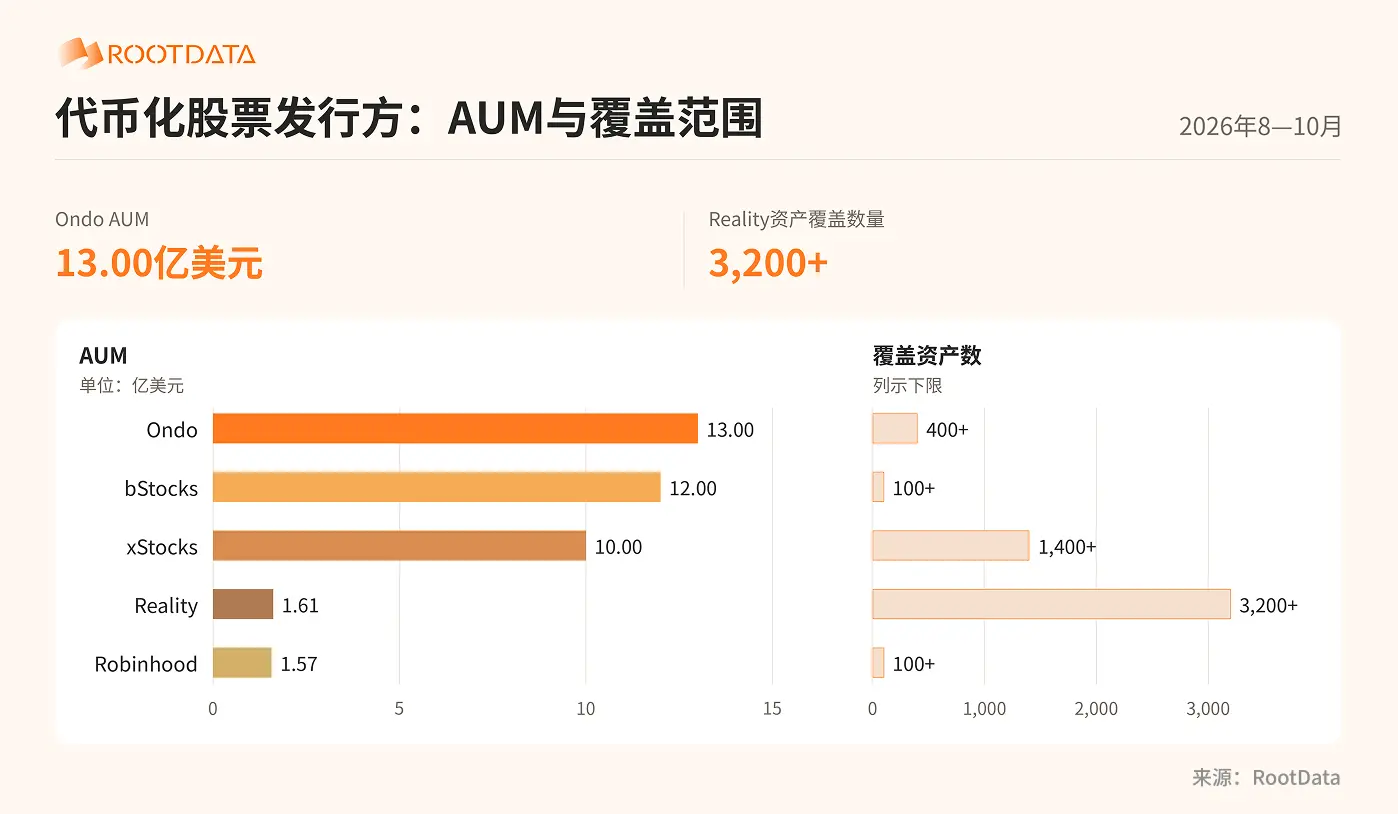
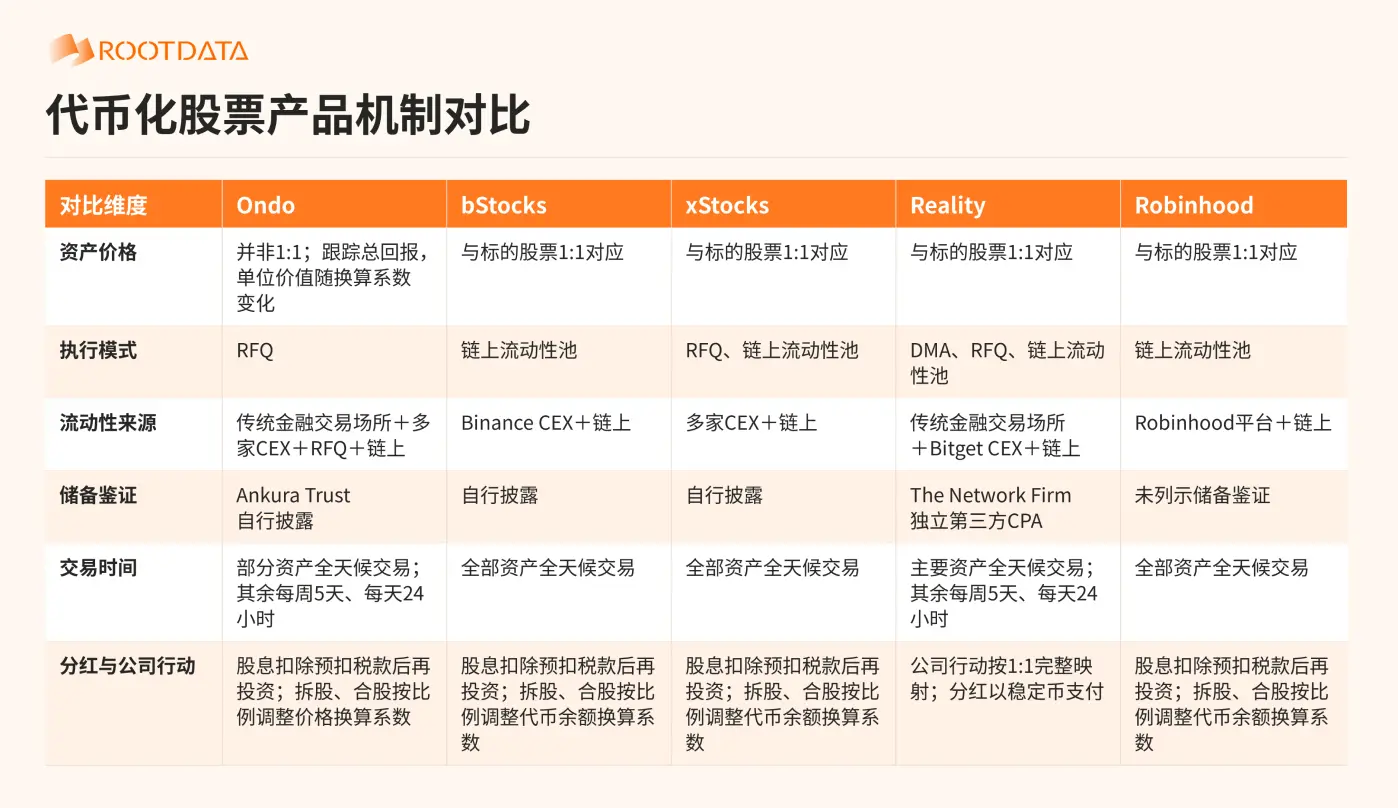
The report lists assets under management of $1.3 billion for Ondo, $1.2 billion for bStocks and $1 billion for xStocks, ahead of Reality’s $161 million and Robinhood Stock Tokens’ $157 million. Reality, by contrast, is listed as covering more than 3,200 assets and offering direct market access, request-for-quote execution and on-chain liquidity pools. RootData also describes differences in dividend handling, trading hours and reserve disclosures: Reality pays dividends in stablecoins and lists an independent third-party CPA reserve attestation, while the other four products reinvest after-tax dividends, according to the report.
The question left open by this snapshot is whether broader listings and varied execution routes produce sustained holdings and trading. RootData’s figures show attention and activity concentrated in derivatives; they do not yet establish durable adoption for every tokenized-share model. Its averages use available daily observations rather than filling missing dates with zero.